
Rutgers Football AI Strategy: Performance Tracking and Game Planning
Rutgers football is leveraging artificial intelligence for player performance tracking and strategic game planning. The university joins a wave of college programs adopting AI analytics to gain competitive advantage.

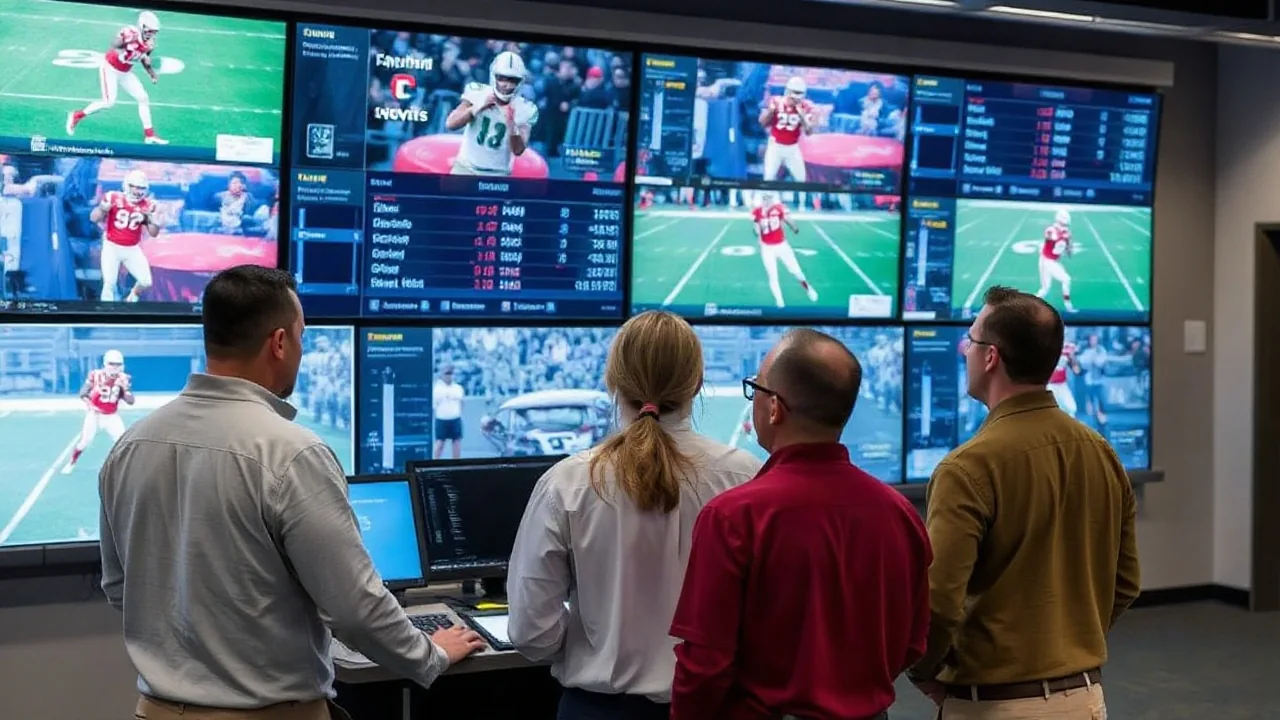
Rutgers University football entered the 2026 season with a competitive edge rooted in artificial intelligence and advanced data analytics. The program has implemented AI-driven systems to track player performance metrics in real time, optimize defensive alignments, and predict opponent tendencies with precision previously unavailable to college football teams.
The integration of artificial intelligence into Rutgers' coaching operations represents a broader shift in how college athletics departments approach strategic decision-making. Head coaching staff now rely on machine learning algorithms to process thousands of data points during practice and games, enabling faster adjustments and more informed personnel decisions.
"AI gives us the ability to see patterns in opponent behavior that would take hours of manual film study to identify," said Dr. Marcus Chen, director of sports analytics at Rutgers, in a statement to the program in August 2026. "We're not replacing coaches' expertise; we're augmenting it with computational speed and consistency."
Performance Tracking and Player Development
The Scarlet Knights use wearable sensors and video analysis software to monitor player performance during every snap. These systems collect data on sprint speed, acceleration patterns, joint angles, and fatigue levels, feeding that information directly into coaching dashboards accessible on sidelines and in meeting rooms.
Key metrics tracked include:
- Burst velocity on first steps out of breaks
- Tackling efficiency and angles of approach
- Route precision and ball tracking reflexes for receivers
- Muscle fatigue indicators to optimize substitution timing
- Coverage gap identification for defensive backs
Strength and conditioning coaches use predictive algorithms to identify injury risk before problems develop. If a player's movement patterns deviate from his baseline, the system flags the coaching staff for evaluation, potentially preventing season-ending injuries.
Sports strategy at Rutgers now begins with data from the prior week's performance. Defensive coordinators input opponent film into machine learning models that recognize formations and corresponding play calls, helping the team predict what's coming before the snap.
Game Planning and Opponent Analysis
Rutgers employs football analytics platforms that have reduced game preparation time while increasing strategic depth. Rather than coaches spending eight hours reviewing an opponent's past 10 games, AI tools synthesize that material into priority reports highlighting the opponent's most-likely plays in specific down-and-distance situations.
The program uses data analysis to generate heat maps showing where opposing offenses favor certain routes and where defenses shift coverage. This visual representation allows quarterbacks and receivers to identify soft spots in coverage schemes faster than traditional chalk talks.
In the 2026 preseason, Rutgers' defensive line benefited from AI-generated scouting reports that highlighted which offensive linemen favor certain blocking angles under pressure. This granular intelligence helps defensive ends and tackles win leverage battles more consistently.
Offensive play-calling has also evolved. When Rutgers trails by a specific point total with a set amount of time remaining, the AI system recommends play sequences with the highest historical conversion rates in that scenario. Coaches retain full authority to override the recommendation, but they're making decisions informed by millions of data points across college and NFL play archives.
Why College Athletics Are Embracing AI
Rutgers is not alone. Programs like Alabama, Georgia, and Ohio State have deployed similar systems, but smaller conference schools are catching up. The cost of AI infrastructure has fallen significantly since 2024, making it accessible to mid-tier athletic departments with budgets under $10 million annually.
Recruiting has become another frontier for AI application. Rutgers' talent evaluation team now uses algorithm-assisted film review to identify overlooked players whose movement patterns match high performers at the same positions. This approach has expanded the program's recruiting pool and reduced bias in prospect rankings.
The competitive pressure is real. If one program adopts AI-driven insights before its conference rivals do, that school enjoys a measurable advantage in player development and strategic execution. Conference commissioners and athletic directors recognize that schools lagging in technology adoption risk falling behind on the field and in recruiting.
Rutgers football's embrace of AI reflects the broader transformation of college sports in 2026. As the NCAA continues clarifying rules around technology use, programs are investing aggressively in systems that turn raw performance data into actionable intelligence. For Rutgers, that investment is already visible in sharper film study, faster injury prevention, and more prepared players stepping onto the field each Saturday.