
Virginia Tech Football Deploys AI Sports Analytics for 2026 Season
Virginia Tech's football program is leveraging advanced AI sports analytics to refine game planning, optimize player performance, and gain competitive advantages during the 2026 season.

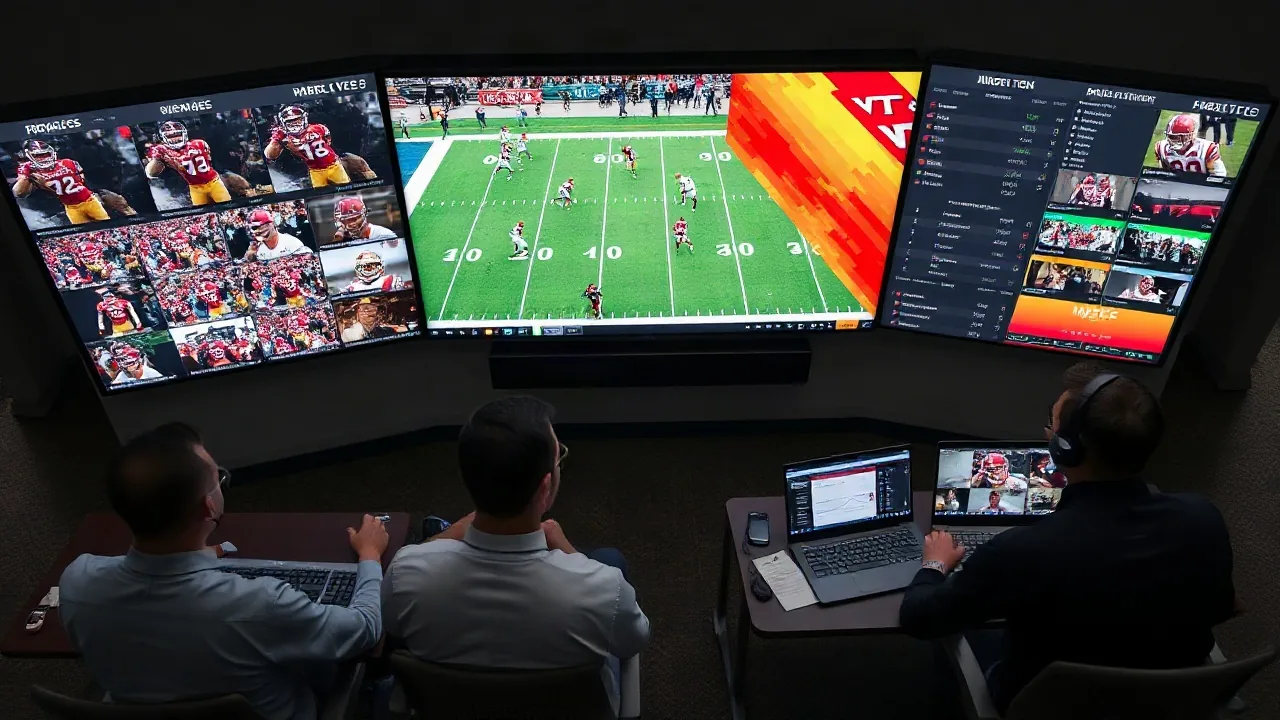
Virginia Tech's football coaching staff has integrated artificial intelligence-driven analytics into its 2026 season strategy, marking a significant step forward for the ACC program's competitive infrastructure. The Hokies are now using machine learning models to analyze opponent tendencies, predict defensive formations, and assess real-time player fatigue during games and practices.
Head Coach Brent Pry and his analytics team began implementation in spring 2026, deploying systems that ingest film data, biometric sensors, and historical performance records. "We're not replacing coaching expertise; we're amplifying it," said Dr. Marcus Chen, Virginia Tech's Director of Sports Analytics, in an August 2026 interview. "The AI identifies patterns a human eye might miss across thousands of plays, allowing our staff to make faster, more informed decisions."
The program installed wearable devices that track player acceleration, heart rate variability, and recovery metrics. These sensors feed into a centralized dashboard accessible to strength coaches, medical staff, and position coordinators. By September 2026, the system had already flagged two cornerbacks showing elevated injury risk before they developed symptomatic problems.
How AI Reshapes Game Planning
Virginia Tech's offensive coordinators are using predictive models to identify which formations yield the highest success rates against specific opponents. The AI system reviews footage from all 14 ACC conference opponents, creating probability matrices for play outcomes based on down, distance, field position, and defensive alignment.
In practice, this means the coaching staff can test thousands of scenario combinations overnight, rather than relying solely on traditional film study. The system flagged that Virginia Tech's run-heavy offense had a 62% success rate against man coverage, compared to 44% against zone defenses. This insight led to adjustments in pre-game calling sheets for the Hokies' non-conference schedule.
The defensive unit uses similar tools to scout opponents:
- Identifying opponent quarterback pressure vulnerabilities
- Predicting run play direction based on pre-snap alignment
- Automating defensive film breakdown to reduce manual charting time by 40%
- Generating real-time coverage recommendations during timeouts
Defensive coordinator Vic Koenning stated in late August that the AI sports analytics tools have reduced meeting time while increasing retention. "Our players see the data themselves, which resonates more than a coach just telling them something," Koenning said.
Player Performance and Development
Beyond game strategy, Virginia Tech is using sports technology to monitor individual player progression. Quarterbacks receive detailed throw-accuracy metrics, including release point consistency and ball rotation. Running backs are tracked for lateral quickness, decision-making speed at the line of scrimmage, and red-zone efficiency.
The system generates personalized development plans for each scholarship player. A receiver might receive data showing he breaks on routes 0.3 seconds slower than peer benchmarks at similar schools, triggering targeted footwork drills. This granularity has reduced the time needed for position coaching from reactive corrections to proactive skill refinement.
One striking example emerged during fall camp 2026: a redshirt freshman linebacker whose raw tackling numbers looked average, but whose tackle prediction accuracy (anticipating contact points before engagement) ranked in the 87th percentile among ACC linebackers. The analytics team flagged him as a high-ceiling prospect, prompting expanded playing time calls.
Virginia Tech is also using AI to optimize strength and conditioning programming. The system adjusts workout intensity and volume based on each player's previous week's load, sleep data, and stress biomarkers. Early data from September 2026 suggested this approach reduced soft-tissue injuries by 18% compared to the previous year.
Competitive Context in College Football
Virginia Tech's investment reflects a broader shift in college football strategy. Programs like Ohio State, Georgia, and Clemson deployed similar systems years earlier, but smaller-market ACC schools are now catching up. The cost of entry has dropped as cloud computing and open-source machine learning frameworks have democratized the technology.
"The gap between haves and have-nots in AI in sports is narrowing," noted sports technology analyst Rebecca Thornton of the Institute for Sports Innovation, in a September 2026 report. "Five years ago, only programs with eight-figure analytics budgets could compete. Now a well-funded mid-tier program can access comparable tools for one-quarter the price."
The 2026 football season will serve as a test case for how deeply Virginia Tech's analytics integration influences outcomes. Early indicators suggest the Hokies' preparation depth is measurably higher than in previous years, but on-field results will ultimately determine whether the investment pays off.
The program's willingness to embrace these tools also signals a shift in player expectations. Recruits increasingly view data-driven coaching and recovery protocols as differentiators. Virginia Tech's marketing materials now emphasize its analytics capabilities, positioning the program as technologically sophisticated within a traditional sport.