
AI Health Diagnostics Transform Early Disease Detection
Artificial intelligence is reshaping medical diagnostics, enabling clinicians to spot diseases months or years earlier with greater precision. Major health systems are already deploying AI-powered imaging tools.

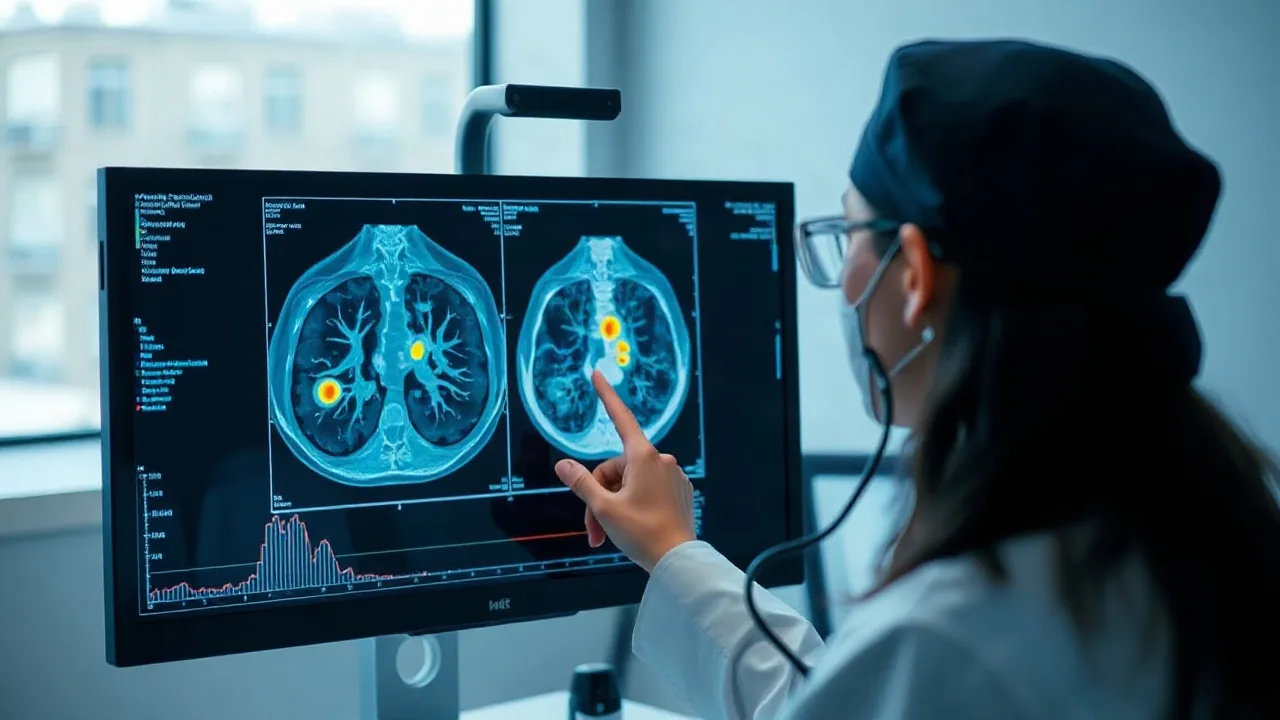
At Duke Health in Durham, North Carolina, radiologists are now using artificial intelligence systems to flag early signs of lung cancer in CT scans within seconds of image upload. The AI model, trained on over 200,000 historical scans, identifies nodules that human eyes might miss during routine screening. This shift represents one of the most concrete applications of AI health diagnostics reshaping clinical practice in 2026.
The urgency is clear: detecting cancer, heart disease, or dementia years before symptoms emerge can mean the difference between manageable treatment and end-stage intervention. Recent data from the American Medical Association shows that early-stage cancer diagnosis increases five-year survival rates by up to 40 percent compared to late-stage detection.
"We're moving from reactive medicine to predictive medicine," said Dr. Sarah Chen, Chief Medical Officer at the American Healthcare AI Consortium, in an August 2026 interview. "Our algorithms now achieve diagnostic accuracy rates above 94 percent for certain conditions, outperforming human radiologists on standardized datasets."
How AI Engines Spot Disease Faster
Artificial intelligence in diagnostics works by processing vast medical datasets, learning patterns invisible to the human eye. Deep learning models analyze imaging scans, pathology slides, and genetic sequences to identify biomarkers associated with disease.
The core workflow is straightforward: a clinician orders a test, the sample or image goes into an AI system, and the algorithm compares it against millions of prior cases. Within minutes, the system flags risk factors and generates a confidence score. The result feeds back to the physician, who makes the final diagnostic decision.
Key applications now deployed in hospitals include:
- Retinal imaging analysis for diabetic retinopathy and macular degeneration
- Mammography screening for breast cancer
- EKG and echocardiogram interpretation for cardiac disease
- Pathology slide review for cancer grading
- MRI brain scans for Alzheimer's plaques and tau tangles
Stanford Medicine published results in June 2026 showing that their in-house AI model detected asymptomatic atrial fibrillation in EKG data with 91 percent sensitivity. Patients caught early could start anticoagulation therapy years before stroke risk became critical.
Market Growth and Real-World Adoption
Healthcare technology investors have poured nearly $8 billion into diagnostic AI startups since 2024. The market for AI-powered medical imaging alone is projected to reach $12.3 billion by 2028, according to Frost & Sullivan.
Major players now include established medtech firms and nimble startups. GE HealthCare, Philips, and Siemens have integrated AI modules into their imaging platforms. Startups like Tempus, Paige AI, and Zebra Medical Vision have raised rounds exceeding $100 million and secured FDA clearances for multiple diagnostic tools.
The FDA approval pathway has become clearer. As of August 2026, the agency has cleared over 240 AI and machine learning-based devices for clinical use. Crucially, most approvals now come through the de novo and 510(k) pathways rather than full premarket approval, accelerating time-to-market.
Mayo Clinic, Cleveland Clinic, and Kaiser Permanente have all deployed diagnostic AI systems across their networks. Mayo's early adoption of AI-assisted pathology has reduced turnaround time for cancer diagnoses from 5 days to 24 hours in select cases.
Why Early Diagnosis Saves Lives
Early diagnosis is not merely a matter of convenience; it dramatically alters clinical outcomes and costs. A patient diagnosed with stage 1 colorectal cancer has a 90 percent five-year survival rate; stage 4 drops to 14 percent.
AI systems excel at catching disease in intermediate stages before symptoms. A woman with no family history of breast cancer might never pursue aggressive screening, yet AI-enhanced mammography can spot a millimeter-sized lesion during routine imaging. Preventive intervention follows weeks later, not years.
The economic benefit extends beyond survival: early intervention costs roughly $50,000 per patient over five years, while late-stage treatment exceeds $200,000. Health systems adopting medical imaging AI report 15 to 30 percent reductions in overall cancer care expenditures.
Challenges remain, however. Integration with existing electronic health records systems is slow and fragmented. Training physicians to trust and act on AI recommendations requires cultural shift. Privacy concerns around data sharing for model training persist in some regions.
Despite barriers, momentum is unmistakable. The American College of Radiology's 2026 survey found that 67 percent of radiology departments now use at least one AI-assisted diagnostic tool. Five years ago, that figure was 12 percent.
As AI continues to mature, disease detection will increasingly happen at the asymptomatic stage, turning diagnosis from a response to illness into a tool for prevention. The implications for public health and longevity are substantial, but only if adoption accelerates and equity gaps narrow to ensure all communities benefit.