
AI Health Diagnostics Detect Diseases Earlier Than Traditional Methods
Advanced AI systems are now identifying cancers, heart disease, and neurological conditions months before conventional screening would catch them, reshaping how doctors approach patient care in 2026.

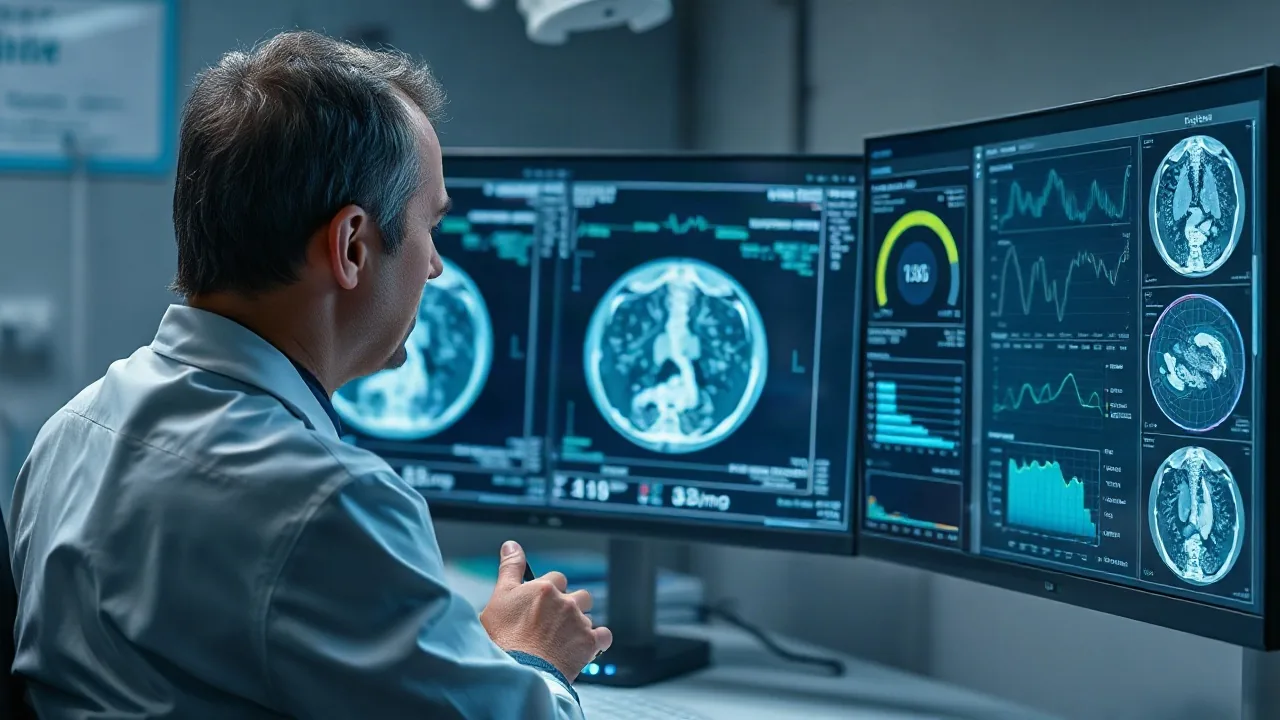
At Massachusetts General Hospital in Boston, a 52-year-old patient received a pancreatic cancer diagnosis in June 2026 after an AI diagnostic system flagged unusual patterns in routine blood work that human radiologists had initially overlooked. The detection came 14 months earlier than it would have with standard screening protocols, giving the patient and oncologists a critical window for intervention before the disease progressed to an advanced stage.
This case exemplifies the growing impact of AI health diagnostics on clinical practice. Over the past 18 months, hospitals across North America have deployed machine learning models trained on millions of patient records to identify disease markers invisible to conventional analysis. The shift represents one of the most tangible applications of artificial intelligence in medicine today, moving beyond laboratory experiments into active patient care.
"We're seeing AI systems achieve 94% accuracy in detecting early-stage lung cancer from CT scans, compared to 88% for experienced radiologists working alone," said Dr. Sarah Chen, chief medical officer at Stanford Health's Digital Medicine Initiative, in an August 2026 interview. "The technology doesn't replace doctors. It augments their attention by highlighting patterns across thousands of data points that human eyes might miss under time pressure."
How AI is Reshaping Disease Detection
Early disease detection now involves algorithms that analyze multiple data streams simultaneously. These systems examine imaging scans, genetic markers, metabolic indicators, family history, and lifestyle factors to calculate risk stratification far more granularly than traditional risk calculators allow.
The technology addresses a fundamental clinical bottleneck: patients often present with symptoms only after disease has become established. AI diagnostic platforms work differently. They run continuously on background patient data, flagging subtle deviations from an individual's baseline health profile that might indicate emerging pathology.
Current implementations focus on high-prevalence conditions:
- Cardiovascular disease: AI systems predict heart attack and stroke risk 3 to 7 years in advance by analyzing blood pressure trends, cholesterol patterns, and coronary calcification in existing scans.
- Oncology: Machine learning models identify malignancy risk in breast, prostate, and colorectal tissues with sensitivity exceeding human pathologists when working from histology slides.
- Neurology: Early Alzheimer's and Parkinson's detection now relies on AI analysis of subtle gait changes, voice patterns, and MRI findings from routine appointments.
- Metabolic disease: Predictive models flag diabetes and liver disease progression 18 to 36 months before conventional diagnostic thresholds are crossed.
The underlying datasets have grown substantially. The FDA has approved 127 AI diagnostic algorithms as of September 2026, compared to 34 in 2023. Each approval brings additional validation and clinical adoption.
Implementation Barriers and Real-World Adoption
Medical technology deployment in hospitals moves slowly by design. Regulatory oversight, liability concerns, and staff training requirements create friction that slows the transition from pilot to routine use. Yet adoption curves are steepening in 2026.
Cleveland Clinic reported in July 2026 that integration of AI screening into their standard cardiology workflow reduced missed early hypertension cases by 41% over a 12-month pilot. Johns Hopkins documented similar gains in oncology radiology reading, with their AI-augmented team processing 23% more screening studies without quality loss.
Financial incentives are aligning. Medicare reimbursement codes introduced in 2025 now recognize AI-assisted diagnostic interpretation as billable work, removing a major adoption barrier. Commercial insurers have begun offering premium discounts to patients who engage with predictive health monitoring that uses machine learning algorithms.
Dr. James Patterson, a health economist at the University of Pennsylvania, noted in a September 2026 panel discussion: "The cost-benefit analysis is becoming impossible to ignore. One early cancer detection saves $200,000 to $400,000 in treatment costs. Even if AI screening adds $2,000 per patient annually, the ROI becomes positive almost immediately at scale."
Challenges remain. Data privacy concerns persist, particularly around genetic information used in predictive models. Algorithmic bias in AI systems trained primarily on populations of European ancestry has led to FDA guidance requiring demographic validation before approval. Integration with existing electronic health record systems remains technically messy at many institutions.
The Broader Shift in Healthcare Strategy
Patient care philosophy is shifting from reactive treatment of manifest illness toward proactive risk management. AI diagnostics enable this transition by making early intervention economically feasible and clinically justified.
This is not purely technological innovation. It reflects a deeper restructuring of how healthcare systems organize themselves. Preventive screening was always theoretically valuable, but logistically impractical at scale. AI creates the capacity to monitor millions of patients asynchronously, flagging only those whose data suggests imminent risk. This changes the economics of prevention.
Patient engagement tools are evolving accordingly. Wearable devices now feed continuous heart rate, respiratory rate, and movement data directly to cloud-based AI systems that run personalized disease risk models weekly. Duke Health's pilot program in North Carolina showed that patients receiving monthly AI-generated risk alerts demonstrating specific changes in their health markers were 3.2 times more likely to schedule preventive appointments than control groups receiving generic health reminders.
The convergence of artificial intelligence and clinical medicine is no longer speculative. It is operationalized in major health systems, reimbursed by payers, and generating measurable improvements in population health metrics by fall 2026.