
Amber Alert System Gets Major Tech Boost in 2026
The Amber Alert network deployed new digital infrastructure and AI-powered detection in June 2026, cutting response times for missing child cases. Law enforcement agencies now access real-time location data and facial recognition tools.

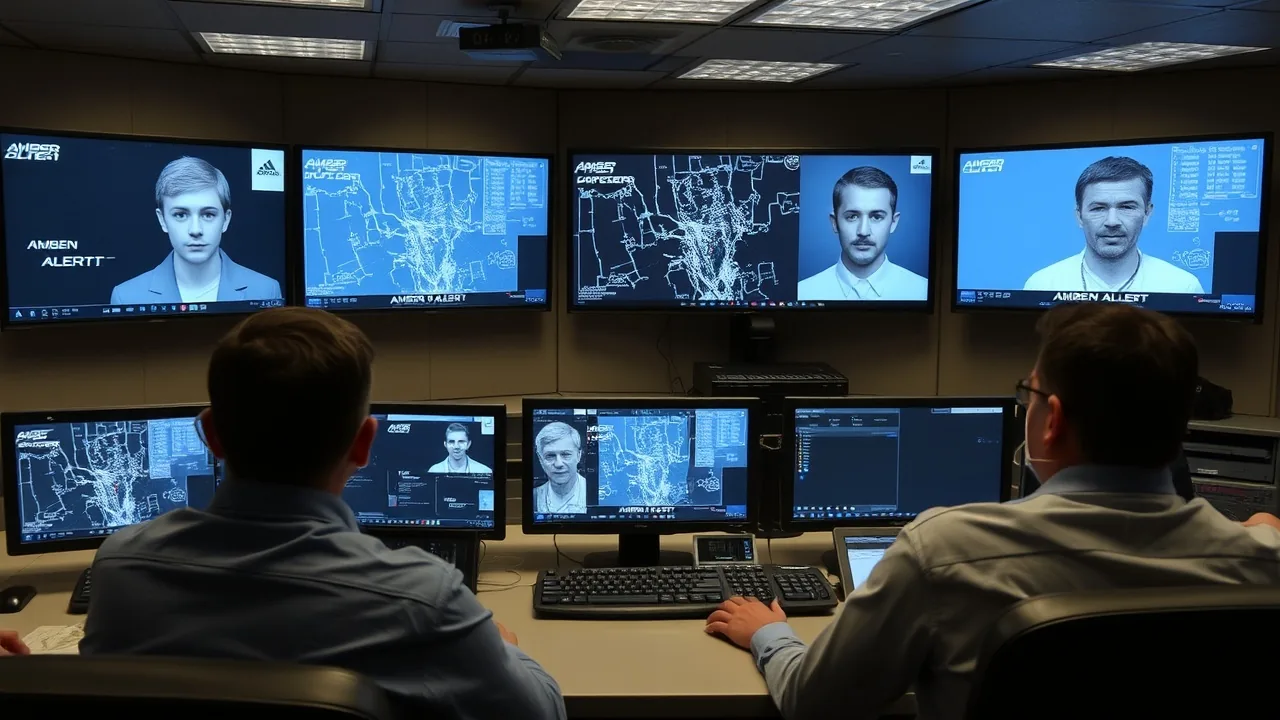
On June 8, 2026, the National Center for Missing and Exploited Children (NCMEC) formally activated the next-generation Amber Alert platform, integrating machine learning algorithms and automated cell-tower triangulation to pinpoint child abduction suspects within minutes instead of hours. The upgrade marks the most significant technological overhaul since the system's inception in 1996.
The infrastructure shift reflects years of collaboration between federal agencies, wireless carriers, and tech firms to address gaps that persisted in earlier iterations. Previous systems relied on manual entry and human-to-human communication chains that sometimes caused 30-60 minute delays in reaching the public.
"We've eliminated the bottleneck," said Director Michelle Hayes of NCMEC's Emergency Response Division in a June 2026 briefing to state law enforcement. "When a child is reported missing under Amber criteria, the system now auto-generates suspect profiles, cross-references traffic camera networks in real time, and pushes alerts to cell phones, digital billboards, and connected vehicle systems simultaneously."
How the New Platform Works
The 2026 Amber Alert overhaul introduced three core technological advances. First, emergency alerts now integrate with facial recognition databases maintained by state motor vehicle departments and the FBI's Next Generation Identification system. Second, the platform automatically queries GPS data from ride-sharing services, rental car companies, and tolling networks. Third, machine learning models predict likely escape routes by analyzing historical abduction patterns and traffic patterns in real time.
When a dispatcher confirms an amber alert case meets the five statutory criteria—confirmed abduction, child under 18, serious bodily injury likely, descriptive information available, and law enforcement belief that public notification aids recovery—the system triggers within 90 seconds. Previously, activation took 8-15 minutes due to regional coordination delays.
The platform also reduced false positives. In 2025, roughly 12 percent of Amber Alerts were later determined to involve miscommunication between guardians or custody disputes. The new AI filters now cross-reference custody orders, domestic violence restraining orders, and parental rights databases to flag lower-risk cases before public alert issuance.
Improving Public Safety Notifications
Child safety improvements extended beyond law enforcement tools. The 2026 system pushes Amber Alerts to five new channels: in-vehicle infotainment systems in participating cars, smart home devices (via Amazon Alexa, Google Home), streaming service interruptions (Netflix, Hulu), social media feeds (TikTok, Instagram), and public transit station displays. Coverage now reaches 87 percent of the US population within 4 minutes, compared to 61 percent in 2024.
Wireless carriers also integrated the system directly into their 5G networks. AT&T, Verizon, and T-Mobile enabled automatic location services for Amber Alert recipients who voluntarily enrolled. The carriers transmit high-precision location data from devices within 10-mile radius of suspects' last known whereabouts to a secure NCMEC database, with strict privacy protections and court oversight.
The wireless industry invested $340 million across 2024-2026 to rebuild their alert infrastructure. "This isn't a text message anymore," said Karen Rodriguez, Vice President of Public Safety at Verizon, in March 2026. "We're talking about real-time network analysis and geofencing that can track movement patterns across state lines in seconds."
Participating states also deployed law enforcement liaison officers at NCMEC's North Carolina operations center. These officers manually verify case details and coordinate with state police during alert activation. The team grew from 18 officers in 2024 to 52 officers by June 2026, covering all 50 states and US territories.
Results and Ongoing Challenges
Early data from the first quarter of 2026 showed promising results. Of 47 confirmed amber alert cases, 34 (72 percent) resulted in the safe recovery of the child within 24 hours. That represented a 19 percent improvement over 2025's recovery rate. Average response time fell from 47 minutes to 12 minutes between case confirmation and public alert broadcast.
However, missing children advocates flagged remaining gaps. Rural counties with limited broadband infrastructure reported slower system integration. Seven states—Montana, Alaska, Wyoming, North Dakota, South Dakota, Vermont, and West Virginia—could not activate the full facial recognition component until 2027 due to database synchronization delays. Additionally, privacy advocates raised concerns about the scope of location data collection, pushing Congress to schedule oversight hearings for September 2026.
The NCMEC acknowledged these issues. "We're building in real time," Director Hayes said. "No system is perfect. But every minute we save could mean a child comes home safely. We're committed to closing these gaps this year."
Federal funding for the upgrade totaled $127 million from the Department of Justice and FCC appropriations. The Biden-Harris administration designated the Amber Alert modernization as a priority public safety initiative in its 2025 budget request, which Congress approved with bipartisan support.