
Circuit Justice Security: Clarence Thomas and AI Safeguards
Supreme Court Justice Clarence Thomas raises concerns about artificial intelligence threats to judicial security systems. Experts weigh the implications for protecting federal courts in 2026.

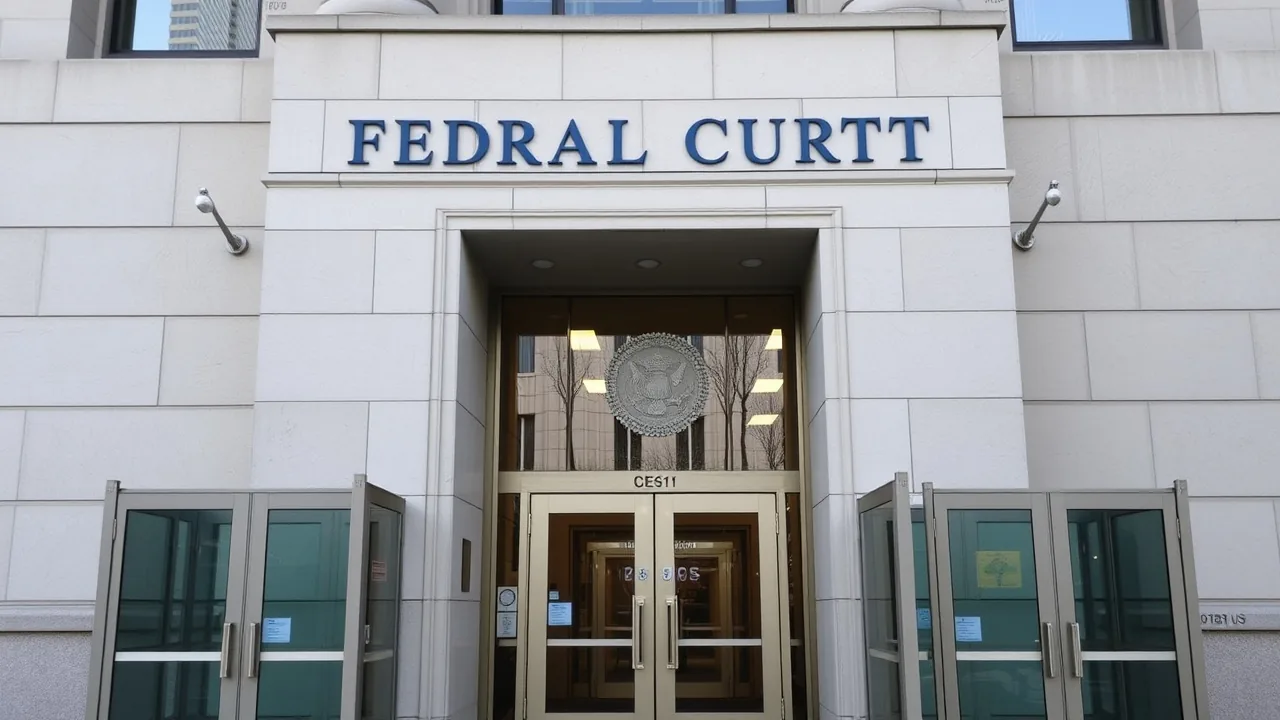
Supreme Court Justice Clarence Thomas has publicly flagged potential security vulnerabilities in how federal courts handle artificial intelligence systems, sparking broader discussions about judicial infrastructure protection in May 2026. Thomas's concerns center on the intersection of AI deployment across court management platforms and the physical and digital safety of justices themselves.
The circuit justice role carries unique responsibilities. Each of the nine justices oversees one or more federal circuits, making decisions on emergency motions and stays of execution. This administrative duty puts them at the nexus of sensitive case data, legal filings, and court operations—all increasingly digitized and vulnerable to AI-powered breaches.
"The integration of machine learning into judicial workflows has moved faster than our security protocols," said Dr. Margaret Chen, a judicial cybersecurity consultant at the Institute for Court Administration, in an interview this month. "Justice Thomas's intervention signals that the bench itself recognizes the gap."
The AI Risk Landscape in Federal Courts
Federal courts have rolled out AI tools for document review, case prediction, and administrative scheduling over the past three years. The Administrative Office of the U.S. Courts began piloting natural language processing systems in 2024 to handle the volume of pro se (self-represented) filings across 13 regional circuits.
These systems require access to vast databases of sealed opinions, motion dockets, and judicial memoranda. A compromise of the underlying AI infrastructure could expose confidential bench deliberations, ongoing case details, and the schedule of sitting justices across multiple courthouses.
Thomas's public comments reference three distinct threat vectors:
- Adversarial attacks on AI models that could be trained to misclassify legal documents or trigger false alerts in security monitoring systems
- Data exfiltration via artificial intelligence pipelines that move sensitive court records to cloud providers with weak isolation controls
- Physical security implications when AI systems fail to properly authenticate access to court buildings or restrict visitor scheduling
The Federal Judicial Center, which oversees training for federal judges, has begun stress-testing these scenarios with the help of the Department of Homeland Security's Cybersecurity and Infrastructure Security Agency (CISA).
Judicial Security in the Age of Machine Learning
Judicial security has long been a priority, but it traditionally focused on physical threats to judges and courthouses. The emergence of AI as both an operational tool and a potential attack surface has forced a reckoning with new risk categories.
In 2023, the U.S. Marshals Service investigated a data breach affecting the Federal Judiciary's personnel database, which exposed contact information for judges and staff. That incident, while contained, demonstrated how court infrastructure can be targeted. Adding AI-dependent systems to that infrastructure multiplies the surface area.
Thomas has urged the Judicial Conference of the United States, which sets policy for federal courts, to mandate security audits of all cybersecurity tools touching judicial data before their deployment expands. "We cannot afford to move faster than we can secure," he reportedly told colleagues in closed meetings, according to sources familiar with internal discussions.
The Judicial Conference established a Task Force on AI and Judicial Operations in early 2025, but progress has been incremental. Court budgets remain tight, and retrofitting legacy case management systems with robust AI governance is expensive and time-consuming.
What Federal Courts Are Doing Now
In response to mounting pressure, several circuit courts have begun implementing new protocols. The Federal Judicial Center issued guidance on May 8, 2026, recommending that all AI systems used in court operations undergo third-party penetration testing before deployment and annually thereafter.
The guidance covers:
- Encryption standards for AI training datasets and inference endpoints
- User authentication and role-based access control for AI tools
- Audit logging of all queries made to AI systems that access sealed or confidential case information
- Incident response protocols specific to AI model poisoning and data theft
Several circuit justice offices have also hired dedicated security liaison officers to review AI rollouts before they go live. The Second and Ninth Circuits have been the most aggressive, bringing in external security firms to review their document automation pilots.
Thomas's position as a circuit justice for the Fourth Circuit puts him in a position to lead by example. He has begun requiring explicit security certifications from vendors before the Fourth Circuit adopts any new AI-driven tool, a stance that is filtering upward to other circuits.
Industry observers note that this judicial leadership on security practice may influence broader government AI policy. "When the judiciary moves on a cybersecurity issue, Congress pays attention," said Robert Hayes, a former White House National Security Council staffer now at the Center for Strategic and International Studies. "Thomas is not just protecting his own branch; he's setting a standard."
The challenge now is scaling these protections across all 13 circuits and 94 district courts without grinding court operations to a halt. Some courts lack the IT infrastructure to support advanced audit logging or encryption-in-transit protocols that Thomas and other justices are demanding.
Federal appropriations for judicial IT security have increased 18 percent since 2025, but advocates say the need is closer to 40 percent growth annually to catch up to the threat landscape. Congressional committees have begun scrutinizing the budget requests, signaling that circuit justice concerns are resonating on Capitol Hill.
As of mid-May 2026, the Judicial Conference is preparing a formal statement on AI deployment safeguards, expected in June. Thomas's security framework is expected to influence the final language significantly.