
Cybersecurity Threats in 2026: Emerging Hacking Tactics
In 2026, cybercriminals are deploying AI-powered attacks and supply-chain exploits at scale. Learn which tactics pose the greatest risk to your organization and how to defend against them.

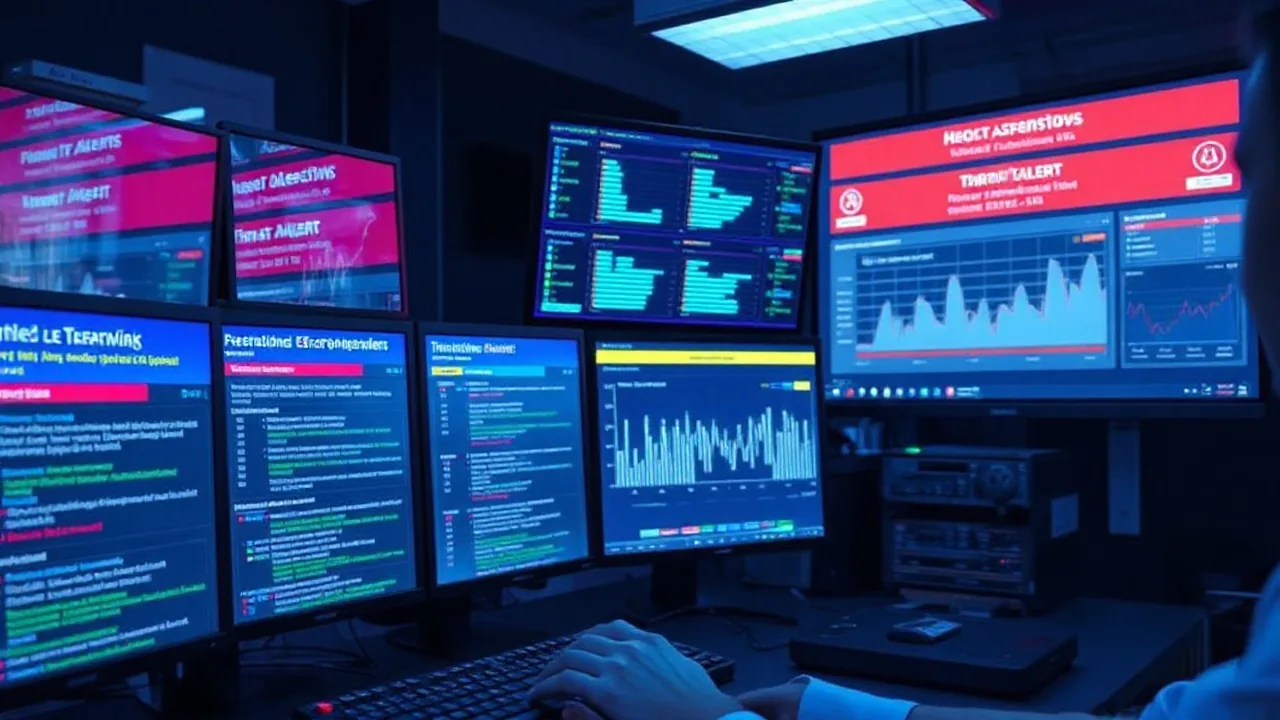
On March 15, 2026, the U.S. Cybersecurity and Infrastructure Security Agency (CISA) issued an alert warning of a coordinated campaign targeting healthcare systems across 12 states using a novel variant of ransomware that self-modifies based on network topology. This incident marked the first major public showcase of what security researchers have been tracking all year: a sharp escalation in cybersecurity threats that blend artificial intelligence, social engineering, and zero-day exploits in ways that outpace traditional defenses.
The threat landscape of 2026 differs fundamentally from years past. Attackers are no longer relying on crude phishing emails or brute-force password attempts. Instead, they are leveraging machine learning to identify vulnerabilities faster than patches can be deployed, automating the reconnaissance phase of attacks and tailoring their payloads in real time to evade detection systems.
AI-Powered Attacks and Supply Chain Infiltration
One of the most consequential shifts in 2026 involves the weaponization of artificial intelligence by threat actors. "We are seeing adversaries use AI not just to optimize their attacks, but to predict defender responses and adapt their tactics within seconds," said Dr. Marcus Chen, senior threat intelligence analyst at the Global Cybersecurity Institute, in a briefing to Congress on May 10, 2026. This real-time adaptation has made signature-based detection nearly obsolete.
Supply-chain compromise remains a preferred vector for sophisticated attackers. In February 2026, a breach of a major software vendor's build environment went undetected for eight weeks, affecting over 4,000 downstream customers. The attackers inserted a backdoor into legitimate software updates, giving them persistent access to enterprise networks across finance, manufacturing, and government sectors.
The attack surface has expanded because organizations increasingly rely on third-party vendors, cloud services, and open-source libraries. A single compromised dependency can propagate across thousands of applications. Defenders must now implement supply-chain data protection strategies that include vendor risk assessment, continuous monitoring of third-party code, and rapid incident response protocols.
Ransomware Evolution and Extortion Networks
Ransomware in 2026 is no longer about simple file encryption. Criminal syndicates have evolved into sophisticated enterprises with customer service operations, affiliate programs, and negotiation teams. The most prominent gangs now operate as "ransomware-as-a-service" platforms, where technical expertise is rented to less-skilled attackers for a percentage of the ransom payment.
The average ransom demand has risen 27% year-over-year, now reaching $2.1 million for enterprise targets as of May 2026. But payment is only part of the cost. Attackers often exfiltrate sensitive data before encrypting systems, using the threat of public disclosure as additional leverage. Many victims now face dual extortion: pay for decryption or have their data auctioned on criminal forums.
Sectors most heavily targeted include:
- Healthcare systems (accounting for 31% of reported incidents through Q2 2026)
- Manufacturing and industrial control systems
- Financial services and insurance
- Education and research institutions
- Critical infrastructure operators
Organizations responding to ransomware must balance the pressure to restore operations with the forensic investigation required to prevent recurrence. Paying ransoms is increasingly criminalized or discouraged by regulators, forcing enterprises to rely on backup restoration and incident response teams that themselves have become targets.
Credential Compromise and Identity Attacks
Identity-based attacks have become the leading entry vector for breaches in 2026. Stolen credentials, phished multifactor authentication tokens, and compromised service accounts now account for over 58% of confirmed breach incidents, according to the FBI's Internet Crime Complaint Center annual report released in April 2026.
Attackers obtain credentials through multiple channels. Credential stuffing attacks (using passwords leaked in past breaches) have become more effective because many users still reuse passwords across accounts. Sophisticated phishing campaigns now use deepfake video or voice calls to impersonate trusted colleagues, bypassing skepticism that text-only approaches encounter.
The rise of infosec challenges extends to the cloud. Misconfigured cloud storage buckets, overpermissioned service accounts, and inadequate identity governance in hybrid environments have created sprawling attack surface. A single compromised identity in a cloud platform can grant access to months of confidential data before detection.
Organizations must implement zero-trust architecture, enforce passwordless authentication where possible, and maintain detailed logs of identity activity. Multi-factor authentication, while protective, is no longer sufficient as a standalone control when attackers actively target the MFA enrollment process itself.
Legal and Regulatory Implications
The regulatory environment has tightened significantly in 2026. New federal cybercrime legislation requires organizations to report breaches within 48 hours, and penalties for non-compliance now exceed $500,000 per incident in some jurisdictions. State-level privacy laws continue to proliferate, with California's updated digital security framework and New York's cybersecurity requirements setting the baseline.
Boards of directors now face personal liability for negligent security practices. Insurance carriers are withdrawing coverage for organizations that fail to meet basic hygiene standards, forcing CFOs and CISOs to justify security budgets in terms of risk transfer and regulatory compliance.
Effective digital security in 2026 requires continuous investment, not just point solutions. Organizations must balance agility with security, rapidly patch systems, monitor for intrusions 24/7, and maintain an incident response plan that has been tested in the past 12 months. The threat landscape will continue to evolve, but the fundamentals of visibility, detection, and rapid response remain the foundation of resilience.