
AcuRite Shuts Down Popular IoT App, Cites Obsolete Tech
Smart weather device maker AcuRite is retiring its long-standing "My AcuRite" app on May 30, forcing users to transition to a newer, subscription-based platform. The company cites outdated technology and a need for modernization as the primary reasons for the shutdown.

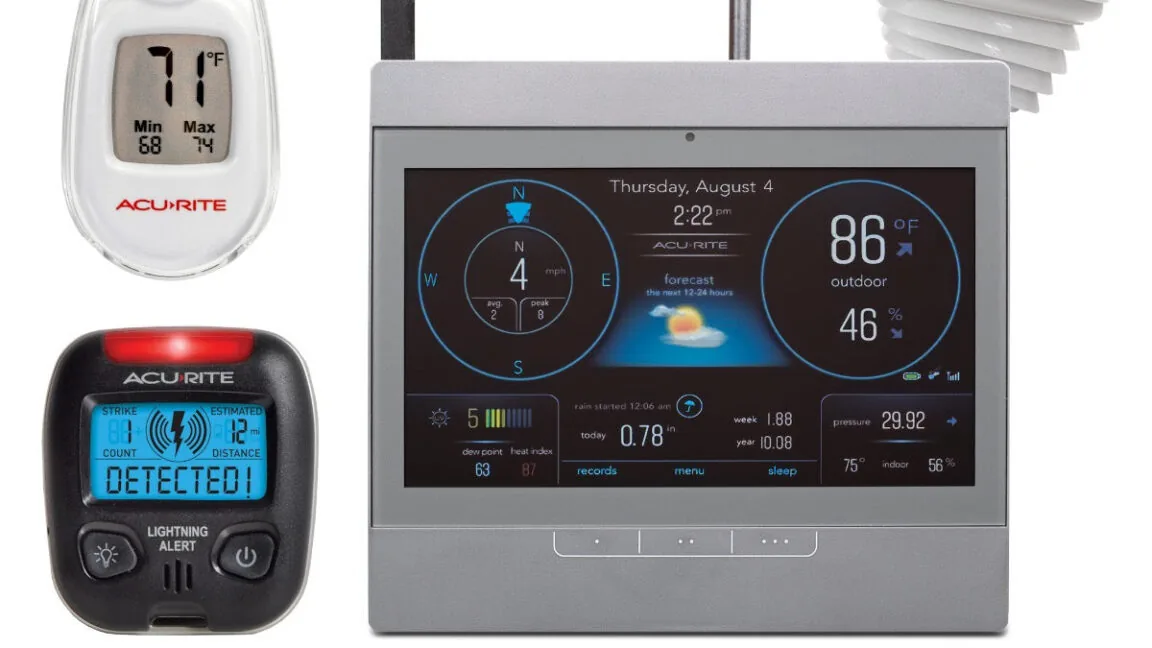
AcuRite, a manufacturer of smart weather-monitoring devices, announced this month that its popular "My AcuRite" iOS and Android application, a staple since 2016, will cease functioning after May 30. Customers are now required to migrate to "AcuRite NOW," a successor app launched in June 2025, to manage their connected gadgets. This transition has sparked considerable frustration among AcuRite's user base, particularly due to perceived limitations in the new application compared to its predecessor. Features such as renaming multiple temperature sensors, organizing on-screen sensor displays, and reporting temperatures beyond whole numbers are reportedly missing from AcuRite NOW, though the company states it is developing solutions for some of these issues.
Jeff Bovee, VP of product development at AcuRite, explained the company's decision to Ars Technica, highlighting "AcuRite NOW"'s foundation on a "newer cloud-connected platform" that offers enhanced flexibility. He contrasted "My AcuRite," which he described as primarily a "weather-station cloud dashboard," with "AcuRite NOW," envisioned as a more expansive, connected-device platform. "The underlying technology [of My AcuRite] was more limited in terms of long-term app development, modern cloud services, smart home integration, and support for newer connected devices," Bovee stated. The new architecture, he claimed, provides a "stronger foundation" for feature enhancements like extended weather data history, improved user account management, device pairing, and notifications. Furthermore, AcuRite NOW integrates with Tuya's SmartLife IoT ecosystem, allowing compatibility with other third-party smart gadgets.
Transitioning to a Modernized Ecosystem
The shift also includes a new subscription fee for sharing data with the real-time weather service Weather Underground, a feature previously available for free with "My AcuRite." Bovee asserts that "AcuRite NOW" offers superior support for this data sharing. While the financial implications for AcuRite are evident, Bovee emphasized the unsustainability of maintaining two separate applications. "The technology behind "My AcuRite" is obsolete and can no longer be maintained," he explained. He cited ongoing costs associated with maintenance, updates, hosting, monitoring, security, and ensuring compatibility with evolving operating systems, cloud services, and third-party integrations. Even if the old app continued to function for some users, the required backend infrastructure demands significant and continuous investment.
Coinciding with the app's retirement, AcuRite also removed its web-based dashboard, which allowed users to manage devices via a browser. Bovee noted that the web dashboard, mobile app, cloud services, and device connections were all linked to the same older system, making separate maintenance impossible after the platform's retirement. AcuRite plans to introduce a new web dashboard for "AcuRite NOW," though a release date remains unconfirmed. Despite user dissatisfaction, Bovee expressed hope that customers will not abandon their AcuRite devices, given the company's efforts to "bring those legacy weather stations along" to the new platform. "We understand the frustration that creates. We’re not dismissing that feedback," Bovee said. "We’re asking for patience as our team continues to fix issues, improve usability, and build out the new platform. Our goal is to earn back confidence by making AcuRite NOW the best user experience in home weather stations."
This situation reflects a broader challenge faced by makers of smart gadget devices and their early adopters. Many companies struggle with long-term business models, leading to situations where users who have already purchased devices find themselves facing new costs or reduced functionality. The decision to require users to pay for features like Weather Underground integration, previously free, highlights the pressure on connected device makers to monetize their platforms. The forced migration to a new app, especially when it initially lacks features of the old one, can be a difficult experience for loyal customers. As the IoT landscape evolves, users are increasingly vulnerable when vendors alter their business practices, whether through ads, device bricking, subscription fees, or the deprecation of existing software. While innovation is expected, the challenge for manufacturers is to evolve without alienating their existing customer base.