
Xreal Project Aura XR Smartglasses Redefine AR Hardware
Xreal has unveiled Project Aura, a next-generation augmented reality smartglasses platform designed for immersive mixed-reality experiences. The device marks a significant step forward in wearable XR technology.

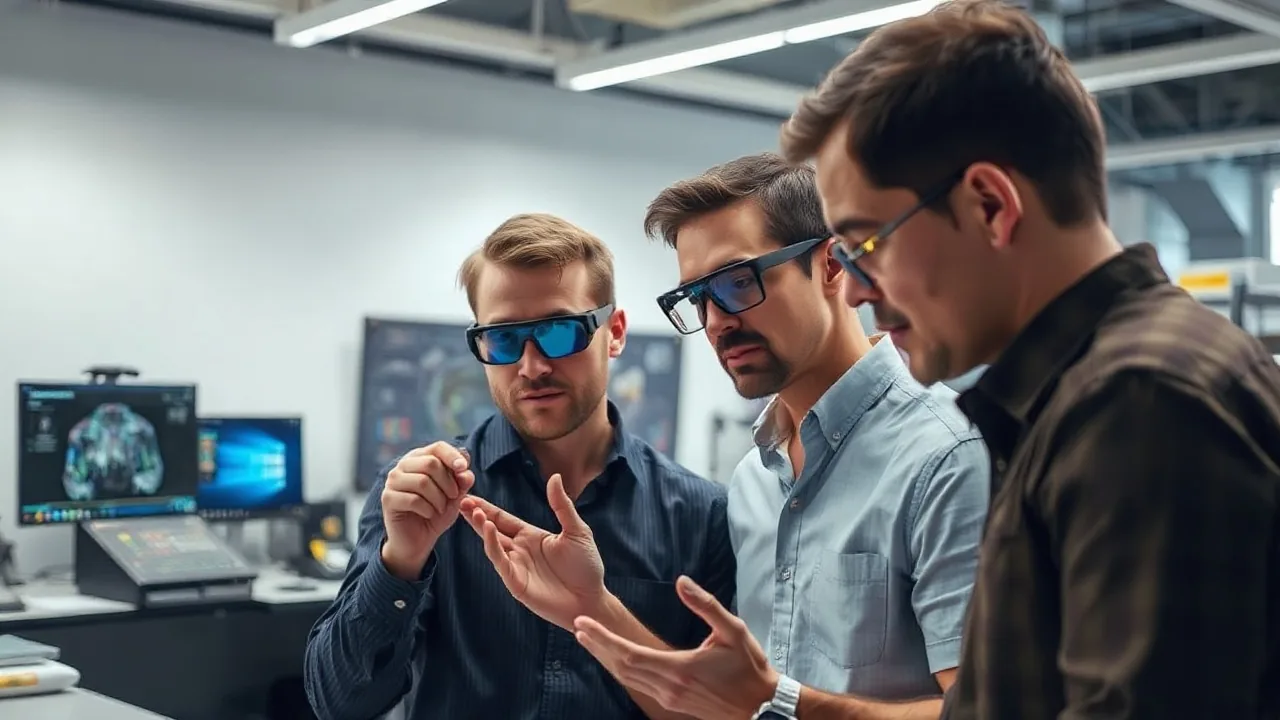
Xreal announced Project Aura in May 2026, introducing a new category of XR smartglasses engineered for everyday augmented reality use. The device combines optical displays, spatial computing, and AI-driven features into a form factor that closely resembles conventional eyeglasses.
The hardware sits at the intersection of consumer accessibility and technical sophistication. Project Aura weighs approximately 100 grams and features waveguide displays capable of rendering virtual content with 50-degree field of view. Battery life reaches up to 4 hours under typical usage conditions.
"We are focused on creating smartglasses that integrate seamlessly into daily life rather than serving as novelty devices," said Xreal's product director during a press briefing. "Project Aura represents our commitment to bridging the gap between mobile computing and true spatial experiences."
Core Specifications and Design
Project Aura incorporates several technical advances over earlier AR devices. The platform includes:
- Dual micro-OLED displays with dynamic dimming capability
- Qualcomm Snapdragon XR2 Gen 2 processor for on-device computing
- Hand and eye tracking via integrated infrared cameras
- Spatial audio with bone conduction speakers
- Wi-Fi 7 and 5G connectivity options
- Open ecosystem SDK for third-party app development
The device supports pass-through video, allowing users to see the physical world while augmented reality overlays remain visible. Xreal engineered the optical stack to minimize glare and chromatic aberration, recurring challenges in earlier wearable displays.
Weight distribution was optimized to prevent discomfort during extended wear sessions. The nose bridge design includes adjustable nose pieces to accommodate different face shapes, addressing ergonomic concerns raised by early AR headset adopters.
Positioning in the XR Landscape
Project Aura occupies a distinct market position relative to competitors. Unlike VR headsets that fully isolate users from their surroundings, Project Aura prioritizes mixed-reality scenarios where AR content coexists with the physical environment.
Xreal positioned the device as a successor to its earlier Xreal Air line while incorporating lessons from the broader wearable computing market. The company targets enterprise adoption in design, engineering, and spatial collaboration workflows, alongside consumer applications in gaming and navigation.
Industry analyst Marcus Chen from tech research firm Vertex noted: "Project Aura demonstrates that AR glasses are transitioning from experimental prototypes to genuinely usable consumer products. The weight, battery life, and display quality represent meaningful progress."
The device ships with developer tools for building spatial apps. Xreal released comprehensive documentation and SDKs for both native applications and cross-platform frameworks like Unity and Unreal Engine. Early developers have created proof-of-concept apps spanning architectural visualization, medical imaging overlays, and location-based entertainment.
Pricing, Availability, and Developer Strategy
Xreal set Project Aura's launch price at $1,899 for the base model in the US market. A limited developer edition became available in May 2026, with broader consumer availability expected by Q3 2026.
The company plans to release firmware updates quarterly through 2027, focusing on:
- Expanded gesture recognition and voice command capabilities
- Integration with mainstream social platforms and productivity apps
- Enhanced battery optimization algorithms
- Improved hand-tracking accuracy at distance
Xreal established a developer fund with $50 million allocated to subsidize creation of commercial AR gadgets and applications. This strategy mirrors approaches used successfully by smartphone platforms seeking early ecosystem momentum.
The company has partnerships with major handset makers and cloud service providers. Integration with leading productivity suites means workers can access Word, Excel, and Teams experiences in spatial form while wearing Project Aura.
Security features include iris recognition for user authentication and encrypted processing of eye-tracking and hand-gesture data. Xreal committed to not selling user behavioral data to third parties, a privacy stance that distinguishes the device in an industry often criticized for invasive tracking.
Initial demand has exceeded production capacity. Xreal reports pre-order backlogs extending into July 2026 across North America and Europe. Supply chain constraints on specialized display components limit production to approximately 100,000 units through the remainder of 2026.
Project Aura signals maturation in wearable XR technology. While challenges remain around battery density, field of view, and app ecosystem breadth, the device demonstrates that AR glasses are becoming practical tools rather than experimental hardware. The market response will likely influence product roadmaps across the industry.