
Xreal Project Aura: VR Headset Power in Smart Glasses
Xreal unveiled Project Aura at Google I/O 2026, merging VR capabilities into a smart glasses form factor. A pocket-sized compute puck powers the glasses, offering a full Android XR experience without traditional VR headset bulk.

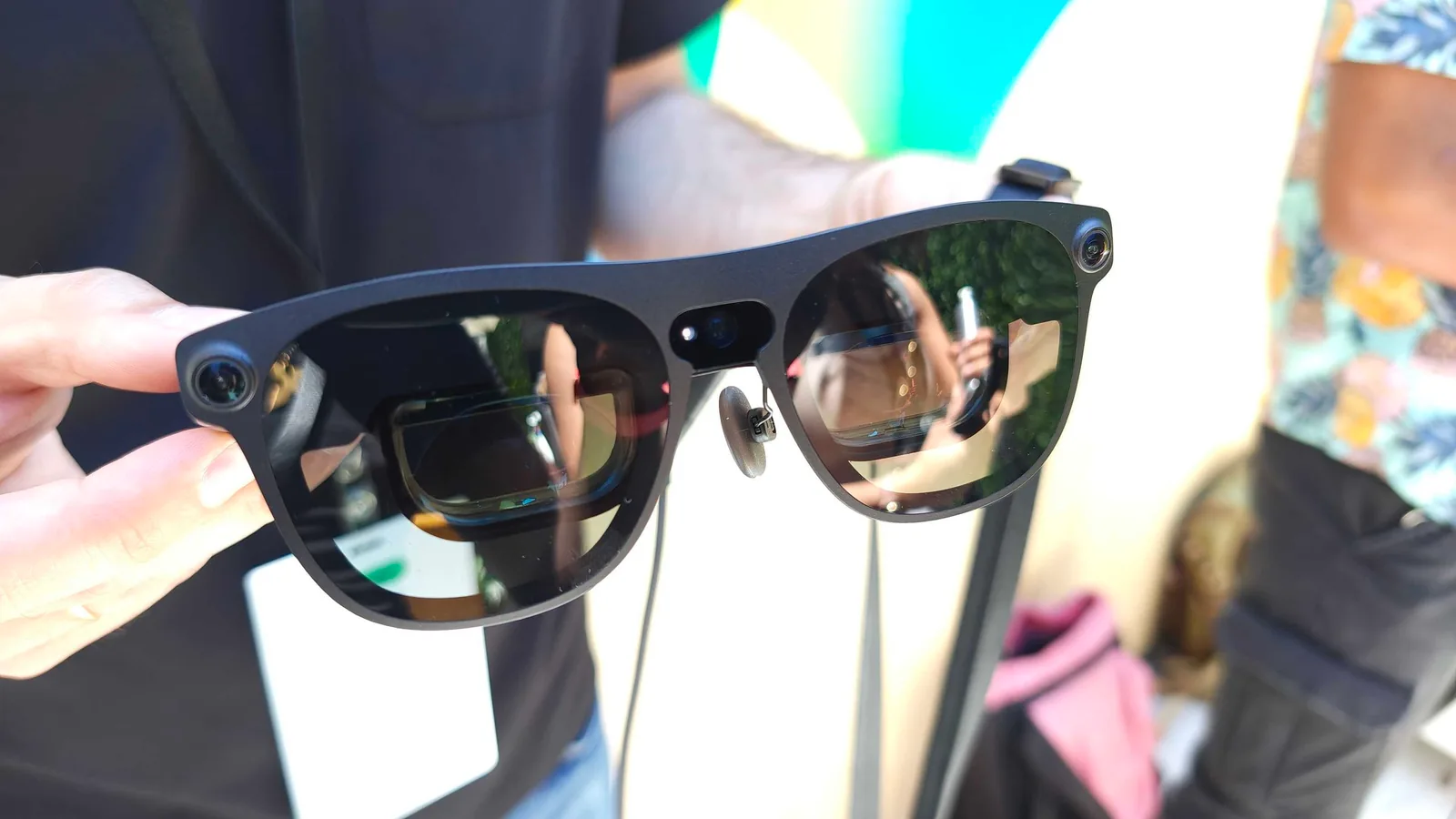
Xreal showcased its Project Aura at Google I/O 2026, a groundbreaking hybrid smart glasses device designed to deliver a virtual reality (VR) experience within a sleek, wearable form factor. The innovation aims to provide the full power of the Android XR platform without the bulk and weight of conventional VR headsets. Project Aura integrates dual displays, speakers, and cameras directly into the lenses, significantly upgrading the smart glasses experience. To achieve this lightweight design, Xreal has opted for a unique approach: a small, pocket-friendly compute puck containing the battery, Snapdragon processor, and other substantial components, leaving the glasses themselves minimal and appearing much like regular eyewear.
The glasses are equipped with an upgraded X1S chip and a suite of cameras enabling spatial tracking, which is crucial for a truly immersive VR spatial experience. This new chip offers enhanced speed and multitasking capabilities compared to the X1 chip found in the current-generation Xreal One glasses. Xreal officially detailed Project Aura after its Google I/O 2026 debut, a year after its initial unveiling. The company indicated that the glasses are expected to launch commercially this year, with potential release alongside new Samsung AI glasses in the fall or closer to the holiday season.
A New Paradigm for Extended Reality
Unlike current-generation smart glasses such as the Xreal 1S or Viture, which function primarily as external monitors tethered to other devices like phones or the Nintendo Switch 2, Xreal Project Aura is designed for standalone operation. While it can still serve as a wearable monitor, its primary function is to connect to the separate compute puck for a complete Android XR experience. This includes full spatial and hand tracking for intuitive interaction with applications. The system supports all existing Android 2D and spatial apps, promising a versatile user experience.
The compute puck itself resembles a smartphone and represents an evolution of the 2024 Xreal Beam Pro, featuring dual USB-C ports. Although Xreal has not specified the exact Snapdragon chipset for the puck, its design for the full Android XR experience suggests a processing capability far exceeding that of chipsets in current all-in-one XR glasses like Ray-Ban Display or the upcoming Google and Samsung offerings. Project Aura boasts a 70-degree field of view (FoV), which is wider than most current smart glasses but narrower than VR headsets like the Meta Quest 3. This makes it well-suited for mixed-reality gaming and applications that blend virtual elements with the real world.
Early hands-on experiences suggest that Xreal and Google have made significant strides in translating the VR experience into a compact smart glasses format. Analysts note that the narrower FoV effectively translates the Galaxy XR experience, and image quality and performance are comparable to headsets for daily tasks. The integration of Gemini into the glasses allows for facial detection, automatically dimming the display when someone approaches, enhancing the sense of a seamless, interactive augmented display. This development marks a significant step toward making advanced XR technology more accessible and integrated into everyday life.