
FIFA World Cup 2026: Future Mobility Takes Center Stage
The 2026 FIFA World Cup in North America will feature autonomous buses, smart traffic systems, and real-time mobility data, marking a major test of next-generation transport technology at a global sporting event.

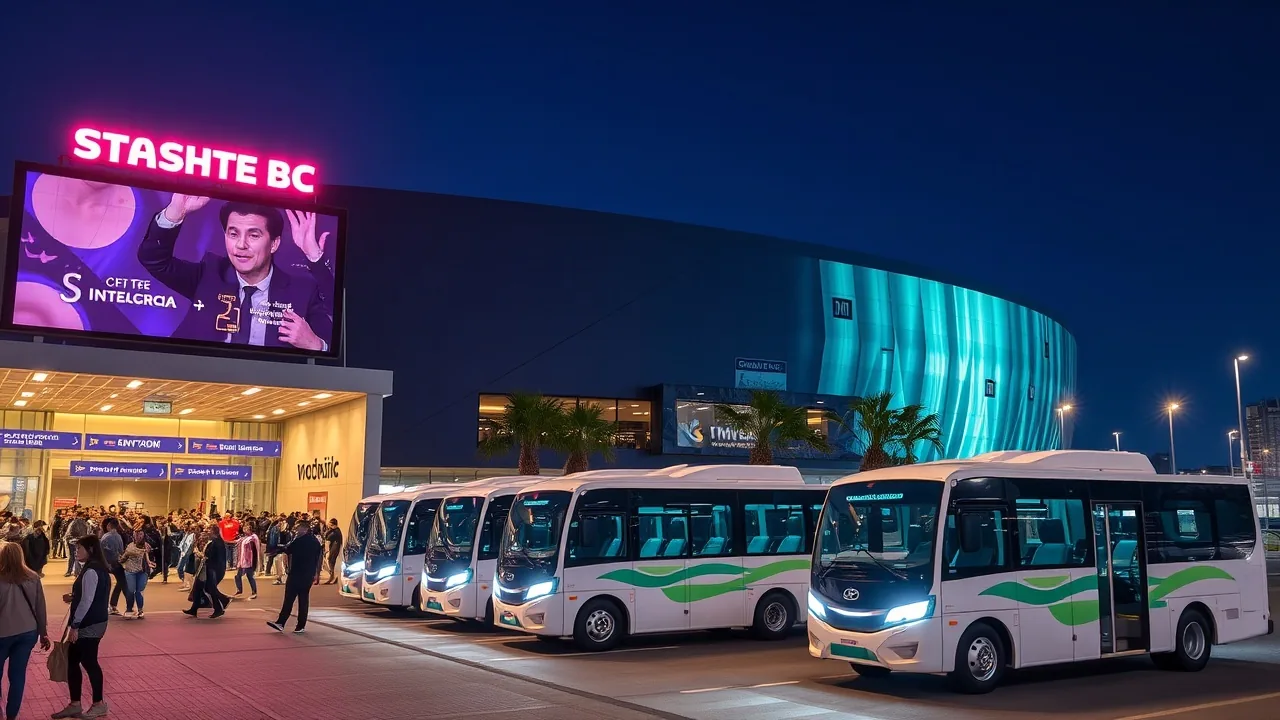
North America's first FIFA World Cup since 1994 arrives in June 2026 with an infrastructure agenda that extends far beyond the pitch. Tournament organizers across the United States, Mexico, and Canada are deploying autonomous transport systems, predictive traffic management, and integrated mobility hubs as part of a coordinated effort to move millions of spectators efficiently while showcasing how cities can solve congestion at scale.
The tournament will span 16 stadiums across three nations, with venues in Los Angeles, New York, Mexico City, and Toronto among others. Each host city is implementing its own version of next-generation mobility infrastructure, turning the World Cup into a de facto technology showcase for the sports and urban planning industries.
"We see the 2026 World Cup as a critical inflection point for proving that autonomous and connected vehicles can handle real-world demand under pressure," said Dr. Margaret Chen, Director of Urban Mobility Innovation at the North American Transport Council, in a June 2026 interview. "The convergence of a global audience, fixed events, and coordinated city planning creates the ideal testbed."
Autonomous Fleets and Smart City Infrastructure
Los Angeles will operate a fleet of 150 autonomous shuttle buses dedicated to moving fans between the SoFi Stadium complex in Inglewood and regional transit hubs. The vehicles, manufactured by a leading North American autonomous vehicle developer, use 5G connectivity to coordinate routing and adjust capacity in real time based on game schedules and traffic patterns.
Toronto has integrated its autonomous vehicles with a centralized smart cities traffic platform that monitors 40,000 sensors across the city's core. This system predicts congestion 45 minutes ahead and dynamically reallocates shuttle routes to bypass bottlenecks. Canada's largest city expects to handle approximately 2.2 million spectator trips during its four group-stage matches and knockout rounds using this coordinated approach.
The infrastructure also includes:
- Real-time passenger information displayed at 280 digital transit stations
- Integrated payment systems allowing single-ticket use across bus, rail, and autonomous vehicle networks
- AI-powered demand forecasting that adjusts vehicle deployment 30 minutes before stadium events conclude
- Battery charging stations installed at 18 transit hubs across tournament cities
Mexico City's approach mirrors Los Angeles in scale but emphasizes integration with existing metro and bus networks. The city will deploy 200 autonomous vans as a first-mile and last-mile solution, connecting the metro terminus directly to Estadio Azteca and the newer Estadio BBVA in Monterrey region.
Data Collection and Long-Term Urban Planning Impact
Beyond moving fans during matches, the tournament serves as a high-resolution data collection event for city planners. Every autonomous vehicle, every traffic signal, and every transit app generates precise information about how humans move through dense urban environments when facing a singular, time-bound goal.
Host cities are implementing standardized metrics to capture transportation performance: average trip time, vehicle utilization rates, carbon emissions per passenger mile, wait times, and customer satisfaction scores. This data will be analyzed by urban planners well into 2027 to inform permanent infrastructure investments.
"The 2026 World Cup gives us six weeks of incredibly rich behavioral data that would normally take years to collect through surveys and simulation," explained James Rodriguez, Chief Urban Planner for the Greater Toronto Area, in an email statement. "We're documenting how people choose routes, when they abandon plans, and what actually works at scale. That informs infrastructure spending for the next decade."
The tournament also accelerates standardization efforts. FIFA, in coordination with the U.S. Department of Transportation and transport ministries in Canada and Mexico, has established a common data-sharing protocol. This allows mobility data to flow securely between city systems and research institutions without exposing individual trip information.
Sports Technology and Spectator Experience
Autonomous urban planning infrastructure directly improves the fan experience. Spectators can book rides through a dedicated FIFA mobile app, which reserves a specific autonomous vehicle and guarantees arrival within a 20-minute window. The app integrates team schedules, ticket information, and real-time traffic conditions.
Stadium parking lots are being redesigned to accommodate autonomous vehicle dispatch zones rather than traditional parking. These zones free up land for pedestrian gathering areas, food and beverage vendors, and fan zones. The shift reflects a broader rethinking of how major venues accommodate crowds when human-driven cars are no longer the primary arrival mechanism.
International broadcasters are also capturing the mobility story. ESPN, Univision, and international partners have secured rights to feature segments on how spectators navigate to matches, positioning the 2026 tournament as a turning point in how sports events integrate sports technology into the entire fan journey, not just what happens on field.
The economic stakes are substantial. Smooth transportation for 2.8 million expected international visitors and 5.2 million domestic spectators directly correlates to ticket revenue, concession spending, and hotel occupancy. Cities that successfully minimize travel friction will see higher repeat attendance and stronger commercial performance.
By June 2026, the FIFA World Cup will have proven whether autonomous vehicles, smart city systems, and integrated mobility platforms can operate at the scale and coordination required for a truly global event. The results will shape how future Olympic Games, World Cups, and major conferences approach transportation and urban planning.