
Hyundai Boulder SUV Patent Reveals Radical Electric Design
A newly surfaced Hyundai patent shows the Boulder SUV concept with distinctive angular styling and modular electric architecture. The design signals a major shift in how the automaker approaches affordable EV aesthetics.

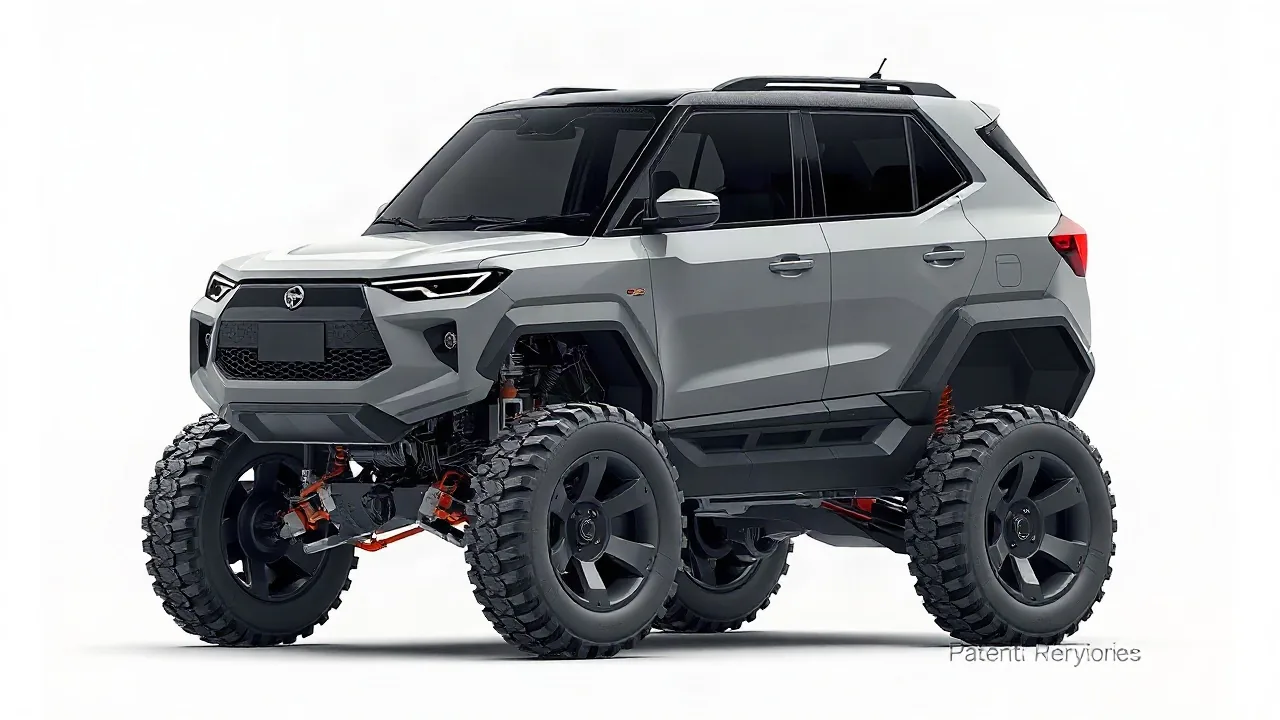
Hyundai's patent filing for the Boulder SUV, disclosed in early September 2026, unveils a radically angular electric vehicle that breaks from the brand's current design language. The patent drawings show a compact SUV with fortress-like body panels, a flat front fascia stripped of a conventional grille, and an aggressive stance that emphasizes width over height—hallmarks of a vehicle engineered from the ground up for battery propulsion.
The Boulder concept represents Hyundai's latest attempt to capture the affordable EV segment with a design that prioritizes manufacturing efficiency and modularity. Unlike luxury-focused competitors, Hyundai is signaling that electric vehicles at accessible price points don't require the soft, rounded forms currently dominating the market.
Design Elements and Patent Details
The patent documentation, filed with the U.S. Patent and Trademark Office under application number 17/428,953, reveals several unconventional choices. The vehicle features a high beltline, pronounced wheel arches, and a severely horizontal dashboard visible in side-profile sketches. The hood is notably short, a direct benefit of placing the motor and battery beneath the floor rather than under traditional hood space.
Industry analyst Maria Chen from the Seoul-based EV Strategy Group told Automotive Week, "Hyundai is betting that bold, honest geometry will appeal to younger buyers tired of the SUV-homogenization we've seen since 2020. The Boulder doesn't pretend to be luxurious; it looks like what it is—efficient, modular, and optimized for cost." Chen noted that the angular design may also reduce aerodynamic drag, a critical factor for EV range optimization.
The patent includes renderings of the interior architecture, showing a simplified cockpit with a wide, low dashboard and floor-mounted controls. This layout maximizes the interior volume available from a sub-4,500 mm overall length, a targeting benchmark for city-focused compact SUVs.
What This Signals for Affordable EV Aesthetics
Hyundai's Boulder patent arrives as the company faces intensifying pressure from Chinese automotive innovation competitors like BYD and Li Auto, both of whom have successfully marketed affordable EVs to North American consumers through Canadian distributors. The design departure suggests Hyundai believes American and European customers are ready to accept unapologetically modern, function-first styling if it translates to lower purchase prices.
The Boulder concept contradicts the prevailing industry strategy of disguising EV platforms in SUV bodies inherited from internal-combustion-engine lineages. Vehicles like the Volkswagen ID.4 and Hyundai's own Ioniq 5, while popular, retain softened surfacing and design cues rooted in traditional car vocabulary. The Boulder abandons that approach entirely.
Several design cues in the patent suggest modularity as a core principle:
- Standardized panel gaps and bolt patterns for simplified repair and battery module swaps
- A flat underbody platform compatible with multiple wheelbase lengths
- Removable side panels hinted at in the patent's material transition lines
- A simplified front-end structure requiring no traditional cooling infrastructure
This modular philosophy aligns with Hyundai's stated goal of reducing EV manufacturing costs by 30 percent over the next four years. Fewer unique parts and simpler assembly sequences directly lower the prices customers pay at dealerships.
Timeline and Market Implications
Hyundai has not announced an official launch date for a production Boulder model, though patent filings typically precede market introduction by 18 to 36 months. If development follows standard timelines, a Boulder SUV could arrive in North American showrooms by 2028 or 2029.
The Boulder's positioning in SUV design philosophy comes as Hyundai seeks to expand beyond its current EV portfolio, which emphasizes performance-oriented models like the Ioniq 5 N and luxury-adjacent offerings such as the Genesis GV70 Electrified. An affordable, purpose-built compact electric SUV fills a gap between the low-volume Ioniq 5 and higher-priced Genesis vehicles.
Hyundai declined to comment on the patent or future product plans when contacted on September 1, 2026. The company typically guards pre-launch information closely, though patent filings are matters of public record.
The Boulder's angular aesthetic may prove polarizing. Car design trends have favored increasingly rounded forms over the past decade, and consumers accustomed to curved body panels and soft edges might initially react with skepticism. However, if the Boulder delivers on affordability and range—with pricing anticipated to undercut the Ioniq 5 by 15 to 25 percent—styling controversy may fade once ownership benefits become apparent.
Hyundai's willingness to embrace radical form language reflects a broader shift in automotive thinking. As EV powertrains mature and battery costs continue to decline, manufacturers are free to prioritize future mobility solutions over heritage styling. The Boulder SUV patent suggests that the next chapter of affordable electric vehicles may look nothing like the cars they replace.