
Ceuta's Green Tech Push: Clean Energy for a Border City
The Spanish enclave of Ceuta is accelerating sustainable infrastructure projects, including renewable energy systems and water management initiatives, as part of a broader regional climate strategy for 2026.

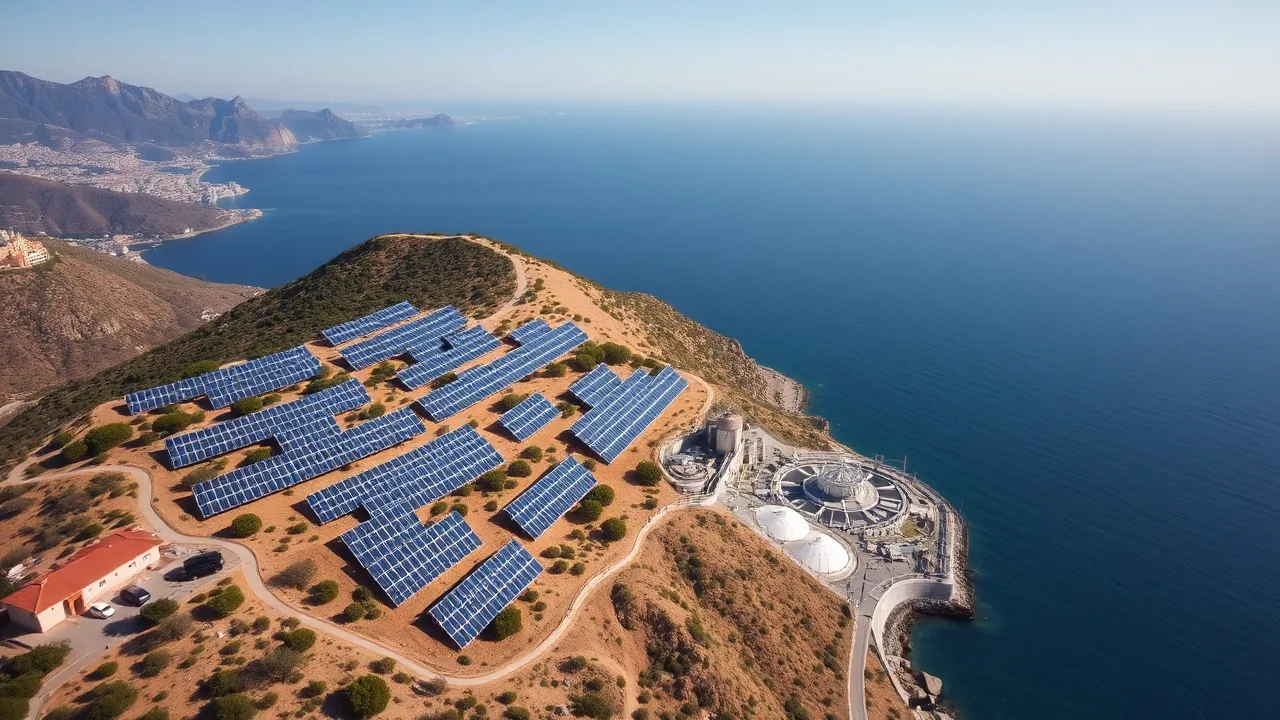
Ceuta, the Spanish autonomous city perched on Morocco's northern coast, is launching its most ambitious green technology initiative to date. Officials announced in July 2026 that the port city will install 45 megawatts of solar capacity over the next three years, alongside modernized desalination plants powered by renewable energy. This marks a shift from Ceuta's historical reliance on diesel generators and imported grid power.
The project arrives as Mediterranean coastal cities face mounting pressure to reduce carbon emissions and adapt to climate variability. Ceuta's geographic isolation—surrounded by sea on three sides and bordered by Morocco on the fourth—has historically limited energy options and created infrastructure challenges unique among Spanish territories.
Maria Delgado, municipal sustainability director for Ceuta, stated in a recent briefing: "We are not waiting for Brussels mandates. Our citizens and businesses need reliable power at lower cost, and the sun over the Strait of Gibraltar is a resource we cannot ignore." The city government has allocated 62 million euros from national climate funds and European Union grants to support the first phase.
Solar and Water: Twin Priorities
Ceuta's clean energy roadmap centers on two interconnected systems. The solar array will be distributed across municipal buildings, industrial zones, and a new 12-hectare facility south of the city. Excess generation will be stored in lithium-ion batteries managed by grid operators, reducing peak-hour fuel consumption.
Water scarcity poses an equal challenge. Ceuta draws 70 percent of its freshwater from two desalination plants built in the 1990s, both energy-intensive and operationally expensive. The city has contracted with Barcelona-based Aquatech Engineering to retrofit these facilities with renewable-powered reverse-osmosis systems. The retrofit is expected to cut water production costs by 28 percent within 18 months.
- First solar installation: 12 MW capacity, operational by Q2 2027
- Water treatment upgrade: reduced energy input from 4.5 kWh per cubic meter to 3.2 kWh per cubic meter
- Battery storage: 18 MWh capacity to stabilize grid during peak demand
- Expected CO2 reduction: 34,000 metric tons annually by 2029
Why Ceuta Matters for Mediterranean Sustainability
Ceuta's sustainability strategy signals how isolated or resource-limited regions can pivot toward environmental solutions despite geographic and political constraints. The city is home to 85,000 residents and serves as a major cargo terminal; energy demand has grown 6 percent annually over the past decade.
European analysts note that Ceuta's approach differs from larger metropolitan hubs. "Small, isolated cities like Ceuta must optimize every resource because they cannot rely on mainland grid backup the way continental regions can," said Dr. Javier Ruiz, senior energy analyst at Madrid-based think tank Observatorio de Energía Sostenible. "Success here becomes a template for island communities and enclaves across the Mediterranean and beyond."
The project also reflects Spain's 2026 climate commitments. The Spanish government has pledged to reduce greenhouse gas emissions by 55 percent relative to 1990 levels by 2030. Ceuta's solar and water initiatives contribute roughly 1.2 percent of the total national reduction target for autonomous cities.
Economic and Social Dimensions
Local contractors and urban development firms are already bidding for construction and installation contracts. The city expects the initiative to create 280 permanent jobs in renewable energy maintenance, water treatment, and grid management by 2028. Several vocational schools in Ceuta and nearby Malaga have launched training programs in solar installation and battery systems.
Business leaders have responded cautiously. The Chamber of Commerce in Ceuta estimates that lower electricity and water costs will reduce operational expenses for the port by 8 to 12 million euros over five years. Tourism-related businesses, which depend on reliable power for hotels and restaurants, view the initiative as stabilizing long-term costs.
Community concerns remain. Environmental groups have raised questions about the ecological footprint of the 12-hectare solar facility, particularly regarding habitat impacts for migratory bird species that traverse the Strait. Ceuta's environmental ministry has committed to an independent ecological survey before ground-breaking in Q4 2026.
Financing and Timeline
Ceuta secured funding through the European Green Deal Recovery Plan and Spain's National Recovery and Resilience Plan. The city will contribute 18 million euros from municipal bonds. Phase one, valued at 47 million euros, is slated for completion by mid-2028. A second phase, contingent on performance metrics from phase one, could add an additional 8 MW of solar capacity and modernized grid storage.
The initiative also includes digital infrastructure: a smart grid management system will monitor energy demand in real time and optimize renewable generation dispatch. This system is being developed in partnership with the Universitat Autònoma de Barcelona's engineering faculty.
Ceuta's green technology ambitions reflect a broader European trend toward green tech adoption in smaller urban centers. As energy costs rise and climate pressures intensify, isolated or peripheral cities are becoming laboratories for sustainable innovation. Success in Ceuta could influence policy decisions for other Spanish autonomous territories and Mediterranean enclaves facing similar resource constraints.