
Clean energy innovations accelerate sustainability in 2026
Major breakthroughs in solar, wind, and battery technology are reshaping the clean energy landscape as 2026 marks a turning point for climate tech deployment across the United States.

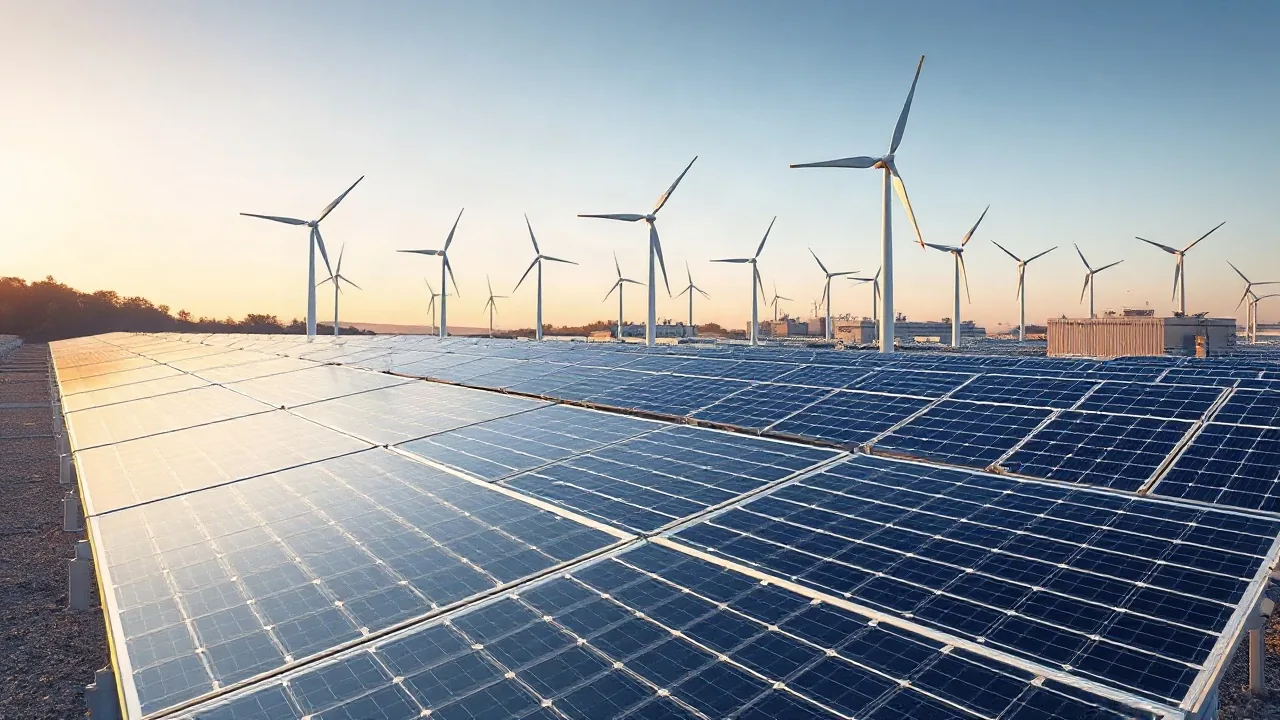
The clean energy sector reached a critical inflection point in early 2026, with three major technological advances converging to accelerate the nation's transition away from fossil fuels. Solar efficiency records fell in rapid succession this spring, grid-scale battery costs dropped below $80 per kilowatt-hour for the first time, and offshore wind installations began generating power at record capacity factors along the Atlantic coast.
"We're witnessing the moment when renewable energy stops being an alternative and becomes the default choice for new power generation," said Dr. James Chen, director of the Energy Futures Initiative, in a September 2026 interview. "The economics have fundamentally shifted in ways we didn't anticipate even two years ago."
The cost compression across multiple technologies reflects years of sustained investment and manufacturing scale-up. Photovoltaic panel prices have declined 89% since 2010, but 2026 brought innovations that improved power conversion without requiring expensive materials. Perovskite solar cells achieved 31% efficiency in laboratory settings, positioning tandem solar architectures for commercial deployment by 2027.
Battery technology and grid storage reshape power markets
Sustainability efforts at the grid level have been constrained for years by the cost and performance limitations of energy storage. That constraint is rapidly disappearing. Lithium iron phosphate batteries now dominate the market at $78 per kilowatt-hour in wholesale pricing, down from $132 in 2020. Several manufacturers have begun shipping long-duration storage systems using sodium-ion chemistry, which costs 40% less than lithium alternatives and carries no supply-chain risk tied to cobalt or nickel extraction.
The scale of deployment is accelerating. In the first half of 2026, the United States added 8.4 gigawatts of new battery storage capacity, compared to 5.1 gigawatts in all of 2025. California, Texas, and Florida led the buildout, driven by falling prices and regulatory support for grid reliability.
Key storage technologies entering commercial phase include:
- Iron-air batteries with round-trip efficiency exceeding 70% and 100-plus-hour discharge capability
- Flow battery systems using abundant vanadium for multi-day storage at utility scale
- Thermal storage solutions pairing concentrated solar plants with molten-salt systems
- Compressed-air energy storage retrofitted into depleted natural-gas caverns across the Midwest
These advances address a historical problem: renewable energy generation is variable, and grids require stable, dispatchable power. Storage fills that gap without burning natural gas, cutting carbon emissions from the power sector by an estimated 18% in 2026 compared to 2025.
Climate tech venture capital and deployment acceleration
Climate tech funding in 2026 reflects confidence in near-term commercialization. Venture capital commitments to energy storage, grid software, and carbon capture reached $14.2 billion in the first half of 2026, with corporate buyers from Microsoft, Google, and Amazon combining to sign power purchase agreements for 18 gigawatts of new clean capacity.
Industrial decarbonization has emerged as the highest-priority segment. Steel, cement, and chemicals production account for roughly 30% of global carbon emissions, yet these sectors have historically lacked cost-competitive alternatives to fossil-fuel-based processes. In 2026, hydrogen electrolyzer costs fell to $3.50 per watt, making green tech hydrogen cost-competitive with steam methane reforming in regions with low-cost renewable electricity.
Several major manufacturers announced plans to shift production by 2028:
- ArcelorMittal will operate a 100,000-ton-per-year green steel facility in Kentucky by mid-2027
- Holcim committed to supplying 15% of its cement from calcium-looping plants powered by waste heat recovery
- BASF began construction of a green ammonia plant in Louisiana, using electrochemical nitrogen fixation
Transportation represents another major frontier. Electric vehicle sales reached 43% of new light-duty vehicle sales in September 2026, up from 36% in September 2025. Charging infrastructure expanded to 185,000 public fast-charging outlets nationwide, with average charging times for 300-mile range dropping to 18 minutes at optimal hardware.
Grid integration of millions of electric vehicles is now a technical and economic reality rather than a future projection. Vehicle-to-grid technology enables 8.7 million registered EVs to serve as distributed storage resources, collectively offering 12 gigawatts of peak-discharge capacity during afternoon demand peaks.
Policy and market momentum entering the final quarter
Federal support for clean energy remains strong despite political uncertainty. The Inflation Reduction Act continues funding deployment of solar, wind, and storage systems through production and investment tax credits, with $38 billion in incentives disbursed to date in 2026. State-level renewable energy standards now cover 60% of US electricity demand, up from 44% in 2023.
However, grid modernization remains a bottleneck. Transmission capacity constraints limit how quickly renewable electricity can flow from resource-rich regions like West Texas and the Great Plains to population centers. Permitting timelines for new transmission lines average 8 to 12 years, creating a mismatch between generation growth and distribution capability. Several states and the Federal Energy Regulatory Commission have launched expedited permitting pathways, though implementation remains inconsistent.
The convergence of lower technology costs, increased manufacturing capacity, and supportive policy creates conditions for sustained acceleration through the end of 2026 and beyond. Energy analysts project that renewables will supply 50% of US electricity generation by 2030, a target that seemed optimistic as recently as 2023 but now appears conservative given current deployment trends.