
Clean Energy Solutions Strengthen Winter Weather Resilience
As extreme winter storms intensify in 2026, renewable energy systems and grid modernization are becoming critical tools for climate adaptation. Utilities across the US are deploying sustainable technologies to ensure stable power during severe cold snaps.

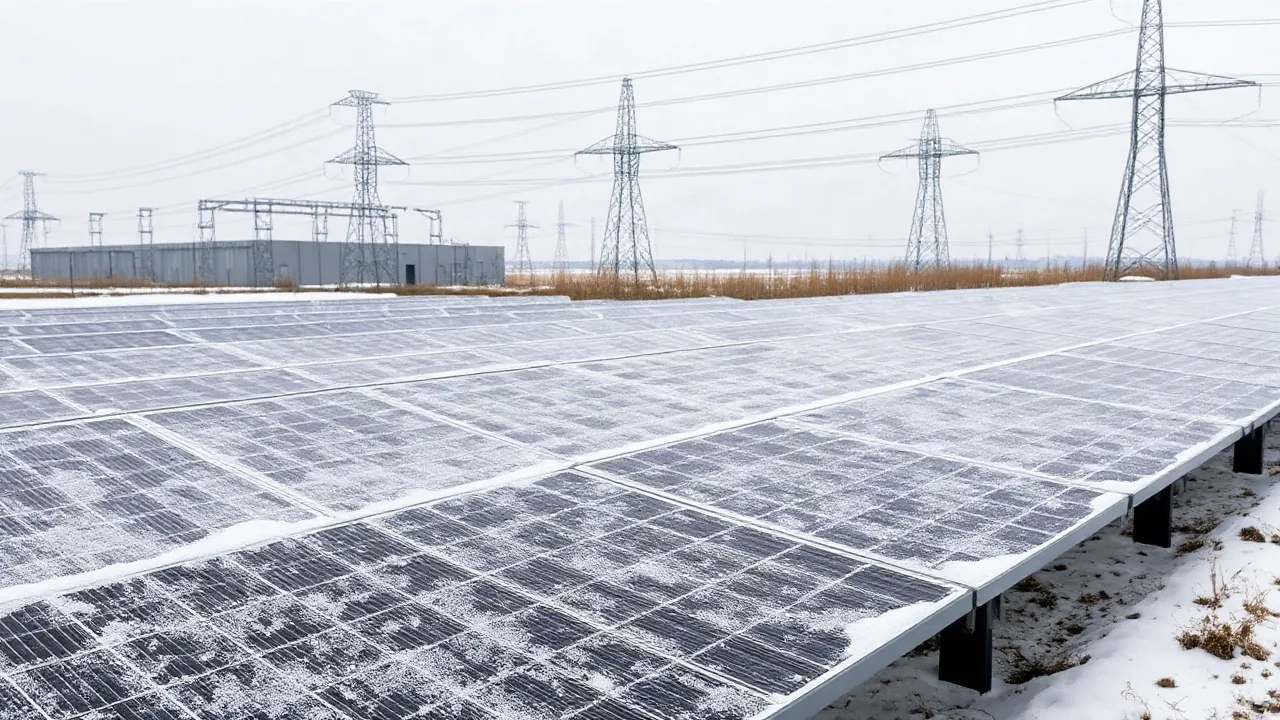
When a polar vortex brought temperatures below minus 20 degrees Fahrenheit to Texas in early February 2026, the state's hybrid power grid—combining wind turbines, solar arrays, and battery storage—maintained more consistent service than during comparable outages a decade earlier. The performance gap reflects a broader shift: clean energy infrastructure is now being engineered explicitly for climate resilience, not just emissions reduction.
Extreme winter weather events are striking US power grids with increasing frequency and severity. The National Oceanic and Atmospheric Administration documented 31 billion-dollar weather disasters in 2025 alone, with winter storms accounting for roughly one-fifth of that total. System operators and grid planners have concluded that traditional fossil fuel dominance no longer guarantees grid stability during volatile conditions.
"The old assumption that coal and gas plants are inherently more reliable during winter simply doesn't hold up anymore," said Dr. Sarah Chen, senior analyst at the American Clean Power Association, in a September 2026 interview. "Modern renewable energy systems, paired with advanced storage and smart controls, are now delivering the dependability grid operators need when ice storms and deep freezes hit."
Battery Storage and Grid Modernization Lead the Charge
The winter grid crisis of 2023 exposed critical vulnerabilities. During that event, natural gas supply chains froze, generation units failed, and rolling blackouts cascaded across three states. Since then, investment in energy resilience infrastructure has accelerated sharply.
Grid operators are prioritizing three technologies:
- Utility-scale battery systems (4-hour and 6-hour durations) positioned near high-demand urban centers
- Thermal storage solutions that capture excess heat or cold during off-peak periods
- Hybrid microgrids that combine local solar, wind, and storage to operate independently during main-grid outages
The US deployed 9.2 gigawatts of battery storage capacity in 2025, nearly triple the 2022 total. By mid-2026, that figure is projected to reach 12.8 gigawatts. Texas alone has added 3.1 gigawatts of new storage systems since January 2024, with half specifically configured to discharge during winter peak demand.
NextEra Energy, one of the nation's largest utility operators, installed a 500-megawatt, 2-hour duration battery facility in northern Florida in July 2026. The project was designed to stabilize the grid during both summer heat waves and winter cold snaps, when demand for heating spikes and solar generation drops.
Distributed Solar and Heat Pump Integration
Beyond utility-scale solutions, residential and commercial climate tech is reshaping winter demand patterns. Heat pump adoption accelerated 22 percent year-over-year through the first half of 2026, driven by federal tax incentives and falling equipment costs. These systems extract ambient heat even in subfreezing conditions, reducing reliance on electric resistance heating and natural gas furnaces.
When paired with rooftop solar and battery backup, heat pumps enable buildings to operate with far lower grid dependency. A pilot program in Minnesota tested 847 homes equipped with solar-plus-battery-plus-heat-pump systems through the 2026 winter. During a January cold snap that dropped temps to minus 18 degrees, participating homes drew 64 percent less grid power than control homes with conventional heating.
"The data surprised even us," noted Mark Rodriguez, project lead at the Minnesota Department of Energy Resources. "We thought the efficiency gains would be modest. Instead, we're seeing residential buildings shift from passive consumers to active grid participants, actually supplying power during peak evening demand."
Manufacturers including Carrier, Lennox, and Mitsubishi Heavy Industries have released cold-climate heat pump models rated to minus 25 degrees Fahrenheit. These units maintain >90 percent efficiency at temperatures that would have rendered older models ineffective just five years ago.
Why Adaptation Matters Now
Extreme weather patterns are no longer a statistical outlier or future scenario. Winter 2024-25 saw four separately declared polar vortex events across North America. Early modeling from the Intergovernmental Panel on Climate Change suggests that by 2030, severe winter storms will occur 40 to 60 percent more frequently than the 1990-2020 baseline.
Grid operators have shifted from a cost-minimization mindset to a resilience-first approach. The Federal Energy Regulatory Commission updated interconnection standards in March 2026 to require new generation or storage projects to model performance under worst-case winter scenarios. Previously, such testing was optional.
Public utilities across the Northeast, Midwest, and Mountain West are now mandating that sustainability projects include winter storm protocols. Vermont Electric Cooperative added weatherization requirements to all proposed rooftop solar installations. Xcel Energy (serving Colorado, Minnesota, and the Dakotas) requires new battery storage facilities to maintain 40 percent reserve capacity year-round, with higher reserves during November through March.
The financial case is compelling. A megawatt of battery storage costs approximately $300,000 to $450,000 installed in 2026, down from $1.2 million in 2019. Meanwhile, the economic damage from a single major grid failure—supply chain disruption, medical emergencies, structural damage from burst pipes—routinely exceeds $2 billion per event in affected regions.
As utilities and policymakers grapple with the dual imperatives of decarbonization and climate adaptation, clean energy is increasingly positioned as the solution to both. Winter preparedness is no longer viewed as competing with sustainability goals. Rather, resilient renewable infrastructure has become the foundation upon which modern grid reliability rests.