
Charged Raindrops Accelerate Metal Corrosion in New Study
Researchers have discovered that electrically charged raindrops can significantly speed up metal corrosion, posing risks to infrastructure and industrial equipment worldwide.

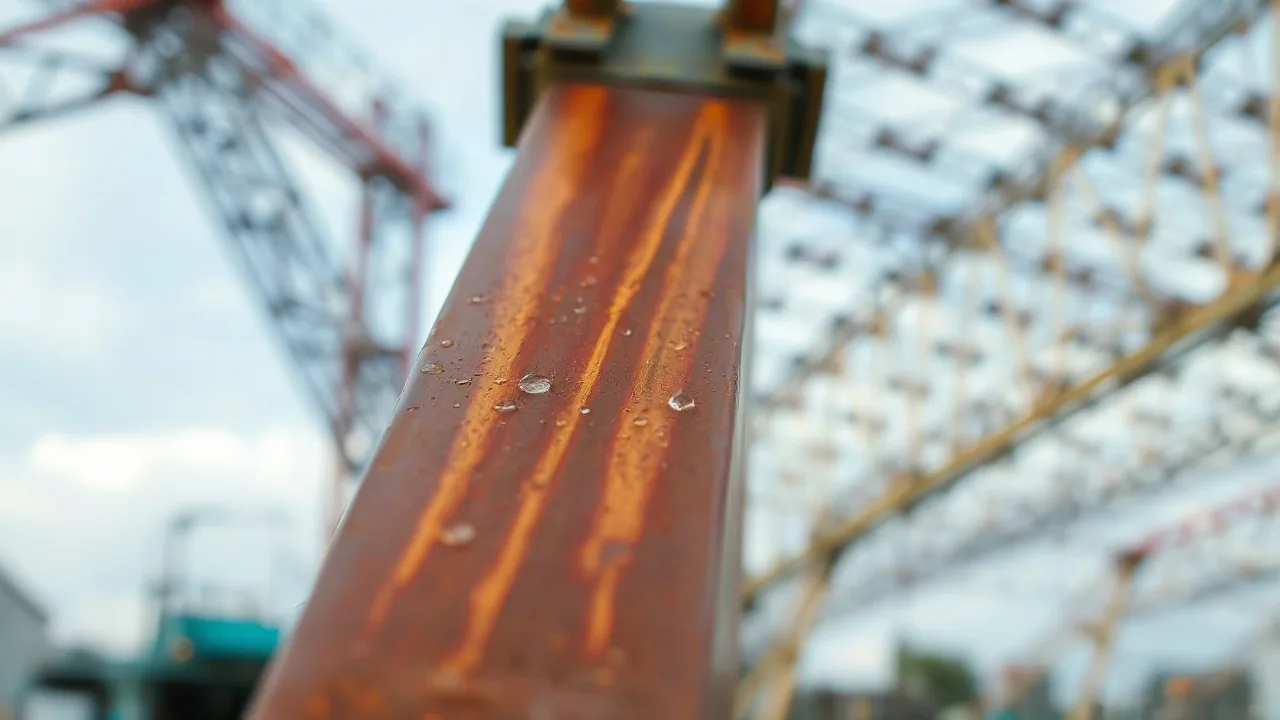
A team of materials scientists at a major North American research institution published findings this month showing that raindrops carrying electrical charges can accelerate metal corrosion rates by up to 40 percent compared to ordinary precipitation. The discovery, validated through controlled laboratory experiments and field measurements, has immediate implications for power grids, bridge structures, and renewable energy installations across the United States.
The research centers on a phenomenon rarely studied in materials science: the role of ionic charge in rainwater during metal degradation. Standard models of metal corrosion account for oxygen and moisture, but they largely overlook the electrochemical effects of charged water molecules interacting with metal surfaces.
"We were surprised to find that atmospheric conditions producing charged precipitation are far more common than expected," said Dr. Helena Vasquez, lead investigator at the institution's Department of Environmental Materials. "Our field data from five U.S. regions show that roughly 30 percent of annual rainfall carries measurable electrical charge, particularly during storm systems and seasonal transitions."
How Charged Water Damages Metal Differently
Traditional corrosion happens when oxygen and moisture create an electrochemical cell on a metal surface. Steel, aluminum, and copper all experience this process, which degrades structural integrity over years or decades. Climate tech and infrastructure engineers account for this baseline degradation when designing protective coatings and maintenance schedules.
The new research shows that when rainwater contains dissolved ions or develops a net electrical charge, it creates a more aggressive electrochemical environment. The charge increases electron transfer rates between the metal surface and the water layer, essentially turbocharging the corrosion process. In laboratory tests, samples exposed to artificially charged rainwater degraded four times faster than controls exposed to standard distilled water.
This accelerated degradation occurs across multiple metals:
- Steel infrastructure shows localized pitting up to 2.3 millimeters deep within 180 days of exposure to charged rainwater
- Aluminum components develop oxide layer breakdown 35 percent faster
- Copper and copper alloys used in electrical systems show significantly reduced service life
The researchers identified charge-bearing rainwater as particularly common downwind of industrial zones, urban centers, and coastal regions. Sulfate and nitrate ions in atmospheric pollution enhance the charge-carrying capacity of rainfall, meaning areas with air quality challenges face compounded corrosion risk.
Infrastructure and Energy Implications
The U.S. infrastructure renewal challenge already faces an estimated 2.6 trillion dollar backlog. Adding a new corrosion accelerator to the equation means early replacement cycles for exposed metal components, from transmission line towers to highway guardrails. Utility companies managing aging power grids will need to revise maintenance protocols and inspection intervals.
Renewable energy installations carry particular exposure risk. Wind turbine structures, solar panel frames, and electrical enclosures in coastal and industrial areas sit unprotected from charged precipitation. A typical utility-scale wind turbine stands 260 feet tall, with exposed steel and aluminum components subject to continuous environmental stress.
"Infrastructure managers need to recognize this as a real cost factor," explained Dr. Robert Chen, a materials engineer at a leading U.S. infrastructure consulting firm, in an interview published on September 4, 2026. "If charged rainwater is accelerating corrosion by 40 percent, then a bridge expected to function safely for 75 years might require major component replacement in 45 years. That's a significant operational and budget impact."
The study included field measurements from monitoring stations in Ohio, Texas, Florida, Washington, and New York. Each location tracked rainfall electrical properties alongside traditional weather data and corrosion coupon exposure. After 18 months, the correlation between charge-bearing precipitation events and accelerated material degradation proved statistically robust.
Organizations like the American Society of Civil Engineers and the National Association of Corrosion Engineers have already requested detailed methodology from the research team. Both groups are considering updates to structural design standards and protective coating specifications before year-end.
Material Science and Green Technology Solutions
Material science researchers are now exploring protective strategies. Current options include advanced polymer coatings, novel alloy compositions, and electrochemical monitoring systems that detect charge-enhanced corrosion in real time.
One emerging approach involves applying graphene-enhanced coatings that provide better ionic barrier properties than conventional epoxies. Another focuses on developing self-healing polymer systems that respond to the localized electrochemical environment created by charged water. Neither technology is yet market-ready, but several private materials companies have announced development programs.
The implications extend into environmental science policy as well. Corrosion byproducts, including iron oxides and heavy metal ions from copper or nickel-alloy components, eventually wash into soil and groundwater. Accelerated corrosion means faster environmental contamination cycles, potentially affecting water quality in regions already dealing with industrial or agricultural pollution.
The discovery also highlights an unexpected intersection between atmospheric chemistry, materials engineering, and climate resilience. As industries work to decarbonize infrastructure and extend equipment service life, understanding all degradation vectors becomes critical. This research suggests that comprehensive green technology approaches must account for electrochemical as well as thermal and mechanical stressors.
The full peer-reviewed study will be published in the Journal of Materials Science and Engineering in October 2026. The research team has made their field data publicly available through the National Materials Institute database, enabling corrosion specialists and infrastructure planners to model risk factors specific to their regions and asset types.