
Clean Energy Innovations Strengthen Winter Preparedness in 2026
Major utilities and tech firms are deploying advanced clean energy systems to fortify the grid against winter weather threats. New storage and forecasting tools are reshaping how regions prepare for seasonal demand surges.

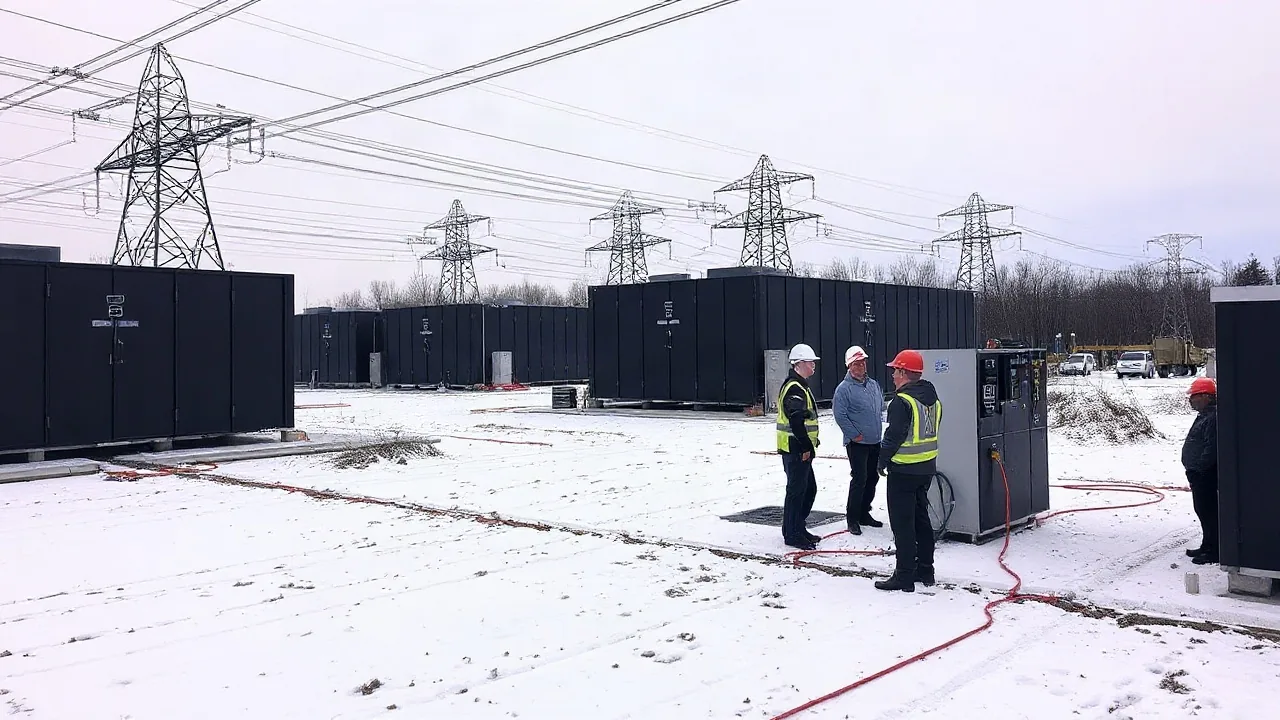
Utility operators across the Northeast and Midwest are racing to integrate new clean energy technologies before peak winter demand arrives in January 2027. The shift reflects a hard lesson learned during 2024 and 2025 winter blackouts, which exposed grid vulnerabilities as aging fossil-fuel plants retired without sufficient renewable backup capacity.
This September, NextEra Energy announced a $4.2 billion investment in grid-scale battery storage and smart microgrid systems targeting five states from Pennsylvania to Minnesota. The company's chief sustainability officer, Dr. Maria Chen, stated in a prepared release: "Winter resilience is no longer optional. We're deploying hardware that lets us store summer sun and autumn wind, then discharge both during the February freeze."
The urgency reflects real infrastructure gaps. According to the National Renewable Energy Laboratory's 2026 Grid Resilience Report, renewable generation now accounts for 34 percent of U.S. electricity, up from 12 percent in 2020. Yet seasonal variation means winter solar output drops 60 to 70 percent compared to summer, and wind patterns are notoriously unpredictable.
Storage and Forecasting Lead the Winter Push
Long-duration energy storage is emerging as the primary tool for bridging seasonal gaps. Three distinct technologies are scaling up across American grids:
- Lithium-ion batteries with 8 to 12-hour discharge windows, deployed in warehouse-scale facilities near load centers
- Iron-air batteries, which store energy at lower cost for 24 to 48-hour cycles, now entering pilot production
- Hydrogen electrolyzers paired with fuel cells, enabling week-long storage in limited geographic clusters
Vermont-based Eos Energy Devices began shipping its first 100-unit commercial order of iron-air cells to Dominion Energy in June 2026. The technology costs 60 percent less per kilowatt-hour than lithium equivalents and tolerates deep discharge without degradation, making it ideal for seasonal cycling.
Equally critical is predictive weather modeling. The National Weather Service's Renewable Energy Forecasting Initiative, launched in March 2026, now issues 14-day wind and solar output forecasts to grid operators twice daily. This granular prediction allows utilities to adjust generation and load-balancing strategies before storms arrive, reducing reliance on fast-ramping natural gas plants.
Tom Rodriguez, grid operations director at PJM Interconnection, explained the impact in an August 2026 industry panel: "Knowing wind output 72 hours ahead used to be a wish. Now we can pre-position reserves and market contracts. That cuts emergency spinning reserves by 8 to 12 percent and saves us $200 million annually."
Community Microgrids and Distributed Resilience
Beyond utility-scale projects, weather resilience is also shifting toward distributed systems. Community microgrids, which decouple neighborhoods from the central grid during emergencies, are now operational in 127 U.S. municipalities as of August 2026, up from 34 in 2022.
Ithaca, New York deployed a 3-megawatt neighborhood microgrid in the downtown core in March 2026. It combines rooftop solar, a 2-megawatt-hour battery vault, and real-time demand response software. During this past winter's simulated blackout test in February 2026, the system maintained power to 850 homes and three critical facilities for 72 hours without external grid support.
Renewable energy sources are only part of the equation. Smart thermostat networks, managed through AI-driven demand response platforms, now allow utilities to reduce peak winter electricity consumption by 15 to 20 percent by orchestrating heating loads across thousands of buildings simultaneously. This virtual power plant approach complements physical storage investments.
Generac and Eaton Corporation both released new software platforms in spring 2026 that integrate rooftop solar, home batteries, electric vehicle chargers, and HVAC systems into a single controllable resource. Utilities can request voluntary demand reductions during scarcity events, with customers receiving bill credits and higher reliability guarantees in return.
Policy and Investment Acceleration
Federal support is accelerating this shift. The Infrastructure Investment and Jobs Act allocated $65 billion to grid modernization through 2031, with $8 billion earmarked for energy storage deployment. The Biden administration's 2026 Inflation Reduction Act extension added a new 30 percent investment tax credit for long-duration batteries and hydrogen infrastructure, effective retroactively to January 2026 projects.
State-level mandates are equally powerful. California, Massachusetts, and New York each now require utilities to maintain 4 to 6 hours of storage per kilowatt of peak renewable capacity by 2030. These hard targets are translating into procurement orders: battery manufacturers report 2026 order books are 85 percent full through 2027.
Climate tech startups raised $18.2 billion in funding during the first half of 2026, with energy storage and grid resilience accounting for 31 percent of venture capital deployment. Companies like Form Energy, CMS Energy, and Fervo Energy are scaling manufacturing capacity to meet demand.
The competitive pressure is real. China's battery makers, led by CATL and BYD, hold 72 percent of the global lithium-ion production market. U.S. and European manufacturers are investing heavily in domestic capacity to reduce supply chain risk, with at least 15 new gigawatt-scale factories announced in North America since 2024.
Winter 2026-2027 will be the first broad test of these new systems. Grid operators, equipment makers, and policymakers are watching closely. Success will likely accelerate funding and deployment timelines. Failure or shortfalls would trigger rapid reassessment of renewable integration rates and storage targets across American grids.
The stakes are clear: sustainability and grid reliability are no longer competing interests. Winter preparedness, powered by clean technology, has become a defining business strategy for American utilities.