
Earth's Biosphere Could Thrive for 1.8 Billion More Years, Study Finds
New research suggests Earth's plant life could survive for an additional 1.8 billion years, a significantly longer period than previously estimated, thanks to resilient plant adaptations.

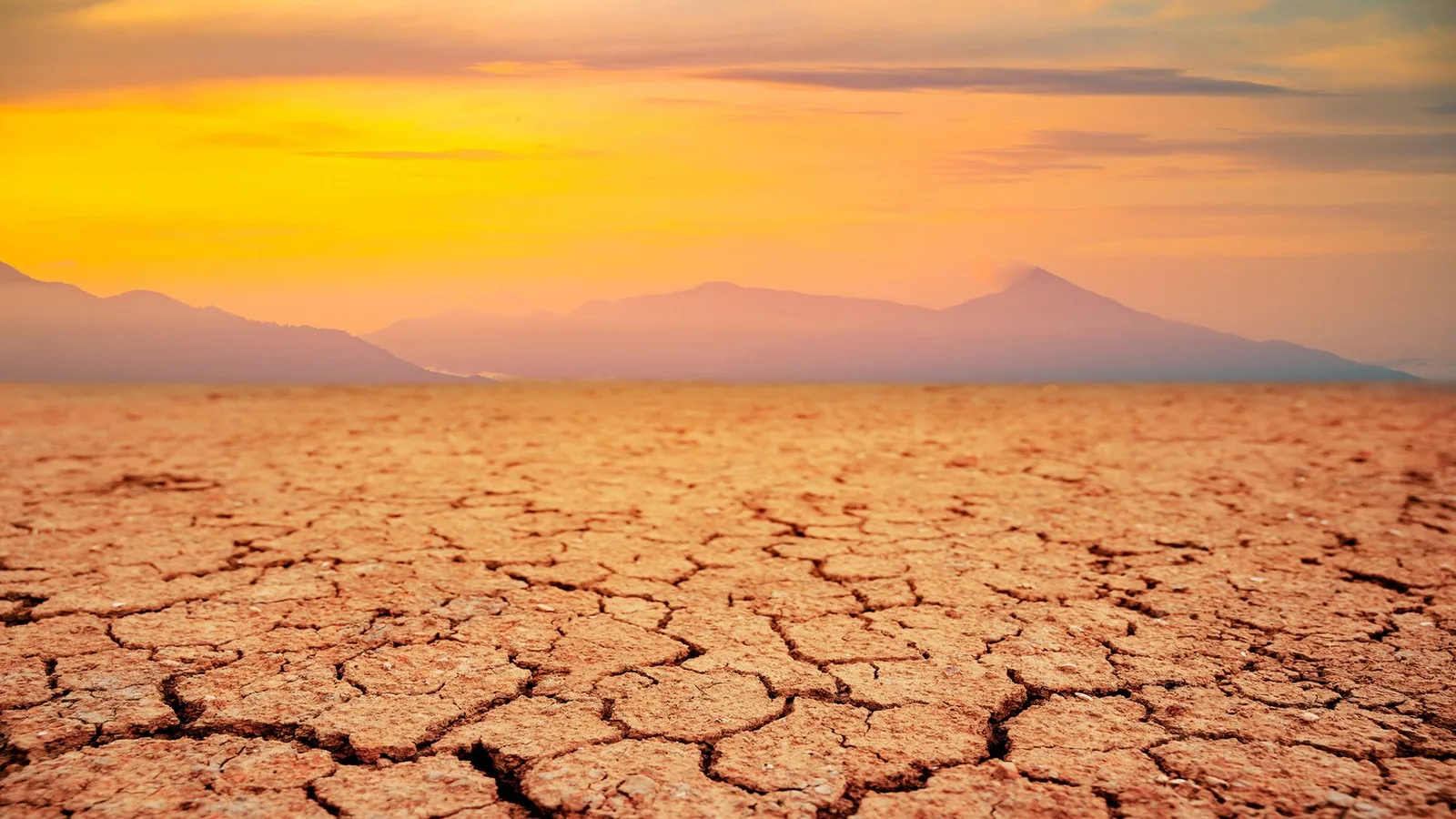
Life on Earth may persist for an astonishing 1.8 billion more years, according to a new study published in the journal JGR Atmospheres. This projection significantly extends previous estimates, offering a more optimistic outlook for the planet's biosphere as the sun gradually increases in luminosity.
The sun, which is currently about one-third more energetic than it was when the solar system formed 4.5 billion years ago, will continue to brighten for the next 5 billion years. For decades, scientists have grappled with understanding how long Earth's complex life could endure these escalating solar conditions. Early research, such as a 1982 study by James Lovelock, predicted the end of the photosynthetic biosphere—the foundation of most life on the planet—in as little as 100 million years.
However, this latest research, spearheaded by astrobiologist Jacob Haqq-Misra of the Blue Marble Space charity, utilized advanced climate models to reassess these limits. The study suggests that plant life, the critical engine of Earth's ecosystems, could continue to exist until roughly 2 billion years from now, nearing the point where Earth's oceans might be lost to space due to solar radiation or runaway evaporation.
"We were trying to show that life on Earth — complex vegetation — could survive longer into the future than previous studies had shown," Haqq-Misra stated. The research aimed to incorporate more sophisticated understanding of how plant life can adapt and persist under changing environmental pressures.
Understanding the Limits of Photosynthesis
Life as we know it fundamentally relies on photosynthesis, the process by which plants, algae, and certain bacteria convert sunlight, carbon dioxide, and water into energy, releasing oxygen as a byproduct. This vital process, however, has specific environmental requirements, particularly regarding temperature and carbon dioxide availability. As the sun intensifies, two primary challenges emerge: rising temperatures can disrupt the photosynthetic machinery, and a dimmer sun in the distant future could reduce atmospheric carbon dioxide, effectively starving plants.
Robert Graham, a planetary science researcher at the University of Chicago not involved in the study, noted that Earth's long-term habitability has been maintained by a natural thermostat involving the storage and release of CO2 through geological processes. "The Earth has stayed pretty hospitable in terms of surface temperature for most of the last 4 billion years because it has a built-in thermostat" by storing CO2 in rocks and releasing it during volcanic eruptions, Graham explained. While this process helps regulate temperature by drawing down atmospheric CO2 when it gets hotter, it makes that carbon less accessible to plants.
The new study addressed these complexities by employing 29 different climate models. Haqq-Misra and colleague Eric Wolf, a research scientist also at Blue Marble Space, simulated various scenarios, focusing on the extreme boundaries: conditions too hot for life with stable CO2, and conditions with insufficient CO2 but stable temperatures. They then explored the intermediate range, factoring in how efficiently Earth's systems might capture carbon from the atmosphere as temperatures rise.
Crucially, the models incorporated the diversity of plant life. Unlike simpler models, this research considered plants with highly efficient photosynthetic processes, such as those utilizing crassulacean acid metabolism (CAM), found in succulents and orchids. These species can thrive on significantly lower levels of atmospheric carbon dioxide. Similar adaptations exist in some marine flora, which can access carbon dissolved in ocean water.
Experts have recognized the advancement in the research. Graham commented, "Haqq-Misra and Wolf have used a sophisticated 3D climate model to show that Earth's climate may remain hospitable to plant life significantly longer into the future than predicted" by earlier, less complex models. He added, "It's an advance over previous work and suggests that complex biospheres like that of Earth are more resilient to environmental change from stellar brightening than previously suggested."
Andrew Rushby, an astrobiologist at Birkbeck University of London who was not part of the study, acknowledged the paper's contribution in updating the understanding of the biosphere's potential lifespan. However, he cautioned that these are still "broad estimates." He pointed out that predicting evolutionary adaptations over billions of years in response to increasing solar output and declining CO2 levels is exceptionally challenging. "It is not possible for us to predict or know the possible evolutionary adaptations that the photosynthetic biosphere may undergo in response to increasing solar output and lower [atmospheric CO2], especially over billions of years," Rushby noted.
The study authors themselves highlighted this point in their paper, suggesting that current limitations based on thermal stress or starvation might not represent absolute barriers for a biosphere capable of evolving. Haqq-Misra expressed a sense of comfort in the findings, remarking, "Earth's system is resilient, and we are part of something that could have a much, much longer future." The research also holds implications for astrobiology, potentially aiding scientists in identifying habitability thresholds on exoplanets by generalizing Earth-based climate physics to a wider range of atmospheric conditions.