
Apple's MacBook Ultra: 12 Rumored Features for New Pro Laptop
Apple is rumored to be developing a high-end "MacBook Ultra," featuring an OLED display, touchscreen capabilities, and next-generation M-series chips. The redesign is expected in late 2026 or early 2027.

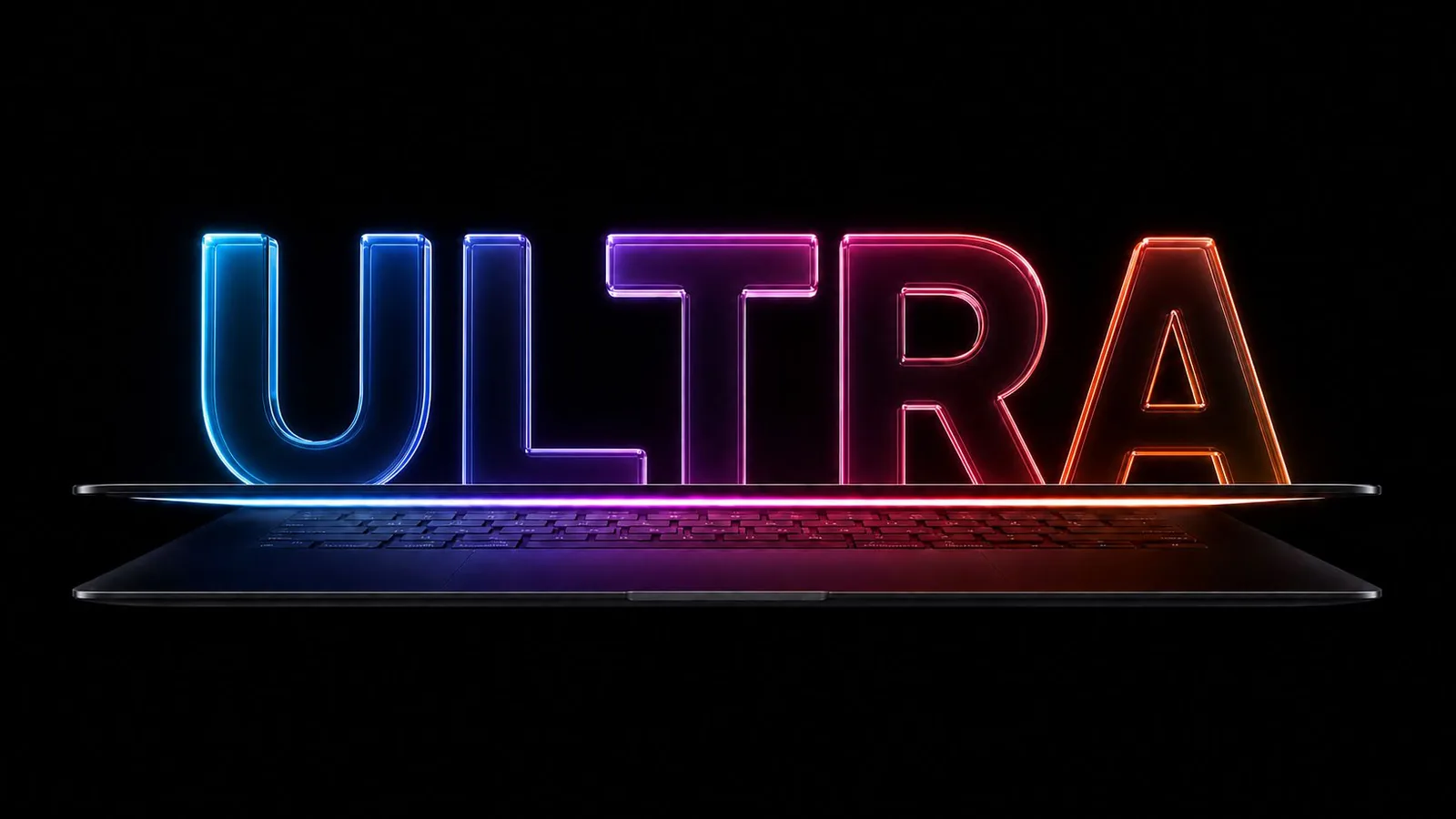
Apple is reportedly preparing to launch its first ultra-high-end MacBook laptop, codenamed "MacBook Ultra," in late 2026 or early 2027. This significant redesign, the first in five years for Apple's premium laptop line, is expected to introduce a suite of new features including an OLED display, touchscreen functionality, and potentially new internal silicon. The unveiling would establish a new tier above the current MacBook Pro lineup, signaling a major evolution for Apple's Mac computers. The anticipated launch follows the last major MacBook Pro redesign in 2021 with the M1 Pro and M1 Max chips.
According to industry analysts and leakers like Mark Gurman of Bloomberg and Ming-Chi Kuo, the MacBook Ultra will be the first Mac to feature an OLED display. This technology promises richer colors, deeper blacks, and improved power efficiency compared to the current mini-LED screens. The laptop is also expected to incorporate hybrid OLED technology, similar to that used in the iPad Pro, which enhances panel longevity. Alongside the visual upgrade, the device is rumored to bring touchscreen support directly to the Mac display for the first time, moving away from Apple's long-standing resistance to the concept. This feature is described not as a touch-first experience, but rather as a flexible input option complementing the keyboard and trackpad.
macOS and Hardware Adaptations
To support the new touch interface, Apple is reportedly adapting macOS to offer touch-optimized controls and gestures, including familiar iPad-style interactions like pinch-to-zoom. This integration aims to provide a seamless user experience across touch, trackpad, and keyboard inputs. The hardware is also being adapted, with reports suggesting a reinforced hinge to ensure display stability during touch interactions. The traditional screen "notch" is expected to be replaced by a hole-punch camera, increasing usable screen real estate and leading to a more immersive display. Furthermore, this cutout is rumored to expand into an iPhone-style Dynamic Island, offering interactive notifications and status indicators.
The internal specifications are a point of evolving speculation. While initial rumors suggested upcoming M6 series chips, recent reports indicate the first MacBook Ultra models will likely ship with the already available M5 Pro and M5 Max chips. However, a second-generation model, slated for late 2027, is expected to feature more advanced M7 Pro and M7 Max chips, specifically designed with enhanced capabilities for intensive AI workloads, including improved neural accelerators and graphics. The laptop is also anticipated to be thinner and lighter than its predecessors, potentially aided by the switch from mini-LED to OLED displays, without sacrificing essential ports like HDMI or the SD card slot, a move that would align with consumer preferences after past port removals.
The MacBook Ultra is expected to be offered in the familiar 14-inch and 16-inch screen sizes, with slightly larger displays due to slimmer bezels. This configuration echoes the current MacBook Pro lineup. Another rumored, though less certain, feature is built-in cellular connectivity, which would mark a first for MacBooks, potentially utilizing Apple's C1X or next-generation C2 modems for 5G and LTE capabilities. The global memory chip shortage has been cited as a potential factor influencing the exact release timing, with mass production slated to begin by late 2026. Pricing details remain unconfirmed, but given the premium features and Apple's recent price adjustments on its Mac lineup, the MacBook Ultra is expected to command a significant premium over existing MacBook Pro models.