
Elektron's Budget Grooveboxes Offer Powerful Music Production Tools
Despite being overlooked, Elektron's Model:Cycles and Model:Samples offer accessible yet powerful tools for aspiring electronic music producers, combining a capable sequencer with intuitive hands-on control.

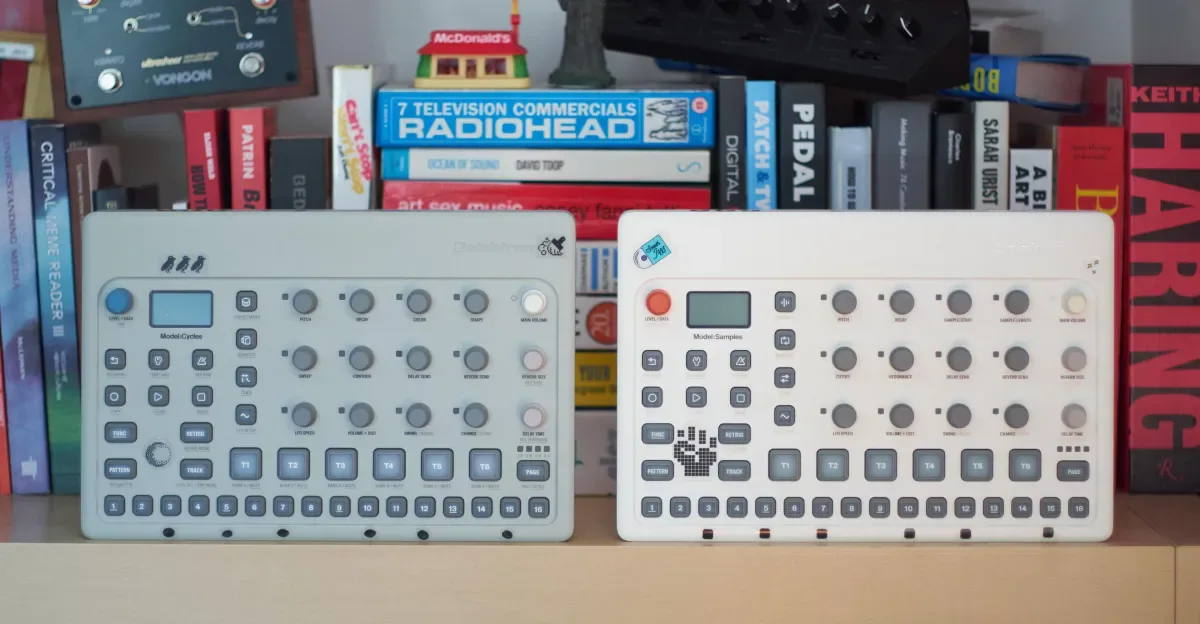
For aspiring electronic music creators seeking accessible yet powerful tools, the Elektron Model:Cycles and Model:Samples grooveboxes present a compelling, albeit often overlooked, entry point. While they may not command the same attention as pricier instruments or those from more widely recognized brands, these devices offer a surprisingly deep creative experience for their cost. They stand as a testament to the possibility of sophisticated music production without requiring a significant financial investment or an exhaustive understanding of complex workflows.
The primary distinction between the two models lies in their sound engines: the Model:Cycles utilizes FM synthesis, capable of generating classic 1980s DX7-like tones as well as modern glassy pads and aggressive bass sounds. The Model:Samples, on the other hand, is designed to play pre-loaded samples, though it requires samples to be loaded via USB rather than recording them directly. Both are six-track grooveboxes, featuring six velocity-sensitive pads and an array of knobs for immediate, hands-on manipulation. Crucially, they incorporate Elektron's renowned step sequencer, but in a streamlined, less intimidating format than the company's more advanced offerings.
The sequencer's power lies in its use of "trigs" (events that trigger notes) and "locks" (step-specific parameter changes). This system allows users to assign different sounds or settings to individual steps within a pattern, significantly expanding the creative potential of each track. For instance, a single track can accommodate multiple percussive elements by using sound locks to switch between kick, snare, and hi-hat sounds on different steps, effectively maximizing the limited track count. This flexibility enables the creation of intricate rhythmic patterns and melodic lines that belie the instruments' compact design.
Expanding Creative Possibilities with Sequencer Features
Beyond basic step sequencing, the Elektron Model series boasts advanced features like "trig conditions." These conditions allow for dynamic pattern variations by dictating when specific steps are triggered – for instance, only on the third pass of a loop, upon activation of a fill button, or contingent on a previously met condition. This sophisticated control over pattern playback can generate substantial variation within a single 64-step pattern. When combined with the ability to chain multiple patterns, users can construct evolving arrangements that are often difficult to achieve with other gear in the same price bracket. The ability to create complex, evolving arrangements is a hallmark of high-end electronic music production, and the Model series brings this capability to a more accessible level.
A key aspect of the Model:Cycles and Model:Samples is their inherent playfulness and suitability for live performance. Unlike some of Elektron's more complex devices that necessitate deep menu navigation, these grooveboxes are designed for immediate interaction. Tweaking filters, initiating drum fills, or applying effects like delay to melodies can be done effortlessly. The "Control-all" function is particularly engaging, allowing simultaneous adjustments across all tracks. This feature can be used to dramatically alter the soundscape, introducing effects like reverb or distortion, or pitch-shifting all samples for a chaotic breakdown, which can then be instantly reverted with a simple button press. This encourages experimentation and spontaneous jamming, a vital element in electronic music creation.
While the Model:Cycles and Model:Samples are highly capable, they do have limitations. The velocity-sensitive pads are described as mediocre, and the inability to record samples directly onto the Model:Samples is a notable drawback. Furthermore, the lack of polyphony on individual tracks—meaning each track can only play one note at a time—can be restrictive for some musical styles. However, considering their retail price of $349, and the availability of used units for as little as $200, these shortcomings are easily forgiven. They represent some of the most valuable bargains in music hardware, providing an excellent starting point for anyone venturing into the world of electronic music production.