
Even G2 Smart Glasses Offer Privacy, But Face Control Challenges
Even Realities' new G2 smart glasses aim for privacy by omitting cameras, focusing on displaying text and AI prompts. However, user control remains a significant hurdle.

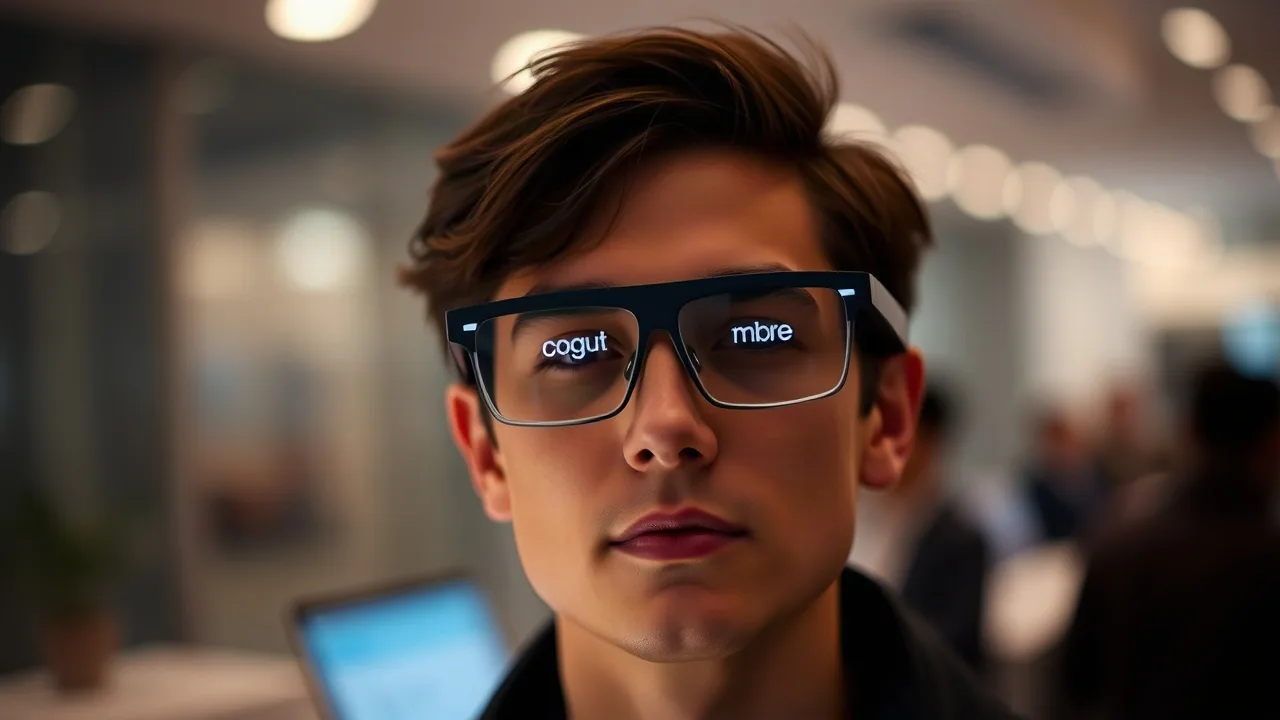
Even Realities has launched its G2 smart glasses, a new contender in the wearable display market that prioritizes user privacy by forgoing a camera entirely. These glasses are designed to project information directly onto the lenses, offering a discreet way to view translations, prepared text, and AI-generated prompts without the constant surveillance concerns associated with camera-equipped devices. The G2s aim to be a daily wearable, integrating technology seamlessly into everyday life.
The core innovation of the Even G2 lies in its camera-less design. Unlike many smart glasses that capture video and images, the G2 focuses on displaying information sourced from a connected smartphone or other devices. This includes real-time language translation, custom dashboards with key data points, and prompts from artificial intelligence models. The company emphasizes a focus on user control and data privacy, making it an appealing option for individuals wary of the privacy implications of current wearable technology.
User Interface and Control Hurdles
Despite the privacy-forward design, the Even G2 smart glasses encounter significant challenges with their control interface. Early reviews and user experiences highlight difficulties in navigating the glasses' features, with the accompanying R1 ring, intended for control, proving to be less intuitive than hoped. This has led to frustration for some users who find the interaction cumbersome, detracting from the otherwise sleek and privacy-centric experience. The reliance on external physical controls for a device meant to be seamlessly integrated adds a layer of complexity that may hinder mass adoption.
The Even Realities G2 project aims to bring a more subtle form of augmented reality to users. By projecting text and data directly into the wearer's field of vision, the device offers a unique utility. Imagine walking through a foreign city and having live translation appear discreetly on your lenses, or receiving important notifications without needing to pull out your phone. This level of integration is the promise of smart glasses, and the G2 attempts to deliver on it by focusing on information display rather than capture.
Contextually, the smart glasses market has seen a gradual evolution. Early attempts often focused on bulky designs and feature sets that didn't resonate with a broad audience, leading to mixed success. Companies like Google with Google Glass, and later efforts from Snap and Meta, have explored various functionalities. Even Realities' approach, however, targets a niche that prioritizes privacy and information access over multimedia capture, a segment that may grow as public awareness of data privacy intensifies. The success of the G2 will likely depend on its ability to refine its user controls and demonstrate clear advantages over existing smartphone-based solutions.
The design of the G2 has also drawn comparisons to a minimalist, almost 'Steve Jobs' aesthetic, characterized by clean lines and a focus on form factor. This emphasis on a refined appearance is crucial for a device intended for constant wear. If users are to adopt smart glasses as a regular part of their attire, they need to be both functional and aesthetically pleasing. The G2's design ethos certainly leans into this, aiming for a look that is less overtly techy and more in line with conventional eyewear.
Ultimately, the smart glasses market is still searching for its killer application and perfect form factor. Even Realities G2, with its privacy-first stance and innovative display technology, represents an interesting experiment. The challenge now lies in perfecting the user interaction to make the advanced features accessible and enjoyable for a wider range of consumers who are looking for unobtrusive, privacy-respecting wearable technology.