
Galaxy Watch Ultra 2 Battery Life Questioned After Chip Upgrade
Despite a larger battery and Qualcomm's new Snapdragon Wear Elite chip, the Samsung Galaxy Watch Ultra 2 may not offer improved battery life over its predecessor. This raises questions about efficiency.

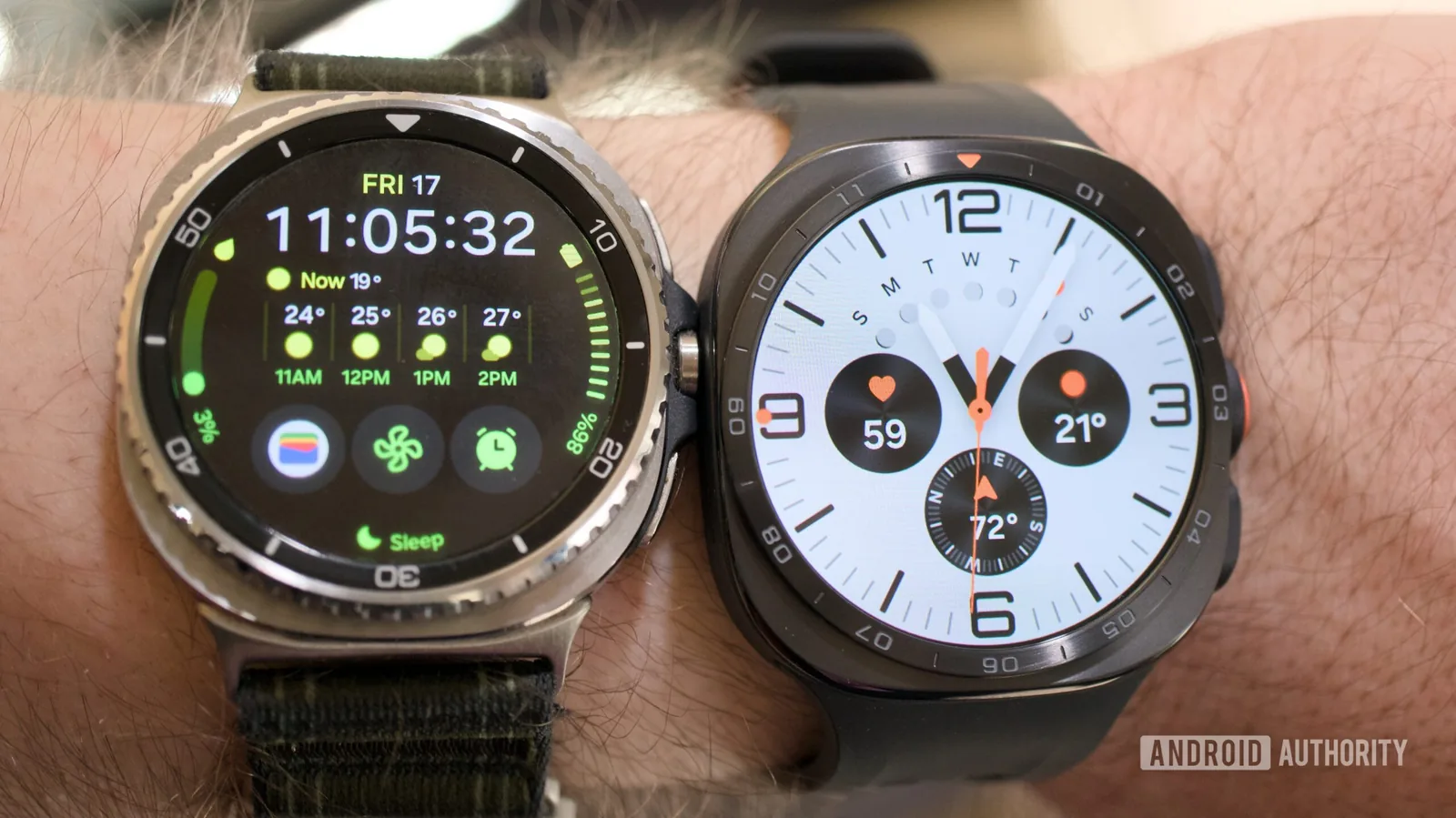
Samsung's latest smartwatch, the Galaxy Watch Ultra 2, has generated questions about its battery performance despite a significant hardware upgrade. Unveiled at the company's recent Unpacked event, the new model boasts a substantial 800mAh battery, a 35% increase from the 590mAh cell in the original Galaxy Watch Ultra. It also features Qualcomm's new Snapdragon Wear Elite chip, a departure from the previous Exynos W1000. However, official battery life estimates remain unchanged, citing the same "up to 60 hours with Always-On Display" as the first-generation model, sparking debate about whether the new silicon has negated the battery capacity gains.
The discrepancy was first noted by Phonefuturist on X, who pointed out that the substantial battery increase coupled with a next-generation processor should logically yield better endurance. The Galaxy Watch Ultra 2 also includes a brighter 5,000-nit Super AMOLED display, an upgrade from the 3,000-nit screen on the previous version, and a slightly higher resolution (498 x 498 pixels vs. 480 x 480). While peak brightness and resolution differences are unlikely to fully account for the lack of runtime improvement, these factors could contribute to increased power consumption.
Efficiency Concerns and Wear OS 7
Similar patterns are observed across the standard Galaxy Watch 9 models. These devices also received battery capacity bumps and transitioned to the Snapdragon Wear Elite SoC. Yet, Samsung continues to advertise up to 40 hours of runtime without Always-On Display for both the new and previous generations. This lack of projected improvement, especially when the new models run on Wear OS 7—a platform that promised enhanced battery efficiency—casts a shadow on the real-world benefits of the hardware changes.
Several factors could be at play. It's possible that the increased demands of the brighter display, the inherent power draw of the new processor, or perhaps even outdated marketing specifications are responsible. Alternatively, Samsung may have opted for a conservative approach in its battery life claims, potentially understating the actual endurance. The company has been contacted for clarification regarding these figures, and further details are expected.
The move away from Samsung's in-house Exynos processors to Qualcomm's chips marks a significant strategic shift in its smartwatch division. While the Snapdragon Wear Elite promises improved performance, its efficiency relative to the older Exynos W1000 remains a critical question for consumers. The performance benchmarks and real-world battery tests in upcoming reviews will be crucial in determining if the switch ultimately benefits the user experience despite the current ambiguity in battery life projections.