
Microsoft Reveals Surface Laptop Ultra & Dev Box with RTX Spark
Microsoft unveiled the Surface Laptop Ultra and Surface Dev Box at Build, both featuring Nvidia's RTX Spark chip for enhanced performance, particularly for AI tasks.

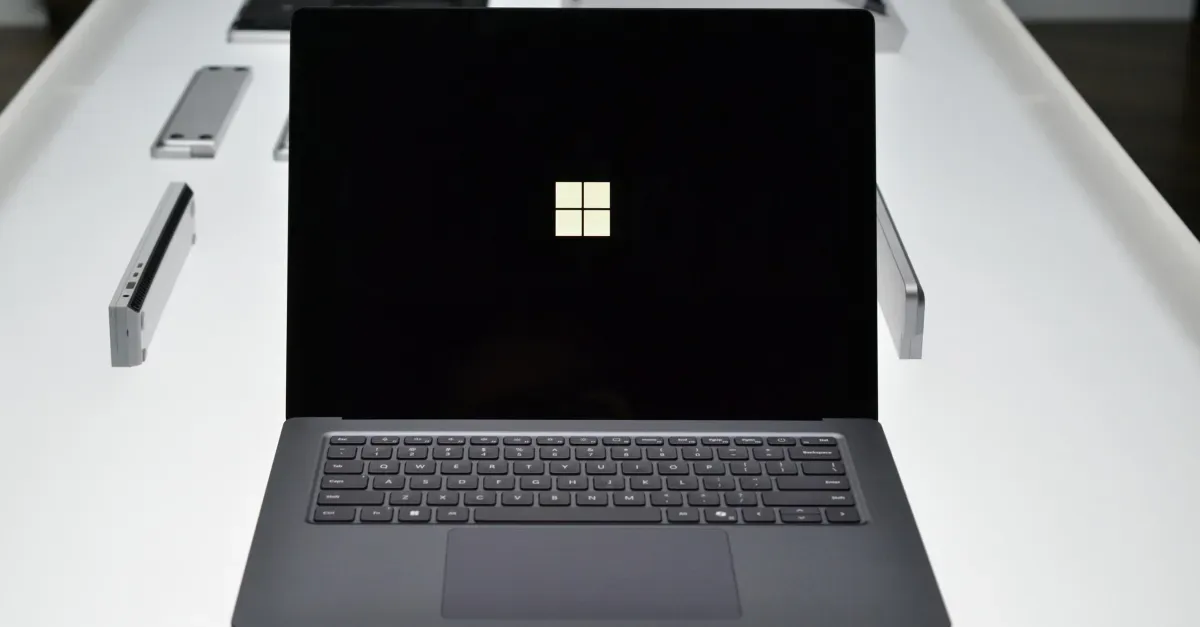
Microsoft has unveiled two powerful new Surface devices poised to redefine performance for professionals and developers alike. The Surface Laptop Ultra and Surface Dev Box, both powered by Nvidia's cutting-edge RTX Spark chips, were showcased at Microsoft's Build conference this week. While sharing the same core silicon, these devices leverage the RTX Spark architecture in distinct ways to tackle demanding workloads.
The Surface Laptop Ultra presents a sleek, traditional clamshell design, reminiscent of premium laptops like the MacBook Pro. It boasts a vibrant 15-inch mini-LED display capable of an impressive 2,000 nits of peak HDR brightness, making it the brightest panel ever featured on a Surface device. Enhancing the user experience, the larger trackpad incorporates Windows 11's new haptic feedback system, providing subtle tactile cues for interface interactions, from button hovering to object manipulation.
Initial impressions suggest the Surface Laptop Ultra is built for power, with a noticeable heft indicating a focus on performance and battery longevity over extreme portability. Andrew Hill, corporate vice president of Surface product, emphasized this design philosophy: "When we went through the priority order of what we're going to design for, performance, performance, performance, battery life, battery life, battery life, display, display, display, making sure we'd nailed those things," he stated in an interview. "If other tradeoffs have to be made, so be it, but let's make sure we nail the fundamentals that are really what people care about."
During demonstrations, the Surface Laptop Ultra proved capable of running local AI models, consuming significant portions of its 128GB of unified memory, even while simultaneously running a game like Indiana Jones and the Great Circle. The device employs a dual-fan cooling system, which remained surprisingly quiet even under heavy load, and thermal management focused on a warm, but not uncomfortable, zone above the keyboard.
Repairability and Connectivity
Microsoft has also prioritized repairability in the Surface Laptop Ultra, significantly improving upon past designs. The internal layout is meticulously organized, with clearly labeled components facilitating easier servicing. This focus on user maintainability echoes Microsoft's advancements with the Surface Laptop 7, which saw its iFixit score jump dramatically in recent years.
Connectivity options are generous, including two USB-C ports and an HDMI port on the left, and a single USB-C, a USB-A port, and a full-sized SD card reader on the right. Intriguingly, one of the USB-C ports on the right side appears slightly wider than those on the left, a detail that Microsoft vice president Andrew Hill hinted would be elaborated on later in the year. The absence of the traditional Surface Connect charging port suggests a potential shift towards USB-C charging, though specifics remain unconfirmed.
While the Surface Laptop Ultra qualifies for Microsoft's Copilot Plus PC features, the company is currently emphasizing its appeal to professionals, creators, and developers. This focus is particularly relevant for local AI computation, offering a cost-effective alternative to cloud-based AI services. "What you have here is an option where you'll be able to do a lot of work locally on a thing you own, and if you want to let it rip, cool, you're not on a meter," explained Hill. "There are sets of workloads that run in the cloud that are better, but you'll be able to do a lot of work here."
The Surface RTX Spark Dev Box, meanwhile, is engineered as a compact yet potent desktop solution for developers. Its striking aluminum, 3D-printed chassis features 1,000 air vents, visually referencing its 1,000 teraflops of compute performance. Internally, it houses the same RTX Spark chip as the Laptop Ultra, but with a higher 100-watt thermal envelope, enabling more sustained performance for intensive AI tasks and potentially enhancing gaming through technologies like Nvidia DLSS.
Pricing for both devices remains a significant question, with expectations that the new RTX Spark-powered Surfaces will occupy the premium end of the market. Official pricing and availability details are anticipated later in 2026.