
Nvidia RTX Spark Superchip Brings AI Power to Laptops
Nvidia unveiled its RTX Spark 'superchip' designed to bring advanced AI capabilities directly to laptops and PCs. This move aims to transform personal computing by enabling AI agents to operate locally, potentially altering user interaction with devices.

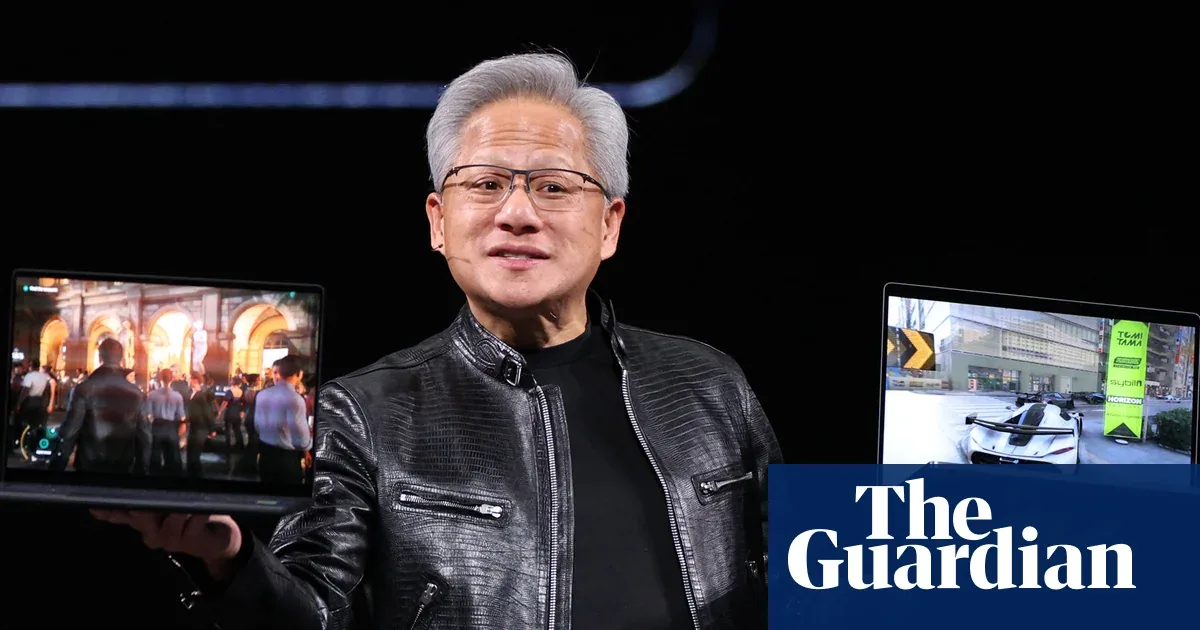
Nvidia has officially entered the consumer PC arena with the launch of its groundbreaking RTX Spark "superchip," a development poised to redefine personal computing by embedding powerful artificial intelligence capabilities directly into laptops and desktop computers. Unveiled at the Computex conference in Taiwan by Nvidia CEO Jensen Huang, the chip is slated for release later in 2026 and will be integrated by major computer manufacturers including Dell, Lenovo, Asus, and HP, working in tandem with Microsoft's Windows operating system.
Huang described the RTX Spark as a reinvention of the PC for the AI era, the culmination of a three-year partnership between Nvidia and Microsoft. This innovative chip combines a microprocessor and a graphics processing unit, with development support from Taiwan's MediaTek. Its primary function is to enable AI agents to run autonomously on local hardware, significantly reducing reliance on cloud computing infrastructure. The design promises to allow these AI agents to navigate PCs independently, potentially making traditional input methods like mouse and keyboard obsolete. Despite its substantial processing power, Nvidia asserts that computers equipped with the RTX Spark will maintain a thin and light form factor.
"Nvidia is reimagining the PC for the first time in 40 years," Huang stated, highlighting the strategic importance of this venture into the consumer PC market. While analysts anticipate this will open a new, long-term business avenue for Nvidia, they also caution that significant returns may take time to materialize. The company currently dominates the rapidly expanding AI semiconductor market, and this move signifies a strategic pivot beyond its established graphics card and data center dominance to integrated chips that power entire computing systems.
AI Agents and the Future of Interaction
Neil Shah, a co-founder of Counterpoint Research, drew parallels between the introduction of the RTX Spark and pivotal technological shifts like the advent of the iPhone, ChatGPT, and DeepSeek. "The RTX Spark looks to transform the traditional app-centric PC to a real useful agentic AI personal computer which will eventually be in every home in coming years as private edge AI agents become pivotal," Shah explained. This new chip, alongside Nvidia's Vera central processing unit (CPU) targeting AI agents, underscores the company's expanding focus on the PC and CPU sectors. Early adopters like OpenAI, Anthropic, and SpaceX are reportedly among those interested in the Vera CPU.
Susannah Streeter, chief investment strategist at Wealth Club, commented on the strategic implications of Nvidia's latest initiative. "Nvidia’s latest push into AI-powered personal computers marks a bold attempt to extend its dominance beyond datacentres and into consumers’ everyday lives," she noted. "The unveiling of the RTX Spark chip reinforces Jensen Huang’s vision of PCs evolving from simple productivity tools into hyperintelligent digital co-workers." However, Streeter also advised a tempered outlook, suggesting that investors might perceive this as a longer-term growth prospect rather than an immediate revenue booster, given that Nvidia's current financial success is overwhelmingly tied to the demand for AI infrastructure and data center computing power.
The competitive landscape is intensifying, with rivals like Intel also preparing to enter the fray. Intel plans to ship its own AI chip later in 2026, featuring advancements in memory and cooling technology designed to compete with Nvidia and AMD. Anil Nanduri, vice-president of AI products at Intel’s Data Center Group, stated that Intel's new graphics processing unit, codenamed Crescent Island and officially designated Xe3P, is "purpose-built for this upcoming AI generation of agents." Amidst growing concerns about AI's impact on employment, Jensen Huang expressed a dissenting view, dismissing the notion that AI would diminish the need for software engineers. He argued instead that AI will enhance worker productivity, thereby increasing the demand for software engineers. "This is the promise of AI," Huang asserted. "The number of engineers, software engineers, is actually increasing. People talk about AI reducing jobs – complete nonsense. It’s causing more software engineers to be hired." Meanwhile, Arm CEO Rene Haas is positioned to receive a substantial pay package, potentially making him a billionaire, contingent on achieving targets that would elevate the microchip firm to a trillion-dollar valuation.