
Panasonic Lumix L10: Stylish Compact Camera with 24-75mm Zoom
Panasonic's new Lumix L10 compact camera offers a versatile 24-75mm zoom lens and a 20.3MP sensor, aiming to capture everyday moments with high-quality photos and video for $1,500.

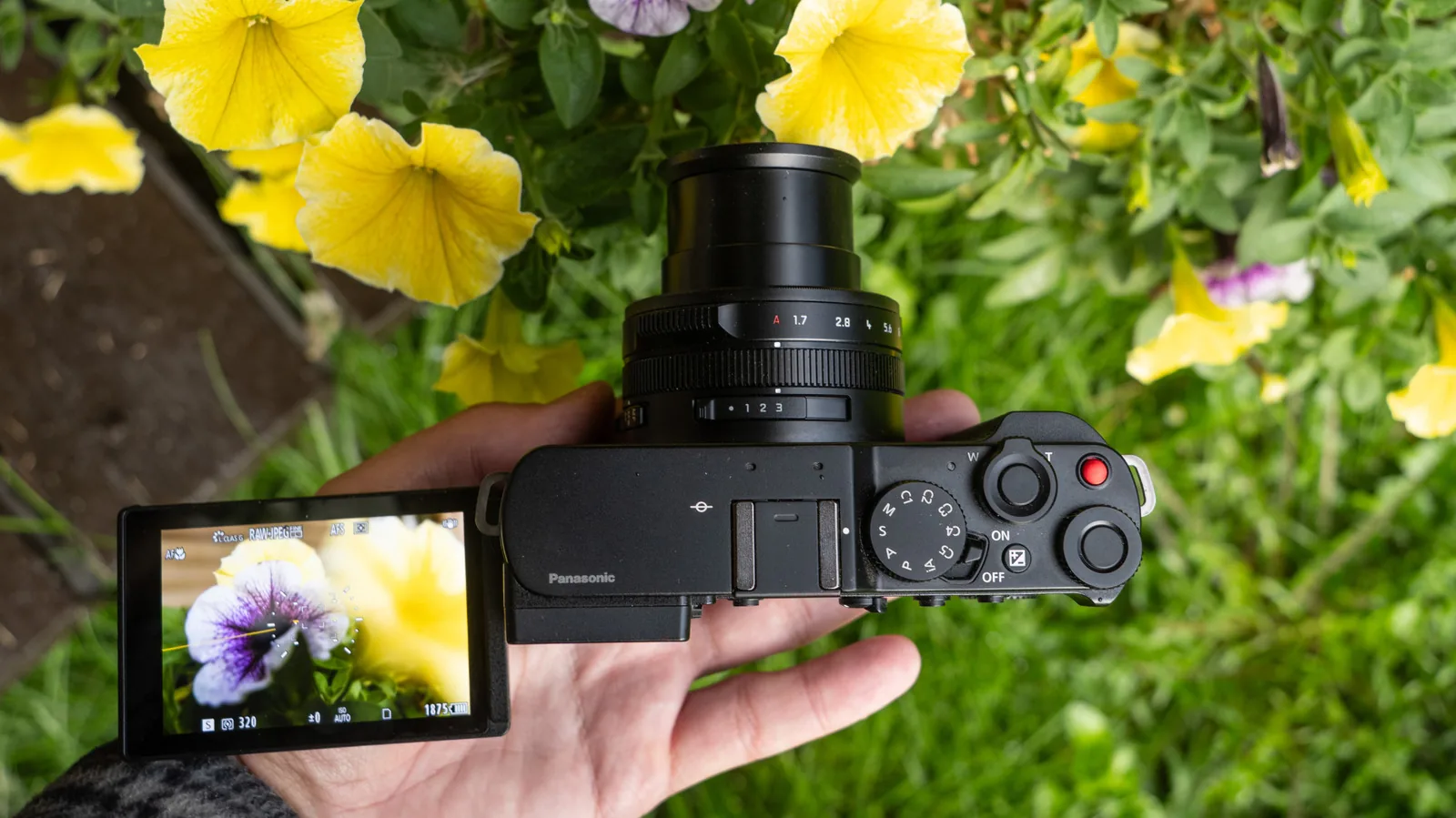
Panasonic has entered the burgeoning market for high-end compact cameras with the Lumix L10, a 20.3-megapixel model featuring a versatile 24-75mm equivalent zoom lens. Unveiled recently, the camera aims to bridge the gap between smartphone convenience and the image quality desired by enthusiasts, particularly for casual shooting at events, parties, or during travel. Priced at $1,500, the Lumix L10 seeks to offer a practical photographic tool for users who find fixed-focal length lenses on competing models too restrictive.
The Lumix L10 is a successor to the LX100 II but presents a more substantial build, weighing 508 grams compared to its predecessor's 392 grams. This increased bulk makes it less pocketable, though its grip is described as comfortable for handling. While not overloaded with manual controls, it provides a selection for its target audience, including dual dials for key settings, a photo/video/S&Q switch, and customizable buttons. Notably, it omits the dedicated shutter speed and exposure compensation dials found on the LX100 II but retains a four-step switch for aspect ratio adjustments.
A significant upgrade is the Leica-branded 24-75mm f/1.7-2.8 equivalent zoom lens, borrowed and refined from the LX100 II. This lens offers strong performance with close-focusing capabilities down to 3 cm at the wide end and 30 cm when fully zoomed. Complementing the lens is a fully articulating 1.8-million-dot rear display, a considerable improvement over the LX100 II's fixed screen, enhancing usability for selfies and video recording. The camera also includes an electronic viewfinder, albeit with a moderate 2.34 million dots resolution.
Upgraded Internals and Autofocus Prowess
The most substantial enhancements in the Lumix L10 lie within its updated sensor and image processor. It now incorporates a slightly cropped version of the 26.5-megapixel Four Thirds sensor found in the Panasonic GH9 II. This allows for higher resolution photos up to 20.3MP, an increase from the 17MP of the LX100 II. The camera boasts impressive speed, offering 9 fps burst shooting with mechanical shutter and continuous autofocus, and an accelerated 30 fps in electronic shutter mode. These speeds significantly outperform the LX100 II's 5.5 fps and rival many competitors.
Autofocus performance is a key area of improvement. The Lumix L10 utilizes Panasonic's advanced phase hybrid AF system with 779 points, a departure from the contrast-detect system of the LX100 II. This new system has demonstrated greater speed and reliability in continuous AF, performing well with both wildlife and human subjects during burst shooting, though it still trails slightly behind the top-tier offerings from Sony and Canon. The system also includes AI subject recognition for people, animals, and vehicles, which proved largely effective in identifying subjects, even in varied environments.
For macro photography enthusiasts, the Lumix L10 features a dedicated macro mode, enabling sharp close-up shots from as little as an inch away from the subject. While the camera includes optical lens shake reduction, it notably lacks in-body stabilization, unlike some rivals such as the Fujifilm X100 VI. The optical stabilization is effective for slow shutter speeds but less ideal for smooth video capture.
Panasonic has equipped the L10 with distinct features for creative flexibility. A dedicated aspect ratio switch allows users to select between 4:3, 3:2, 16:9, and 1:1 ratios directly on the camera, a boon for those who prefer immediate JPEG output for sharing. Additionally, a "LUT" button provides access to customizable photo and video styles. Users can download or create their own "Look-Up Tables" (LUTs) via the Panasonic Lumix Lab app and apply them in real-time, adding a professional touch to shots.
Image quality benefits from the updated sensor, delivering sharper images with reduced noise at lower ISO levels compared to the LX100 II. The dual-gain sensor also contributes to impressive low-light performance for a Micro Four Thirds camera, with manageable noise up to ISO 2,500 and usable results up to ISO 12,800. RAW files offer good editing flexibility, though the smaller sensor inherently presents limitations compared to full-frame cameras in extreme high-ISO scenarios. The L10 also features an automatic dynamic range boost function, combining high- and low-gain circuits for enhanced detail in challenging lighting conditions.
While marketed primarily for stills, the Lumix L10 also offers robust video capabilities. It can record 5.6K video at up to 60 fps in 10-bit and V-Log formats, or 4K at up to 120 fps. However, its compact size and lack of a fan limit continuous recording times, with 4K 60 fps available for about 10 minutes before overheating. The phase-detect AF performs reliably for video, and the camera offers a low 500 ISO floor for V-Log recording, making it suitable for brighter conditions. Despite the improvements, video stabilization remains a weaker point, with optical stabilization providing basic hand-held smoothness and electronic stabilization offering only marginal improvement.
Overall, the Panasonic Lumix L10 presents a compelling package for those seeking a stylish and capable compact camera. Its versatile zoom lens, updated sensor, strong autofocus, and useful creative features make it a practical choice for everyday photography and videography, albeit with a premium price tag and some limitations in video stabilization and recording duration.