
Apple's Craig Federighi on Siri Chatbot App Pivot
Apple's Craig Federighi explained the company's decision to introduce a dedicated Siri chatbot app in iOS 27, a move that initially seemed at odds with their "Apple Intelligence" strategy. The app aims to provide a persistent space for user interactions.

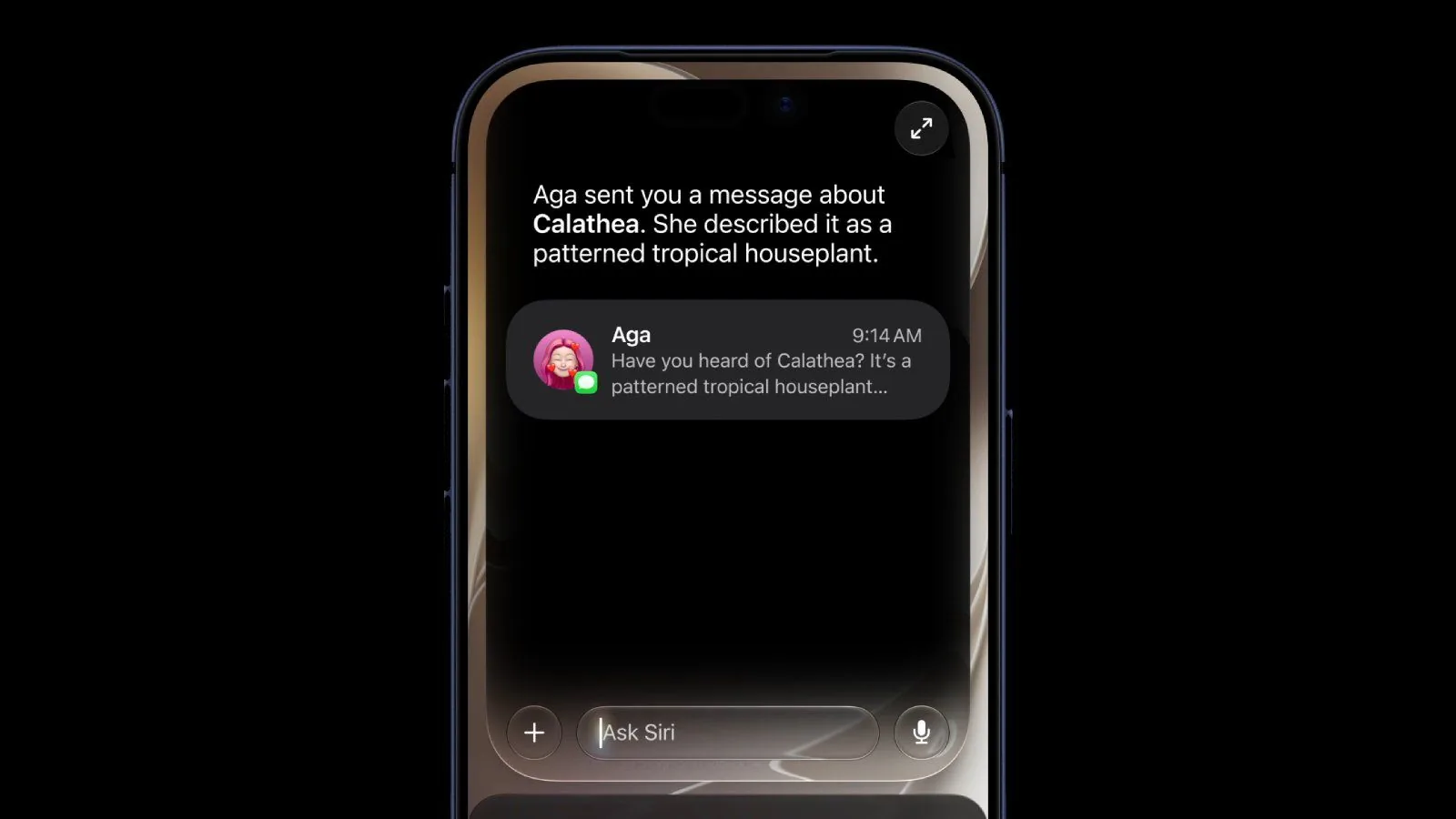
Apple's senior vice president of software engineering, Craig Federighi, has clarified the rationale behind the company's introduction of a standalone Siri application in iOS 27. This decision appeared to diverge from Apple's prior emphasis on integrating Siri capabilities directly into the user's existing workflow, rather than offering a separate chatbot interface. The new Siri app, unveiled at WWDC earlier this week, is designed to offer users a unified location to access and revisit their AI-driven conversations.
Federighi addressed the apparent shift in strategy during a media session at Apple Park following the WWDC keynote. He directly responded to questions regarding Apple's previous public statements, which, post-WWDC 2025, characterized their approach as embedding Siri into daily tasks instead of presenting it as an add-on chatbot. During that period, Federighi and Greg Joswiak, senior vice president of worldwide marketing, toured media outlets explaining this integrationist philosophy.
This week, Federighi stated that the pivot was driven by a practical user need: the ability to easily return to and continue past conversations with Siri. Apple concluded that a home screen application represented the most intuitive method on its platform for users to manage and access these chat histories. The company frames the Siri app not as a distinct product, but as an extension of the core system experience.
Rethinking User Interaction
"We see Siri not as a separate chatbot, just an unintegrated place you go and chit-chat, but rather as an integral, conversational tool that you use in the moment, deeply integrated into your experience," Federighi explained. He elaborated on how Siri is designed to understand on-screen content and interact directly within applications, such as assisting with proofreading a document or offering tips. "And so all these experiences are conversational. They are really an extension of your system experience, deeply integrated into your flow."
The executive acknowledged that Apple deliberated on the best approach for users wanting to revisit previous discussions. "Now, we did go back and forth on what's the best way, if you want to get back to such a chat that you had, because you want to continue it, you want to reference it," Federighi said. "And quite honestly, in our platform, the most natural affordance for any user to go find something like that is to have an app that they can manage on their home screen, launch, and get back to."
Consequently, the Apple Intelligence strategy, while focusing on deep system integration for immediate interactions, now accommodates a dedicated space for continuity. "And so we have a Siri app, and that Siri app just re-embodies those capabilities of that core system experience," Federighi concluded. This move aims to balance the seamless, in-the-moment assistance with the user's desire for persistent access and the ability to build upon previous AI interactions, reinforcing the perceived value of AI within the Apple ecosystem.