
Apple's New Siri Arrives with Google Gemini AI Powers
Apple's revamped Siri, powered by Google's Gemini AI, is now in beta. While functional and impressive, its late arrival sparks debate about Apple's AI pace.

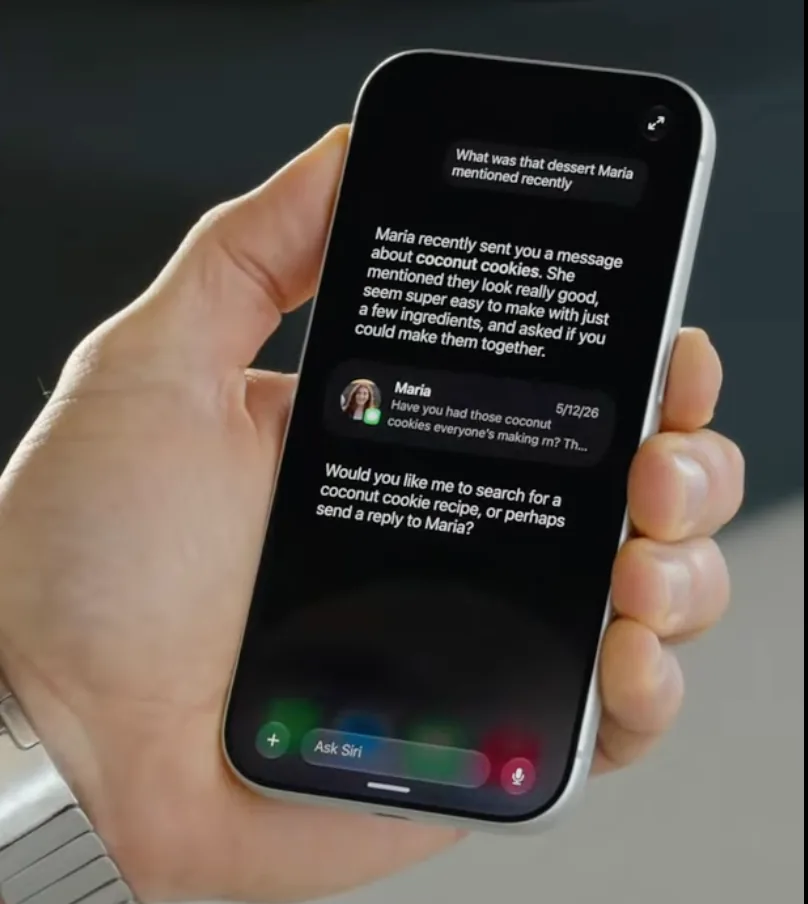
Apple's significantly upgraded Siri assistant, integrated with AI capabilities, has officially launched in the consumer beta version of iOS 27, released in July. This long-awaited update allows Siri to understand personal context, access vast world knowledge for answers, and retrieve specific information stored on an iPhone. Despite these advancements, the launch has been met with a sense of anticlimax, as the broader AI landscape has rapidly evolved while Apple refined its offering.
The current AI ecosystem is characterized by tools that can write code, build software, and perform complex multi-step tasks autonomously. AI is increasingly integrated into daily workflows, acting as a reasoning, memory, and creative partner. In this advanced environment, a functional chatbot or AI helper, while valuable, no longer represents the novel breakthrough it once would have.
Nevertheless, the new Siri AI offers substantial improvements. Users can now engage in natural, back-and-forth conversations with the assistant, with options to adjust the voice's expressivity and pacing. For those who prefer it, typing commands is also an option, and a dedicated app allows for referencing past conversations. A key feature is Siri's enhanced ability to understand personal context, enabling users to find specific photos, emails, contacts, texts, or calendar entries even when the exact search terms are unknown. For example, a user could ask Siri to locate the last saved receipt on their iPhone without specifying its content or storage location, and the assistant would successfully retrieve it. This extends to information saved only as images, such as a driver's license number or a QR code, which Siri can now interpret and utilize.
Siri's Expanded Capabilities and Performance Boost
The upgraded Siri can now launch websites and operate applications, facilitating tasks like obtaining directions, playing music, editing photos, composing emails, and managing audiobooks. Notably, Siri now consistently and accurately plays requested songs, podcasts, or audiobooks on the user's preferred application, addressing a persistent prior limitation. Beyond task execution, Siri is also equipped for brainstorming, assisting users in refining ideas, exploring new subjects, or even suggesting recipes based on available ingredients. It can accurately provide event details, such as concert dates or local happenings, based on user location.
Integration with the camera's viewfinder allows Siri to identify objects in the real world or assist with practical tasks like splitting a restaurant bill. In essence, the new Siri fulfills the long-held expectation of a truly useful assistant that simplifies iPhone interaction through voice commands and can answer a wide array of questions without simply redirecting to web searches.
These significant enhancements are underpinned by a strategic partnership with Google, leveraging its Gemini AI models. Apple has utilized Google's technology as a foundation to train and refine its proprietary Apple Foundation Models. The resulting AI models are designed for optimal performance on Apple's own silicon and within its private cloud infrastructure, ensuring both functionality and privacy.
Despite these comprehensive improvements, the perception is that Apple has addressed a long-standing deficiency in Siri rather than introducing a groundbreaking innovation. The current state of the AI assistant is largely seen as fulfilling its intended potential, with the primary marvel being its belatedly accurate performance. The general public will gain access to these new Siri features with the official release of iOS 27 in September.