
100 Scientists Name Top Unanswered Science Questions for 2026
A survey of 100 leading scientists reveals the most pressing unanswered questions across disciplines like physics, biology, and AI, guiding future research.

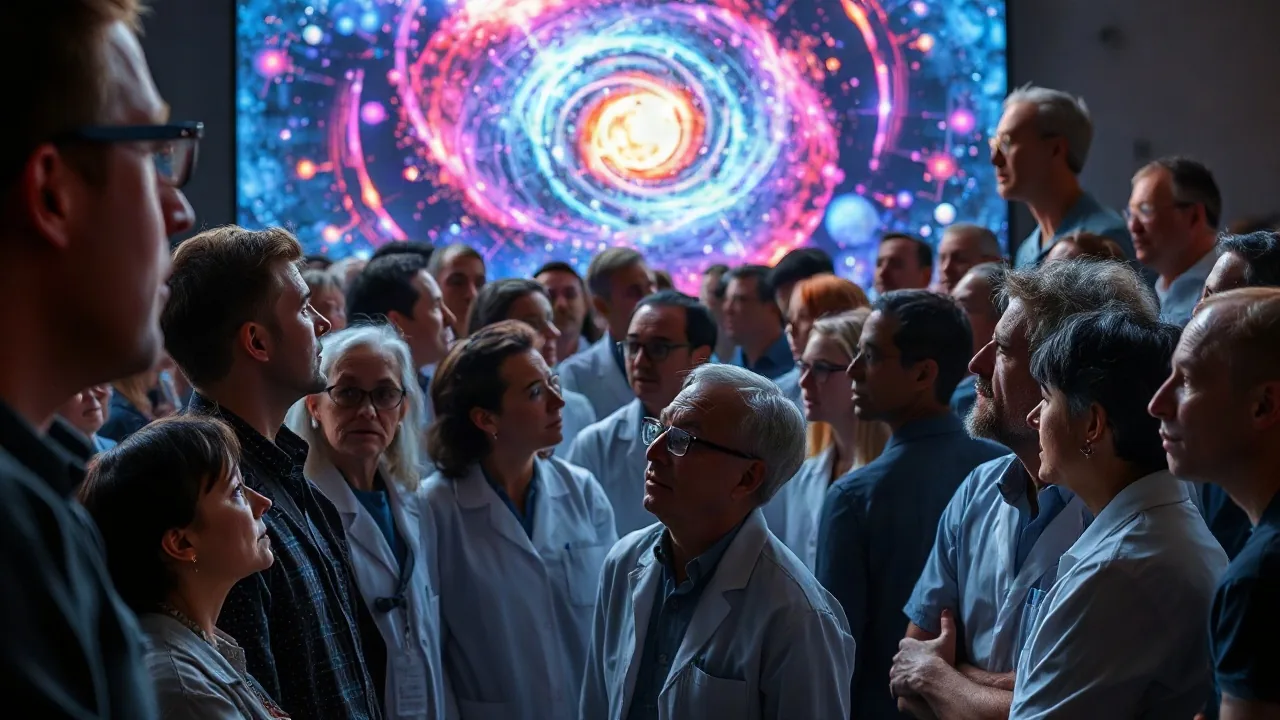
In October 2026, a diverse group of 100 prominent scientists has identified the most profound and pressing questions that currently challenge humanity's understanding of the universe. The findings, compiled by researchers at The New York Times, span fields from fundamental physics and the mysteries of consciousness to the future of artificial intelligence and the search for extraterrestrial life. These inquiries are set to steer the direction of scientific exploration for years to come.
The compilation represents a consensus among experts who were asked to name the most significant unresolved issues in their respective fields. Among the most frequently cited questions is the nature of dark matter and dark energy, which constitute roughly 95% of the universe but remain poorly understood. Another major theme is the origin and evolution of life, both on Earth and the potential for it to exist elsewhere in the cosmos. Researchers are also grappling with the fundamental workings of the human brain, seeking to unlock the secrets of consciousness, memory, and neurological diseases.
In the realm of biology, scientists are eager to understand the intricate mechanisms that govern aging and the potential to extend human lifespan. The development of novel therapies for presently incurable diseases, including various forms of cancer and neurodegenerative disorders like Alzheimer's, remains a critical objective. The field of AI is also a significant focus, with scientists pondering the path towards artificial general intelligence and its ethical implications.
The Quantum and the Cosmic Challenges
The physical sciences present a unique set of challenges, with many scientists pointing to the need for a unified theory that reconciles quantum mechanics and general relativity—the two pillars of modern physics that currently operate under different frameworks. Understanding the precise moment of the Big Bang and what, if anything, preceded it also remains a profound enigma. The nature of black holes, particularly what happens at their singularity, is another area of intense theoretical and observational study.
The survey also highlighted questions related to environmental science and sustainability. How can humanity effectively mitigate the impacts of climate change and transition to a fully renewable energy infrastructure by mid-century? What are the most effective strategies for preserving biodiversity in the face of habitat loss and pollution? These questions underscore the urgent need for interdisciplinary solutions that integrate scientific research with policy and societal action.
Dr. Evelyn Reed, a theoretical physicist at Stanford University and one of the surveyed scientists, emphasized the collaborative spirit behind the initiative. "These aren't just abstract puzzles; they are the frontiers of human knowledge," Dr. Reed stated. "By identifying these grand challenges, we hope to inspire a new generation of researchers and foster the international cooperation necessary to tackle them." The results are expected to influence funding priorities and research agendas across academic institutions and governmental science agencies worldwide.
The collection of questions reflects a sophisticated understanding of current scientific limitations and future possibilities. It serves as a roadmap for discovery, emphasizing that while much has been learned, the universe continues to hold countless wonders yet to be unraveled. The pursuit of these answers promises not only to expand scientific knowledge but also to potentially revolutionize technology and improve the quality of human life.