
Claude AI Gains Gmail Sending Power Without User Approval
Anthropic's AI assistant, Claude, can now send emails directly from Gmail, with options to bypass user approval for replies and forwards. This feature is exclusive to paid Claude plans.

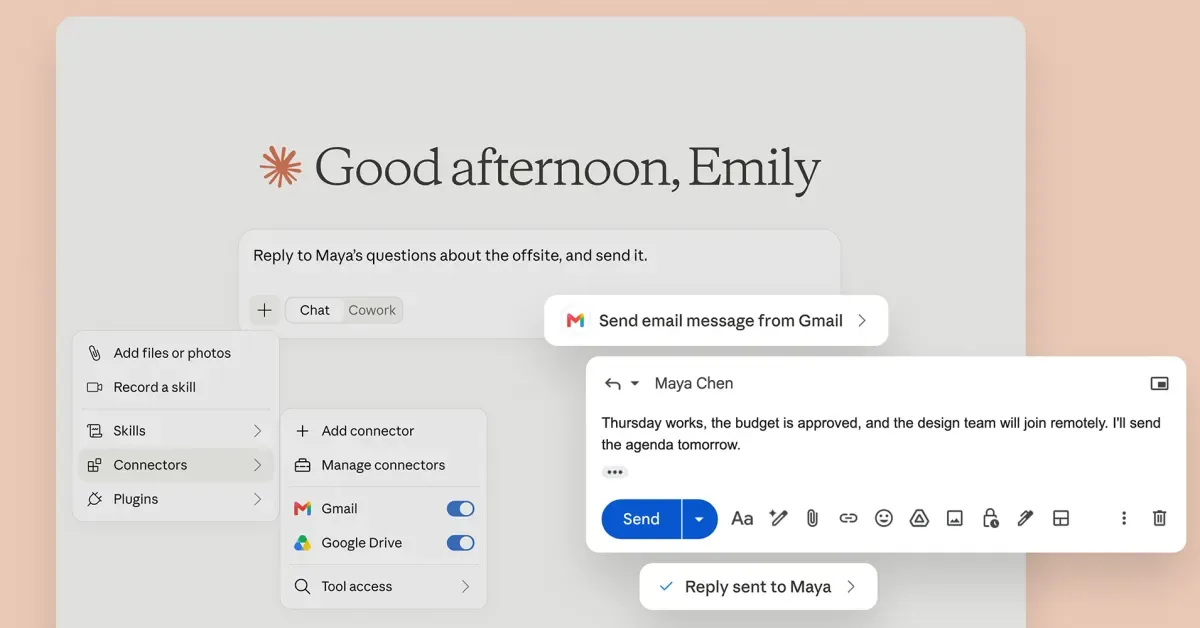
Anthropic's AI assistant, Claude, has gained new capabilities within Google Workspace, allowing it to send emails directly from a user's Gmail account without explicit, per-message approval. This marks a significant expansion of the AI's autonomy in managing digital communications for users of the Claude connector for Google Workspace, which previously offered assistance with inbox management, calendar events, and drive files.
Previously, Claude could help draft responses and manage email threads, but the final act of sending required user confirmation. Now, users can instruct Claude to reply to an email, and the AI can draft and dispatch the response automatically, depending on the user's configuration. While users can still opt for a review step before an email is sent, the option to allow Claude to send messages autonomously represents a notable leap in AI integration with personal productivity tools.
Anthropic clarified that the default setting for Claude is to request approval before sending, replying to, or forwarding emails. However, for users on Team and Enterprise plans, administrators have the discretion to enable or disable the automatic sending functionality for their team members. This means organizations can decide whether to grant Claude the ability to send emails without a final user sign-off, offering a balance between convenience and control.
Enhanced Email Management Features
The expanded functionality is designed to streamline email workflows for users who frequently interact with Gmail. By allowing Claude to send emails without requiring an explicit click each time, the AI can potentially save users significant time, particularly for routine responses or internal communications. This move follows a trend of AI assistants becoming more proactive and integrated into daily digital tasks, aiming to offload cognitive load from users.
The ability to send emails without prior approval is contingent upon the user's or administrator's settings. For individual users on paid Claude plans, they can choose to enable this feature, effectively granting Claude permission to act on their behalf for specific email actions. This increased automation is a key development in the evolution of AI-powered productivity tools, promising greater efficiency for those who leverage these advanced capabilities.
This new feature is part of a broader push by AI companies to embed their assistants more deeply into the digital fabric of users' lives. Companies like Google and OpenAI are also enhancing their own AI offerings, with advancements like Gemini in Chrome and auto-browsing features rolling out to Android devices. The competitive landscape in artificial intelligence is rapidly evolving, with new model releases and feature integrations becoming commonplace. For instance, Anthropic recently launched Claude Opus 5, positioned as a competitor to other high-performing models, and its Gemini 3.7 Flash model was introduced shortly after its predecessor.
The implications of an AI sending emails autonomously are far-reaching. While it offers unprecedented convenience for managing correspondence, it also raises questions about security, accuracy, and the potential for unintended consequences. Users must carefully consider their comfort level with granting such permissions and ensure they understand the default settings and available controls. As AI continues to integrate into our daily tools, the balance between AI autonomy and human oversight will remain a critical consideration for both developers and end-users alike.