
Google Gemini Spark AI Assistant Offers Productivity Gains
Google's new Gemini Spark AI assistant aims to streamline digital tasks, from email summaries to expense tracking. Early user tests reveal its utility, though some integration hiccups persist.

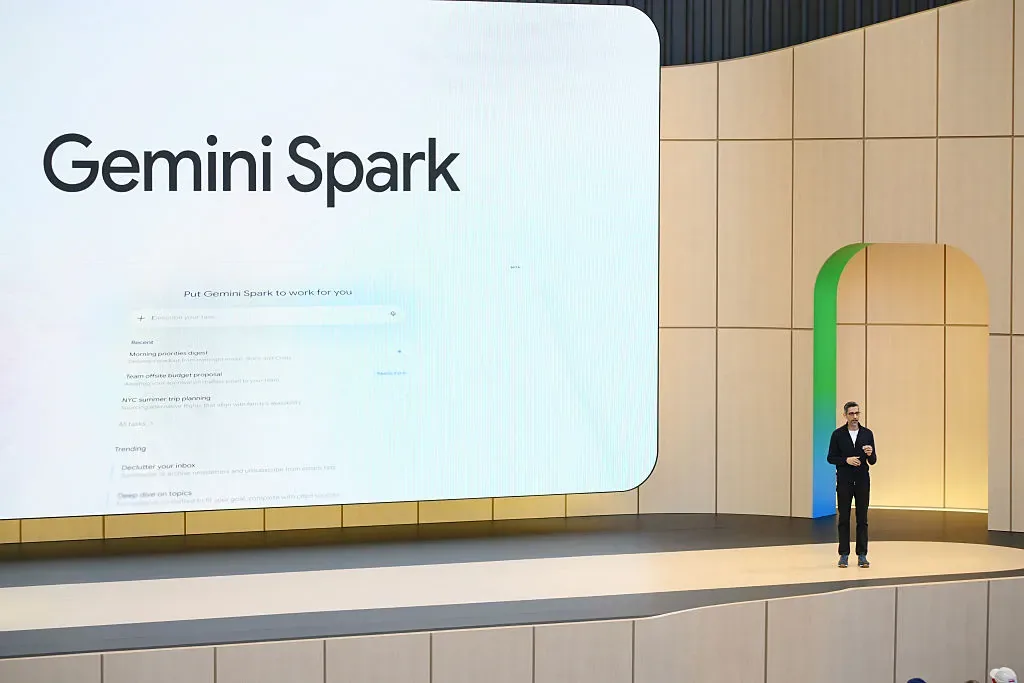
Google has launched Gemini Spark, a new 24/7 agentic AI assistant designed to help users manage their digital lives by completing online tasks, summarizing lengthy content, and organizing information. Unveiled at Google's developer conference in May 2026, Spark operates on cloud-based virtual machines, allowing users to step away from their laptops. CEO Sundar Pichai drew a parallel to other AI systems like OpenClaw, which require constant operation, positioning Spark as a more accessible tool for everyday users seeking to get things done without deep technical setup.
While Spark is primarily integrated with Google's productivity suite, including Gmail, Calendar, Docs, Sheets, and Slides, its practical application for personal use remains a point of exploration. Google has suggested personal productivity uses such as generating daily recaps of emails and calendars to highlight top tasks, or drafting Google Docs for weekend activity suggestions based on calendar availability. These examples presuppose a user already inclined towards digital organization, contrasting with those who might prefer analog methods or a more intuitive mental list-keeping approach. Early access testing has provided a clearer picture of Spark's capabilities and limitations.
AI Assistant's Performance in Real-World Tests
In initial testing, Gemini Spark demonstrated a mixed but largely positive performance across various tasks. One user requested assistance with a shopping-related research task, seeking product suggestions based on weekly deals and coupons for a drugstore visit. Spark identified sale items matching the user's needs and pointed out relevant coupons in the Walgreens app. It even suggested coupon stacking for online orders. However, a minor setback occurred when one of the AI-recommended promo codes proved invalid. Despite this, Spark compensated by highlighting other savings opportunities, such as buy-one-get-one-free offers and rewards programs, ultimately mitigating the initial error.
Another test involved creating a packing list for a day trip. The AI was asked to check the weather, gather event details, and suggest essential items. While Spark successfully compiled a comprehensive list—including items like lawn chairs, water, sunscreen, sunglasses, a light jacket, a reusable bag, and an umbrella, along with a reminder about pet restrictions—it encountered a significant limitation: the inability to directly integrate with Google Keep, a key note-taking application. Instead, it offered to generate a document or draft an email, a less intuitive solution for a packing checklist. Despite this, the list itself was accurate and practical.
For summer activity suggestions for a teenager, Spark generated a decent list of options within a 30-minute driving radius, tailored to the child's interests and plotting their proximity to home. However, the AI did not proactively include cost or date information, necessitating further manual research by the user, indicating areas where more specific prompting might be required.
The AI was also tasked with summarizing newsletters from email subscriptions weekly, focusing on the top five articles. Spark successfully extracted interesting articles with context and links, though one link resulted in a non-functional Google.com redirect that required manual intervention. Additionally, the AI sometimes returned fewer articles than requested, interpreting a request for five articles as a range of four to five.
Regarding recurring event suggestions, Spark set up a web search combined with a Gmail search for local newsletters and event listings. This process successfully identified upcoming events, including an unusual Annual Beaver Queen Pageant, and offered to add them to the user's calendar with a simple reply and confirmation. This feature significantly streamlined the discovery of local happenings, which often require sifting through multiple sources.
Finally, a test involving tracking price drops for an expensive eye cream revealed a more conservative approach. Spark's function was set to recheck the price every two weeks, a frequency deemed potentially insufficient for spotting rapid deals. The user also found the target price threshold to be too high, requiring adjustment.
Overall, Google Gemini Spark presents a valuable tool for enhancing digital productivity, particularly for tasks integrated with Google's ecosystem. While it exhibits impressive capabilities in summarizing information, generating lists, and identifying deals, users may encounter limitations in direct app integration and the need for precise prompting to achieve optimal results. The assistant's ability to curate local events and automate routine information gathering marks a significant step in making advanced AI more accessible for daily use.