
Leap Second Abolished: Earth's Speed Prompts Timekeeping Change
Timekeepers have officially abolished the leap second, a measure used to keep atomic time synchronized with solar time. The change comes as Earth's rotation is accelerating.

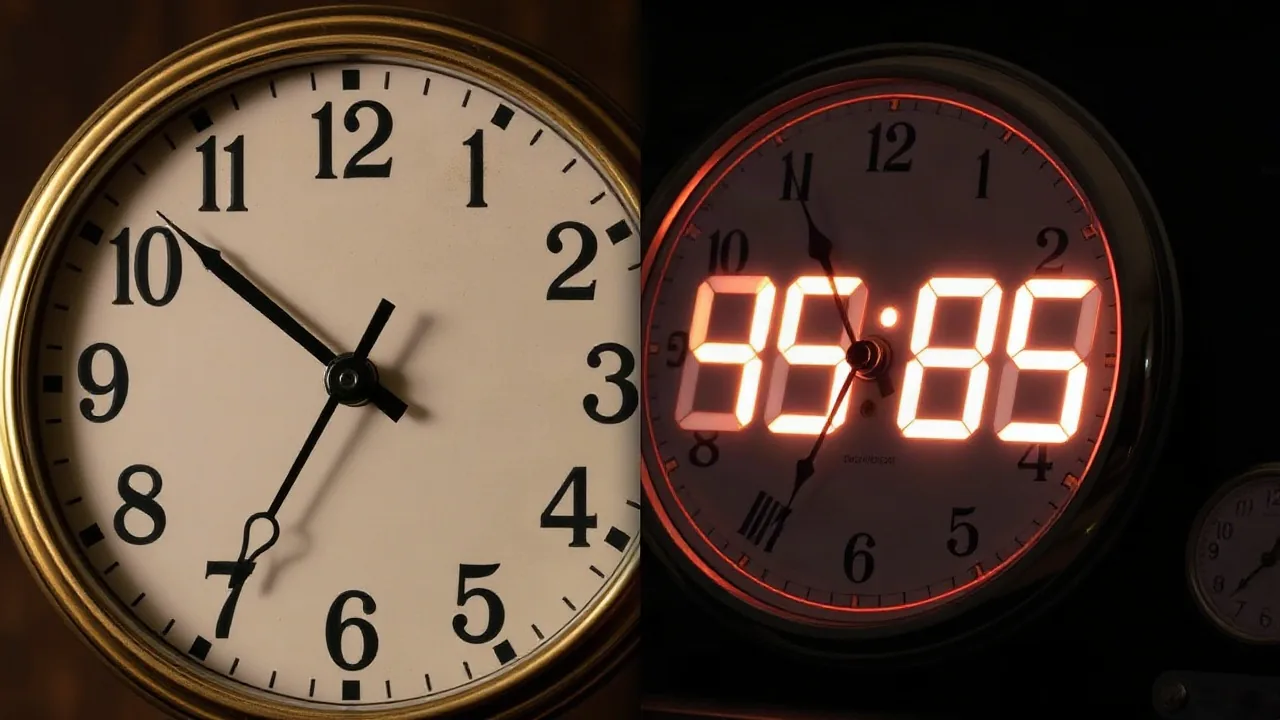
In a significant shift for global timekeeping, the international community has officially abolished the leap second, a practice used to align highly accurate atomic clocks with the slightly variable rotation of the Earth. The decision, announced by the International Bureau of Weights and Measures (BIPM), means that atomic time will now diverge from solar time by up to one second per year, a gap that will be addressed with a more substantial adjustment, tentatively called a "leap hour," at a much later date. This move marks the end of a practice that has been in place since 1972.
The primary driver behind this change is the increasing complexity and potential for disruption caused by the leap second. The Earth's rotational speed is not constant; it fluctuates due to various factors, including tidal forces from the Moon and Sun, and shifts in mass distribution within the Earth, such as ocean currents and seismic activity. While these variations are generally small, they have caused the Earth's actual solar time to drift away from the stable, uniform International Atomic Time (TAI). Leap seconds were introduced to bring these two time scales back into alignment, preventing the difference from exceeding 0.9 seconds.
Earth's Accelerating Rotation Poses New Challenges
Recent scientific observations have revealed a surprising trend: the Earth's rotation has been subtly accelerating. While the effect is minuscule on a human timescale, amounting to fractions of a millisecond per day, it has led some experts to believe that the Earth might eventually run faster than atomic time, necessitating a *negative* leap second—a concept that poses significant technical challenges for digital systems. The last leap second was added on December 31, 2016.
"The leap second has become increasingly difficult to manage," stated Dr. Elisabeth Dubois, a metrologist involved in the discussions. "Introducing negative leap seconds would require significant upgrades to our digital infrastructure, potentially causing widespread system failures. The decision to abolish it was driven by a desire for greater stability and predictability in our global timekeeping systems."
The BIPM's decision will allow TAI to diverge from Coordinated Universal Time (UTC), the basis of civil time worldwide, by as much as 0.9 seconds without correction. This accumulated difference will then be corrected through a larger, less frequent adjustment, such as the proposed "leap hour," which would occur perhaps once a century. This approach is expected to simplify the management of time for critical digital networks, financial markets, and communication systems, which have often struggled with the unpredictable nature of leap second insertions.
The concept of keeping time has evolved dramatically over centuries, from sundials and mechanical clocks to the hyper-accurate atomic clocks that define our modern era. The introduction of the leap second in 1972 was an attempt to bridge the gap between the astronomical time dictated by Earth's spin and the relentless precision of atomic physics. However, as technology advances, the need for a more robust and less disruptive system has become apparent. The abolition of the leap second is a testament to the ongoing adaptation of scientific standards in the face of technological progress and a deeper understanding of our planet's dynamic processes.