
Microsoft App Pushes Bing Search Across All Windows 11 Browsers
Microsoft has released a new standalone application that prompts users to set Bing as their default search engine across all installed browsers on Windows 11, including Chrome, Firefox, and Brave.

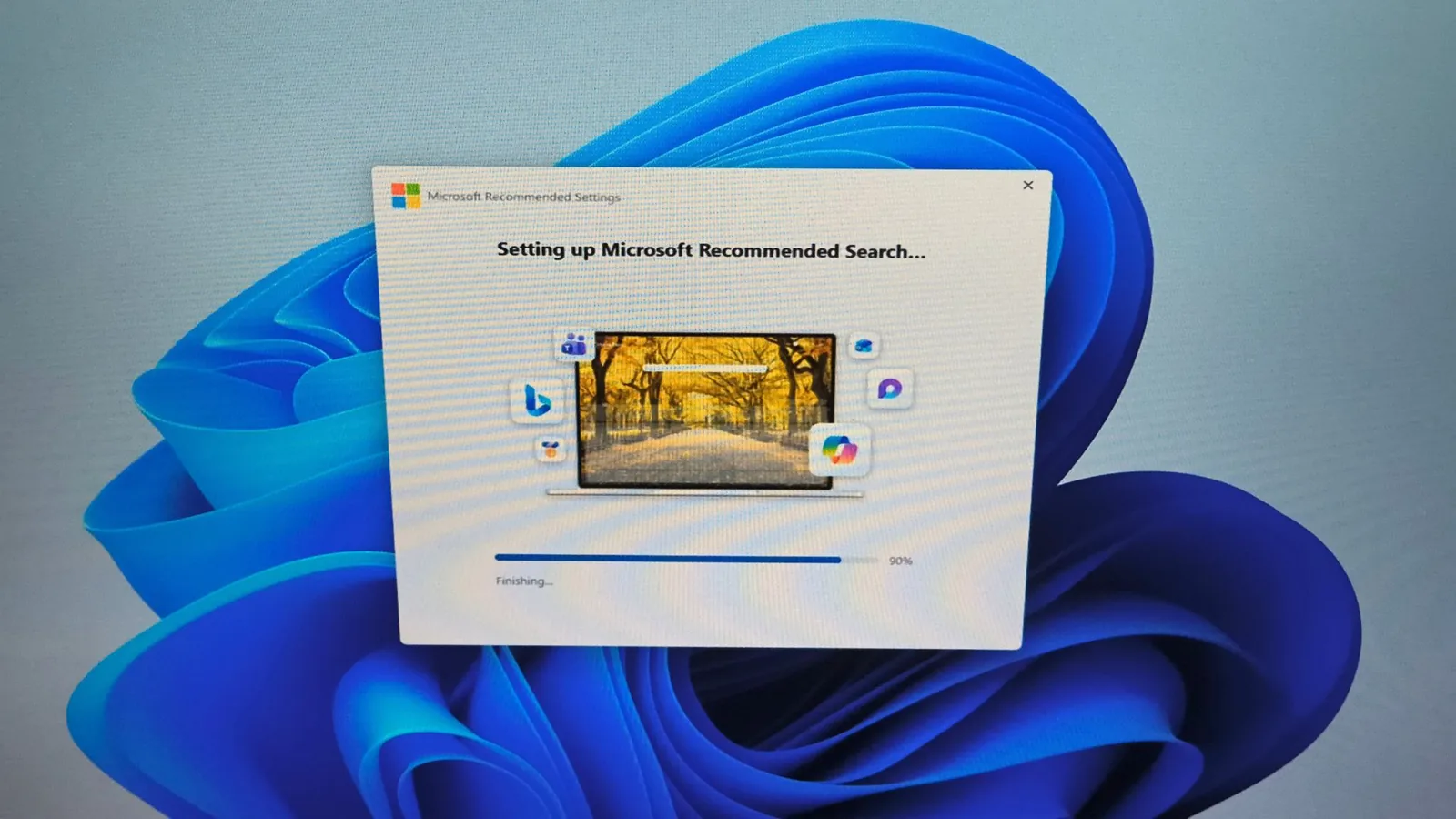
Microsoft has developed a new standalone application designed to encourage users to adopt Bing as their default search engine across all web browsers on their Windows 11 computers. The application, named Microsoft Recommended Search Settings, is not currently distributed through Windows Update or the Microsoft Store but is available as a direct download from Microsoft's official servers. Upon installation, the program prompts users to install browser extensions that automatically redirect search queries to Bing and often present a Microsoft Rewards offer as an incentive.
The executable, identified as MicrosoftSettings.exe, features a WinUI shell and utilizes WebView2 technology. Its sole apparent function is to guide users through changing their browser defaults to Bing and then redirects them to the Microsoft Rewards page upon completion. This dedicated engineering effort for a browser extension installation has drawn attention, particularly as other Windows applications, like the built-in Weather app, are noted for high resource consumption and advertising, with ongoing efforts to declutter the MSN interface elsewhere in the OS.
Browser Conflicts and User Pushback
When tested, the Microsoft Recommended Search Settings application presented a welcome screen, with Bing set as the default search engine via a pre-toggled 'Yes' option. This change was indicated to affect Microsoft Edge, Mozilla Firefox, and Google Chrome. After accepting the settings, users are taken to a "You're all set!" screen, which then opens a Microsoft Rewards offer in the default browser. Chrome and Brave both flagged a new extension, 'Microsoft Bing Homepage & Search for Chrome,' warning that it could read and change data on websites, display notifications, and modify homepage and search settings to bing.com.
The situation escalated when Google Chrome actively pushed back against the change. After the extension was enabled, Chrome presented a prompt asking users if they wanted to revert to Google Search. Microsoft's extension, however, overlaid a second prompt, advising users not to revert, claiming it would disable the Bing extension and remove access to Bing search features. This digital tug-of-war inside the browser highlights the ongoing competition between major tech companies for search engine dominance. This tactic is not entirely new; a similar prompt war was reported in March 2024, indicating Microsoft's persistent strategy to encourage Bing usage.
The move comes as Microsoft has also been working to simplify its MSN interface and Windows search features. Reports indicated a decluttering of MSN tiles and sponsored content in Windows Search, and a default-off setting for MSN feeds and ads in Windows 11 Widgets. The existence of the new Recommended Search Settings app seems to contradict these efforts, suggesting a dual strategy of decluttering some areas while aggressively promoting Bing in others.
Microsoft's broader efforts to increase Bing's user base are evident. The company has introduced options to sign into Bing using Google or Apple accounts, and previously ran a $1 million sweepstakes for Bing users. Despite Bing crossing 1 billion users, as confirmed by CEO Satya Nadella, the company appears to be relying on aggressive promotion and new application development rather than solely on product quality improvements to compete with Google, especially amidst Google's own AI integration into search. The Microsoft Recommended Search Settings app was initially identified by Windows tester Xeno Panther, who noted its specific function of pushing Bing and its associated Rewards offer.