
Microsoft's Intelligent Terminal Integrates AI Agents into Command Line
Microsoft has unveiled its new open-source "Intelligent Terminal," a modified version of Windows Terminal designed to natively integrate AI agents. It features an agent status bar, a dedicated AI pane, and automatic error detection for commands.

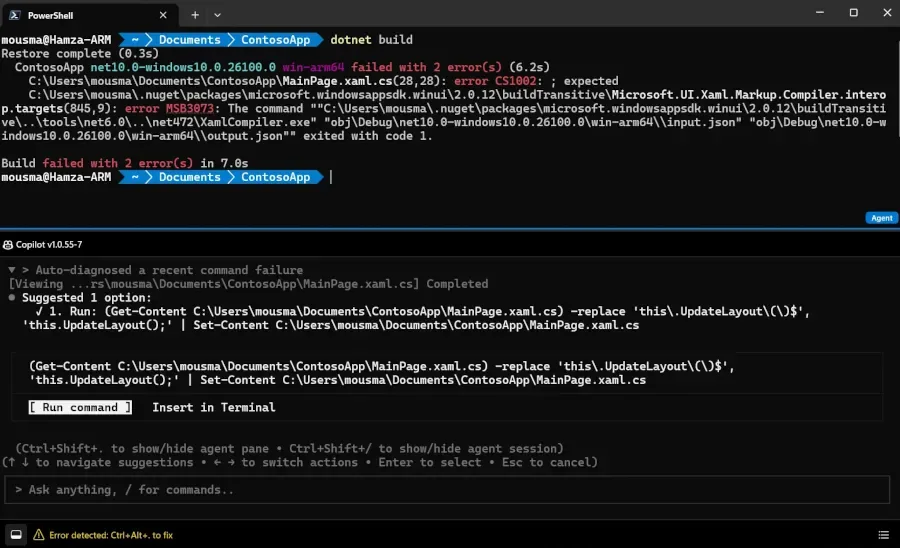
Microsoft has launched its latest open-source project, the "Intelligent Terminal," a new tool designed to embed artificial intelligence capabilities directly into the command-line interface. Announced on June 2, 2026, this project is a fork of the existing Windows Terminal, specifically engineered to provide native integration for AI agents. The company aims to offer a more intuitive and powerful command-line experience for developers and power users.
The Intelligent Terminal introduces several key features that distinguish it from its predecessor. A prominent addition is an agent status bar, which provides real-time information about connected AI agents. Complementing this is a dedicated "agent pane," a configurable, context-aware docked section that allows users to interact with their chosen AI command-line interface (CLI) directly within the terminal window. This aims to streamline workflows by bringing AI assistance directly to the user's command prompt.
Beyond interface enhancements, the Intelligent Terminal boasts functional improvements such as automatic error detection for commands. This feature can help users identify and correct mistakes more quickly, reducing frustration and improving efficiency. The project also includes robust agent management support, enabling users to easily configure and switch between different AI agents. This flexibility allows the terminal to adapt to various tasks and user preferences.
Context and Future Implications
The development of the Intelligent Terminal reflects a broader trend in the tech industry towards integrating AI into everyday computing tools. As AI models become more sophisticated, their application is expanding beyond specialized applications into more general-purpose software. Microsoft intends to continue maintaining the standard Windows Terminal for users who do not require AI agent integration, ensuring that both versions serve distinct user needs. This move signifies Microsoft's commitment to exploring AI's potential to enhance developer productivity and user experience across its product ecosystem.
While the Intelligent Terminal is released under the permissive MIT license, making its source code freely available and modifiable, it currently only supports the Microsoft Windows operating system. Developers and enthusiasts interested in exploring or contributing to the project can find the source code on GitHub. The availability of the code is expected to foster community involvement and accelerate the development of new AI-powered terminal functionalities. The project's initial focus on Windows suggests a strategic approach, allowing Microsoft to refine the core AI integration before potentially expanding to other platforms.
The potential impact of such integrated AI tools on developer workflows is significant. By providing AI assistance directly within the terminal, Microsoft could empower developers to perform complex tasks, debug code, and manage systems with greater ease and speed. This could lead to faster development cycles and more robust software development practices. The ability to configure different AI agents also opens up possibilities for specialized workflows, such as having one agent dedicated to code completion and another to security analysis.