
AEW Wembley Stadium: Broadcasting Technology Behind Live Sports
AEW's 2026 Wembley Stadium event showcased cutting-edge broadcasting infrastructure delivering real-time coverage to global audiences. Advanced camera systems, cloud-based production, and AI-powered graphics transformed how millions watched the live spectacle.

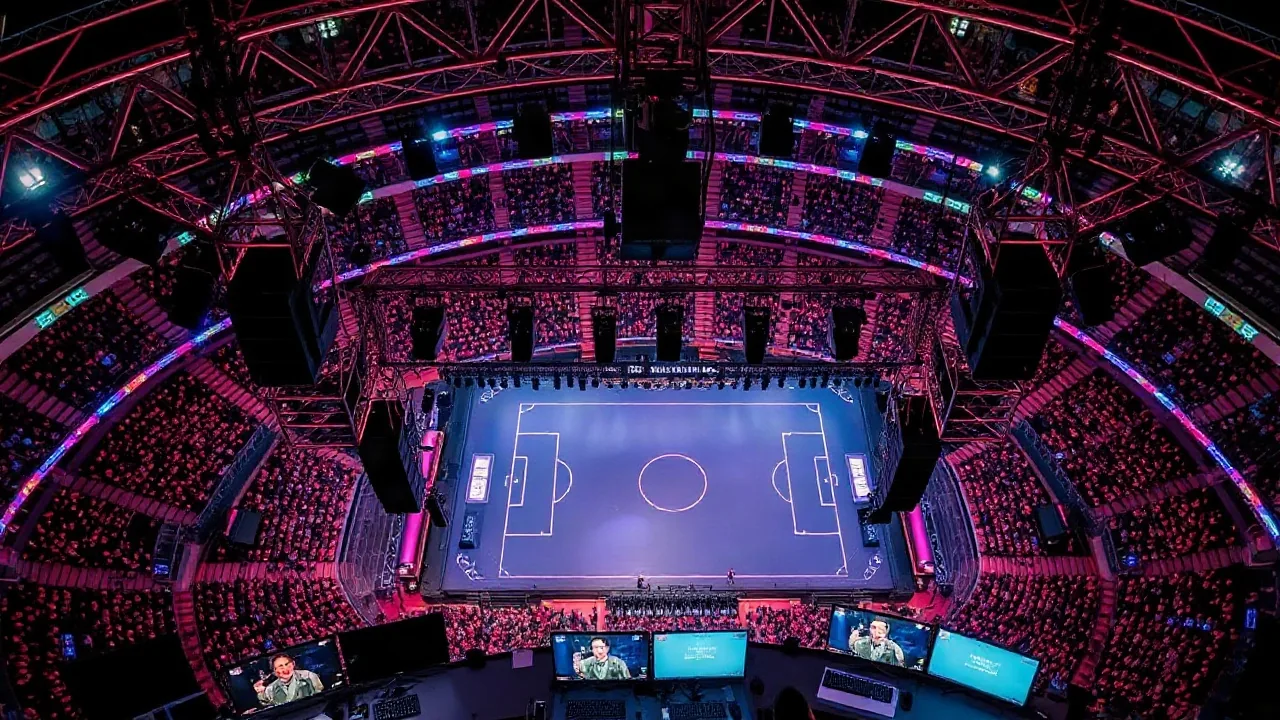
On September 4, 2026, All Elite Wrestling held a major event at London's Wembley Stadium, drawing over 65,000 fans and millions of concurrent streaming viewers worldwide. Behind the scenes, a sophisticated array of broadcasting technology worked in concert to capture every moment, angle, and reaction for audiences across multiple continents and platforms.
The production setup relied on a distributed network of 24 4K-capable cameras positioned around the 90,000-seat venue. Six robotic PTZ (pan-tilt-zoom) units operated remotely from a central control room, while handheld gimbal operators tracked performers in real time. This multi-angle approach allowed the production team to cut between wide shots, close-ups, and dramatic aerial perspectives without missing critical storytelling beats.
"The infrastructure we deployed for Wembley represents a fundamental shift in how live sports and entertainment events are produced," said Michael Chen, Vice President of Production Technology at AEW, in an interview on September 3. "We're not just capturing the event; we're creating parallel narratives for different audience segments, from traditional broadcast to mobile viewers to VR subscribers."
Cloud-Based Production and Real-Time Distribution
Rather than relying solely on satellite uplinks or fiber-optic trunks, AEW's Wembley broadcast integrated cloud-native workflow systems. Raw video feeds flowed into a hybrid edge-compute environment at the stadium, where initial processing, color grading, and metadata tagging occurred before transmission to central playout servers in London and New York.
This approach offered several operational advantages. Redundancy was built in at multiple points; if one uplink failed, the system automatically rerouted streams through backup channels. Content creators and event production teams could access footage and graphics from anywhere on the globe, enabling real-time collaboration and faster editorial decision-making.
The production team also deployed machine-learning models to identify and flag key moments automatically. A proprietary AI system marked submission holds, near-falls, and crowd reactions within milliseconds, allowing highlight editors to compile clips for social media platforms without waiting for manual review. This automation compressed what once took hours into minutes, allowing clips to trend on social platforms before the main event concluded.
Distribution pipelines fed multiple formats simultaneously:
- 1080p/60fps HD stream for traditional cable and satellite partners
- 4K/60fps for premium streaming subscribers
- Mobile-optimized 720p/30fps for smartphone viewers
- Low-latency 1080p feed for VR headset users (experimental)
Enhancing Fan Experience Through Advanced Graphics and Analytics
Beyond cameras and infrastructure, the fan experience relied on real-time graphics rendering and data visualization. A team of 12 graphics operators ran a custom-built graphics engine capable of rendering 200+ animated elements per second without introducing perceptible latency.
These graphics included fighter statistics, historical matchup data, live social media sentiment scores, and immersive AR overlays. When a wrestler entered the ring, their career win percentage, recent injury history, and fan-submitted messages appeared on screen in milliseconds. This layering of contextual information transformed passive viewing into an interactive narrative experience.
The sentiment analysis layer proved particularly innovative. A dedicated server cluster monitored social media mentions, hashtags, and platform-native engagement metrics in real time, displaying live crowd reaction scores on broadcast. This metric reflected genuine audience sentiment and helped remote viewers feel connected to the stadium atmosphere.
"We're treating sports media less as a passive capture and more as a designed experience," noted Sarah Patel, Head of Digital Production for AEW, during a post-event technical debrief. "Every element, from camera movement to graphics placement to audio mixing, is orchestrated to guide viewer attention and emotion."
Audio engineering was equally sophisticated. The production deployed a spatial audio mix using Dolby Atmos, capturing crowd ambience from 32 discrete microphone clusters positioned throughout Wembley. Mixing engineers in real time balanced the roar of 65,000 spectators against commentary clarity, creating an immersive soundscape for home audiences.
Technical Challenges and Contingency Planning
Coordinating this infrastructure across an international venue presented logistical hurdles. Wembley Stadium's existing network infrastructure required upgrades; the production team installed additional fiber runs and temporary wireless backhaul systems to ensure bandwidth sufficiency.
Latency management was critical. For VR feeds and interactive features, latency exceeding 200 milliseconds degraded viewer experience. The team implemented edge-caching strategies and optimized codec selection to keep end-to-end delays under 150 milliseconds for most streams.
Power consumption also demanded attention. The temporary production equipment consumes approximately 600 kilowatts during peak operation. The venue coordinated with local utilities to provision dedicated power feeds and maintain voltage regulation within strict tolerances.
Contingency protocols addressed potential failures. A redundant production control room was staffed in a secondary location five miles away, ready to assume full control if the primary truck-based facility became compromised. Internet connectivity relied on three separate ISP connections, each capable of sustaining the full broadcast alone.
The Wembley deployment underscores how production innovation in live sports has evolved from technical infrastructure into a core competitive advantage. As audiences fragment across platforms and viewing preferences diverge, broadcasters who can deliver tailored, low-latency experiences will retain both casual and devoted fans. AEW's investment in cloud-based architecture, AI-assisted workflows, and redundant systems positions the organization as a leader in next-generation stadium tech deployment for the 2026 viewing season and beyond.