
Falcon Heavy Lifts NASA's Roman Telescope on Historic Mission
SpaceX's powerful Falcon Heavy rocket successfully launched NASA's Nancy Grace Roman Space Telescope on August 30, 2026. The rocket's immense thrust sent the observatory on a million-mile journey to its operational orbit.

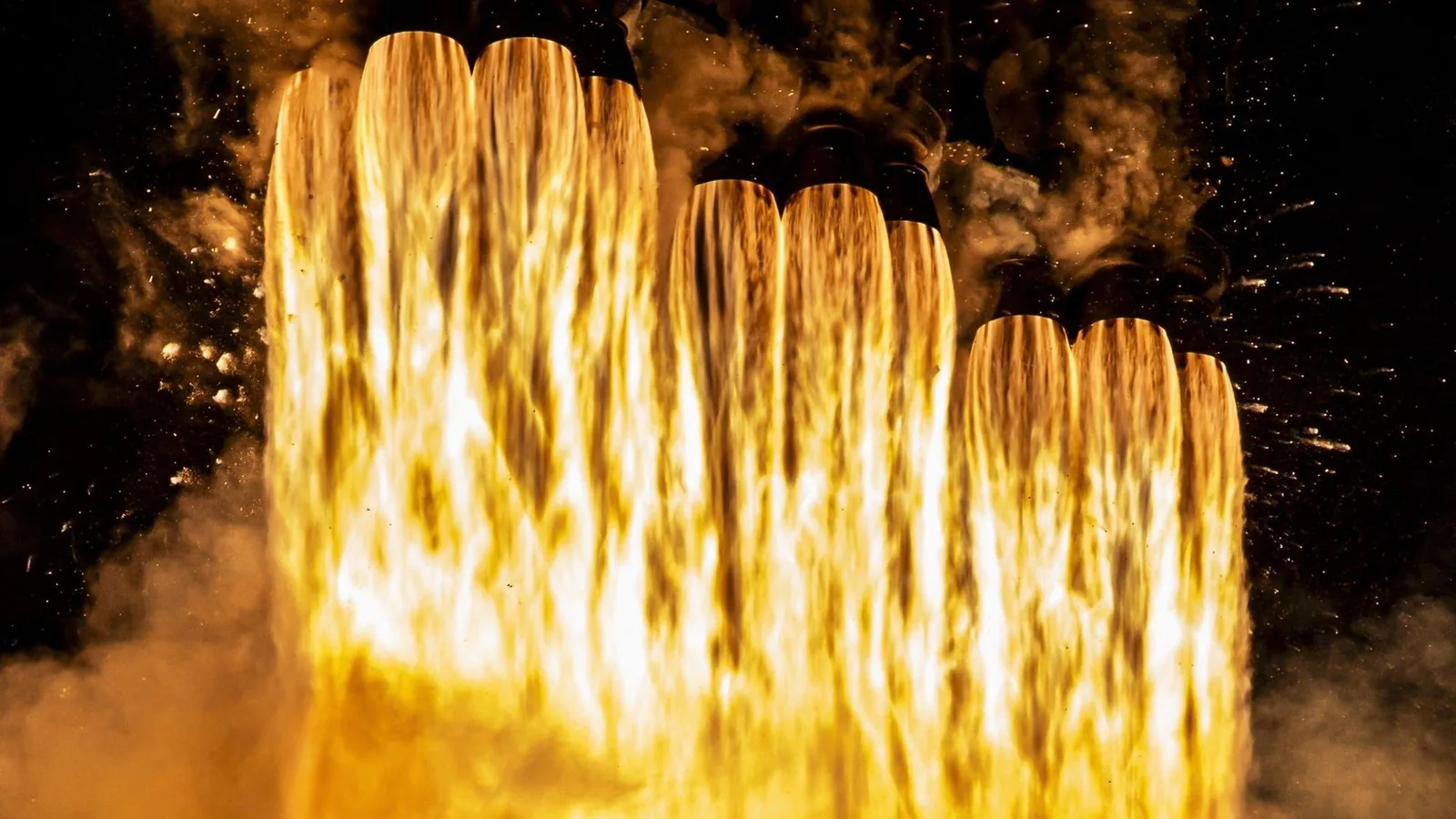
The immense power of SpaceX's Falcon Heavy rocket was on full display Sunday, August 30, 2026, as it propelled NASA's groundbreaking Nancy Grace Roman Space Telescope toward its distant destination. The rocket's 27 Merlin engines ignited, generating over 5 million pounds of thrust to lift the observatory into space from a picture-perfect launch.
The Falcon Heavy delivered the Roman Space Telescope to a unique and stable orbit at Lagrange Point 2 (L2). This location, situated 1 million miles from Earth between our planet and Mars, is a gravitationally balanced point where the pulls of the Sun and Earth effectively cancel each other out. This vantage point is ideal for astronomical observations, offering a clear view of the cosmos.
The Roman Space Telescope will spend several months calibrating and coming online before commencing its ambitious scientific mission. Its primary objectives include searching for evidence of dark energy and dark matter, phenomena that dominate the universe but remain largely mysterious. Additionally, the telescope will hunt for distant exoplanets, potentially discovering new worlds beyond our solar system.
A Beast for Heavy Payloads
SpaceX reserves the formidable Falcon Heavy rocket for missions requiring exceptional heavy-lift capabilities. This launch vehicle is essentially a triple-booster configuration, combining three Falcon 9 rocket cores. This robust design allows the SpaceX rocket to carry substantial payloads across vast cosmic distances.
The successful deployment of the Roman Space Telescope highlights the critical role of advanced launch vehicles like the Falcon Heavy in enabling ambitious space science. NASA relies on such powerful rockets to transport its most sophisticated instruments to orbits far from Earth, where they can conduct research unhindered by atmospheric interference.
The Roman Space Telescope represents a significant leap forward in astrophysics. Its wide field of view and infrared capabilities will allow astronomers to map the distribution of dark matter and dark energy with unprecedented precision. Its contribution to understanding the universe's expansion and composition is expected to be profound. The telescope is named in honor of Nancy Grace Roman, a pioneering astrophysicist at NASA who was instrumental in establishing the agency's space telescope programs.