
Greenland Ice Island Survives Collision with Joe Island
A massive iceberg that calved from Greenland's Petermann Glacier in August 2026 survived a significant collision with a rocky outcrop known as Joe Island, continuing its journey into Nares Strait.

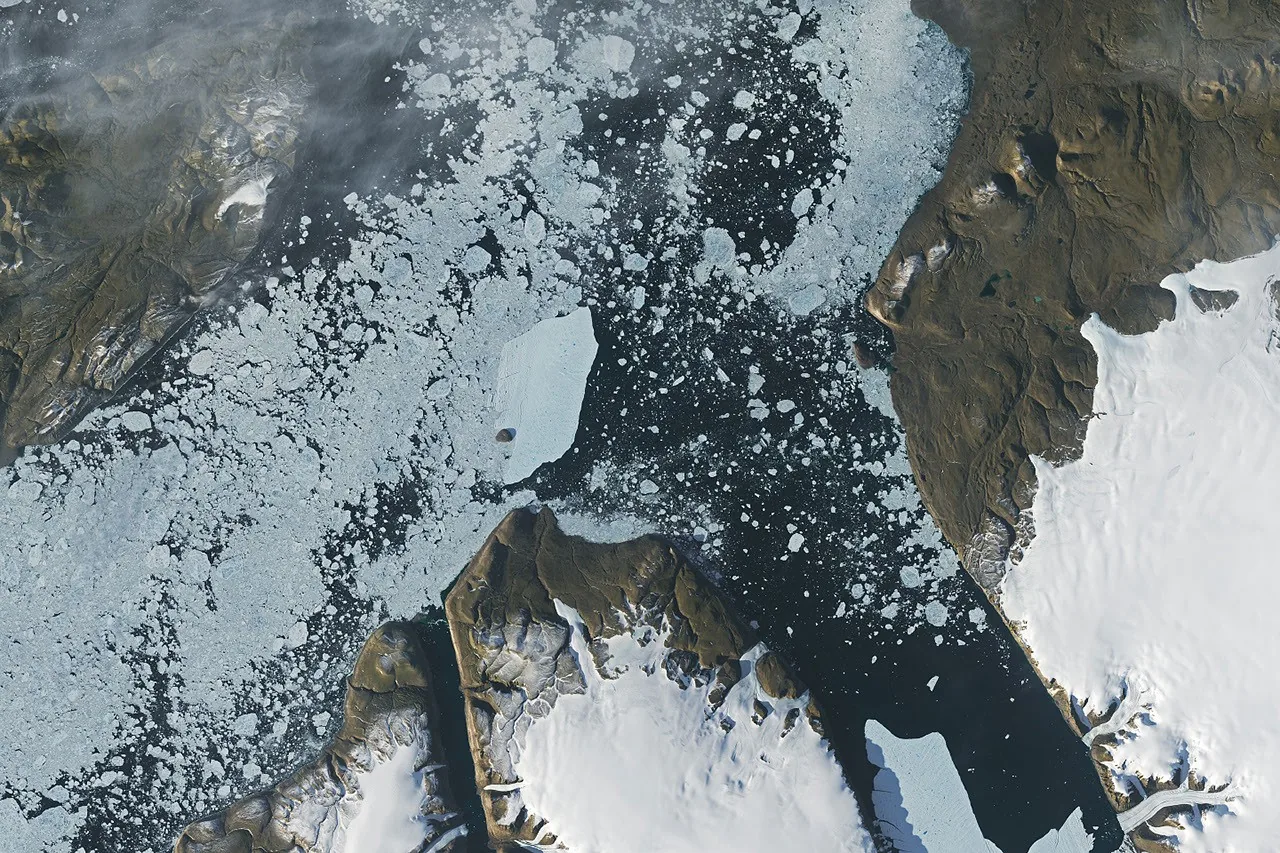
A colossal iceberg, estimated to be over 76 square kilometers (29 square miles) at the time of its detachment, has successfully navigated a perilous encounter with Joe Island in Greenland's Nares Strait. The iceberg, which broke off from the massive Petermann Glacier on August 4, 2026, is the largest such event from an Arctic glacier since 2020. Scientists are closely monitoring these calving events as indicators of glacial stability and potential impacts on global sea levels.
The dramatic event was first identified by Adam Garbo, a doctoral candidate in glaciology at the University of Ottawa, using data from the European Space Agency's Sentinel-1 satellite mission. Garbo and his international team have been utilizing remote sensing technologies to study the glacier's ice tongue. This particular iceberg, a 'tabular iceberg' or 'ice island,' measured just over 76 square kilometers upon calving. While substantial, it was smaller than anticipated by the research team, who had been monitoring large rifts on the glacier's ice tongue. "What surprised us was that the calving instead followed a different fracture, producing a smaller ice island than we had originally anticipated," Garbo stated. He noted that two additional large rifts remain on the glacier, which are expected to eventually yield new ice islands measuring approximately 94 and 84 square kilometers, though their calving dates are uncertain.
Navigating Obstacles
As the newly formed ice island began its drift down Petermann Fjord, it was tracked by glaciologist Mauri Pelto of Nichols College, who utilized images from NASA-USGS Landsat satellites. The berg traveled at an average speed of 3 kilometers per day. Its path led it directly toward the junction of the fjord and Nares Strait, where it encountered Joe Island, a small, rocky protrusion. This island represents one of the initial obstacles for icebergs departing Petermann Fjord. Collisions with Joe Island have historically been destructive, with the 2010 ice island calving event having been split into two pieces upon impacting it. Petermann Glacier's icebergs are known to be thinner and more susceptible to fragmentation than those from other Greenlandic glaciers or Antarctic ice shelves. "We were certainly watching closely as it interacted with Joe Island and were impressed that it survived the interaction without further fragmentation," Garbo remarked.
Despite the significant impact, the ice island, estimated to be less than 150 meters thick at calving, managed to avoid breaking apart. Satellite imagery captured by the Operational Land Imager (OLI) on Landsat 9 on August 23 and August 24 confirmed the collision and the subsequent continued movement of the berg. Surface currents and winds have propelled the ice island out of the fjord, and it was observed pivoting away from Joe Island, continuing its journey southwest through Nares Strait. Over time, the berg will inevitably fracture into smaller pieces due to the relentless forces of tides, winds, ocean currents, and melting. Ice islands originating from Petermann Glacier, unlike those from tidewater glaciers with floating ice-shelf extensions, may not ground within the fjord itself but can become stranded later in their extensive drift paths. Indeed, numerous ice islands and their fragments have previously grounded off the coasts of Coburg and Baffin Islands.
The phenomenon of large icebergs breaking off from major glaciers like Petermann Glacier is a natural process integral to the life cycle of outlet glaciers. However, the frequency and size of these events are drawing increased scientific scrutiny. Greenland's ice sheet is a critical component of the global climate system, and its melt rate has direct implications for future sea-level rise. The stability of glaciers like Petermann, which act as crucial 'gatekeepers' for ice flow from the Greenland ice sheet into the ocean, is therefore a subject of intense study. Monitoring these 'ice islands,' their trajectories, and their interactions with the environment provides valuable data for climate models and for predicting future changes. Ice islands and their smaller fragments, as they melt, distribute freshwater across the ocean, influencing salinity and marine ecosystems. Their long-distance travel also poses potential navigational hazards and risks to offshore infrastructure.