
Harvard Scientist Argues Mysterious Space Object 1998 KY26 Is Not an Asteroid
A Harvard astrophysicist is pushing back against NASA's assessment of a mysterious, accelerating space object, suggesting it could be a lost Soviet spacecraft.

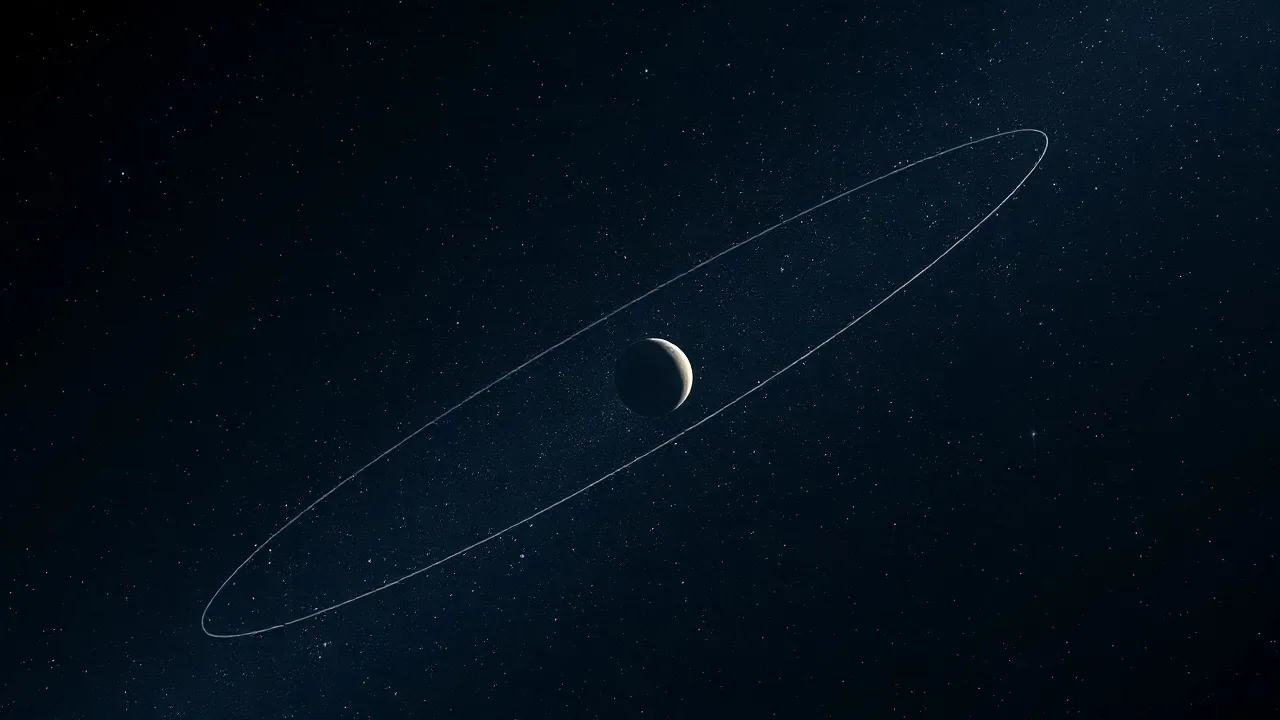
A high-profile debate has emerged within the scientific community regarding the true identity of a fast-moving object in the solar system. Avi Loeb, a Harvard astrophysicist, is pushing back against statements made by NASA officials regarding the nature of the near-Earth object known as 1998 KY26. While space agency leadership maintains the object is a standard rock, Loeb contends that its unusual movement patterns indicate it is something entirely different.
Known as 1998 KY26, the approximately 36-foot-wide object has drawn intense scientific scrutiny because it is accelerating in a manner that gravity alone cannot explain. Jared Isaacman addressed the mystery during a media appearance, stating, “I've not seen any evidence to suggest this is...anything other than an asteroid.” However, Loeb rejected that conclusion during a subsequent interview, pointing to the object's unconventional trajectory.
Evaluating Theories on Non-Gravitational Acceleration
“Well, first of all, it's not an asteroid because 1998 KY26 appears to have non-gravitational acceleration, meaning it's being pushed by some force other than gravity, and asteroids are just rocks,” Loeb said. Researchers have explored several hypotheses to account for the speed, including the possibility that KY26 is a “dark comet.” Yet, recent findings from Georgia Tech and other institutions have cast doubt on whether the object can retain enough ice for such behavior, especially given the complete lack of a visible cometary tail or outgassing.
Loeb and his colleagues have proposed an alternative hypothesis: that the object is actually Phobos 1, a Soviet spacecraft launched toward Mars in July 1988 that lost communication after a faulty command. According to their calculations, sunlight reflecting off the historical probe could produce a push consistent with the observed acceleration. NASA countered this in a published paper by stating that a comprehensive orbital analysis determined the complex trajectory is driven by solar radiation forces acting on its non-spherical shape, rather than hidden comet-like activity or artificial origins.
The definitive answer to the debate may arrive in 2031, when the Japan Aerospace Exploration Agency's Hayabusa2 spacecraft is scheduled to rendezvous with the object. Loeb remains confident that a close-up examination will ultimately prove whether scientists are observing a natural space rock or a piece of human engineering.