
Supernova discovery reveals faintest stellar explosion ever recorded by researchers
Israeli researchers may have discovered the faintest supernova ever recorded, staying visible for nearly a year and reversing cosmic-ruler rules.

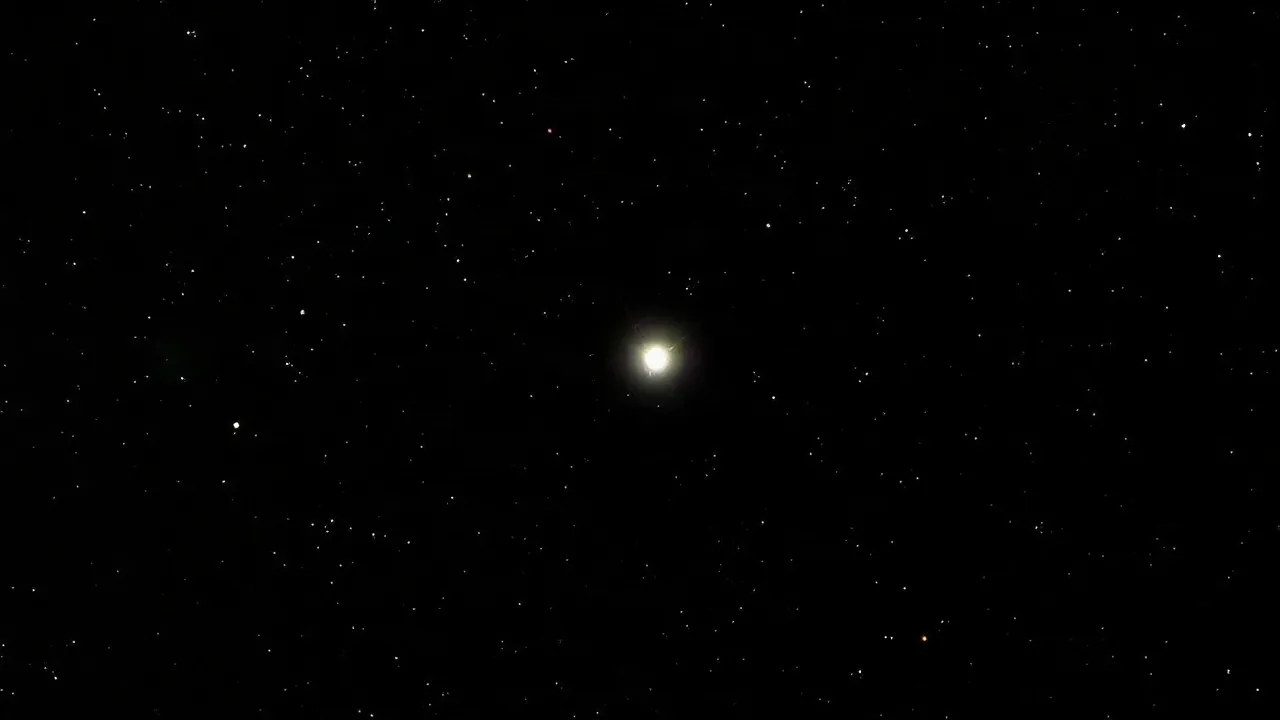
A group of Israeli researchers may have made a groundbreaking stellar discovery by identifying what could be the faintest supernova ever recorded. According to reports, this unusual celestial event produced a stellar explosion that was 400 times fainter than usual.
Instead of fading quickly as standard cosmic events typically do, the exceptionally weak explosion refused to go out. The phenomenon remained visible for nearly a year, challenging conventional astronomical expectations and reversing standard cosmic-ruler rules. Scientific analysis indicates that the occurrence may have trapped radiation for 70 days, while imagery from the Euclid spacecraft points toward a white dwarf as the underlying source.
Unusual Stellar Characteristics
Observations highlight the peculiar behavior of the cosmic event, which stood out due to its remarkably low luminosity. Research institutions including the Institut d'Estudis Espacials de Catalunya have pointed to the weak explosion as the primary reason the anomaly managed to sustain its visibility over an extended period. Publications such as The Times of Israel and Tech Times detailed how the trapped radiation contributed to its prolonged presence in the night sky.
Understanding such faint stellar remnants helps astronomers refine models of stellar evolution and white dwarf behavior. As space agencies continue to analyze data from missions like Euclid, researchers hope to uncover more about these hidden stellar mechanics.