
Japan Aims for Martian Moon Sample Return Mission First
Japan's space agency is set to launch a groundbreaking mission to Phobos, a moon of Mars, aiming to be the first nation to collect and return samples from an extraterrestrial moon beyond Earth's orbit.

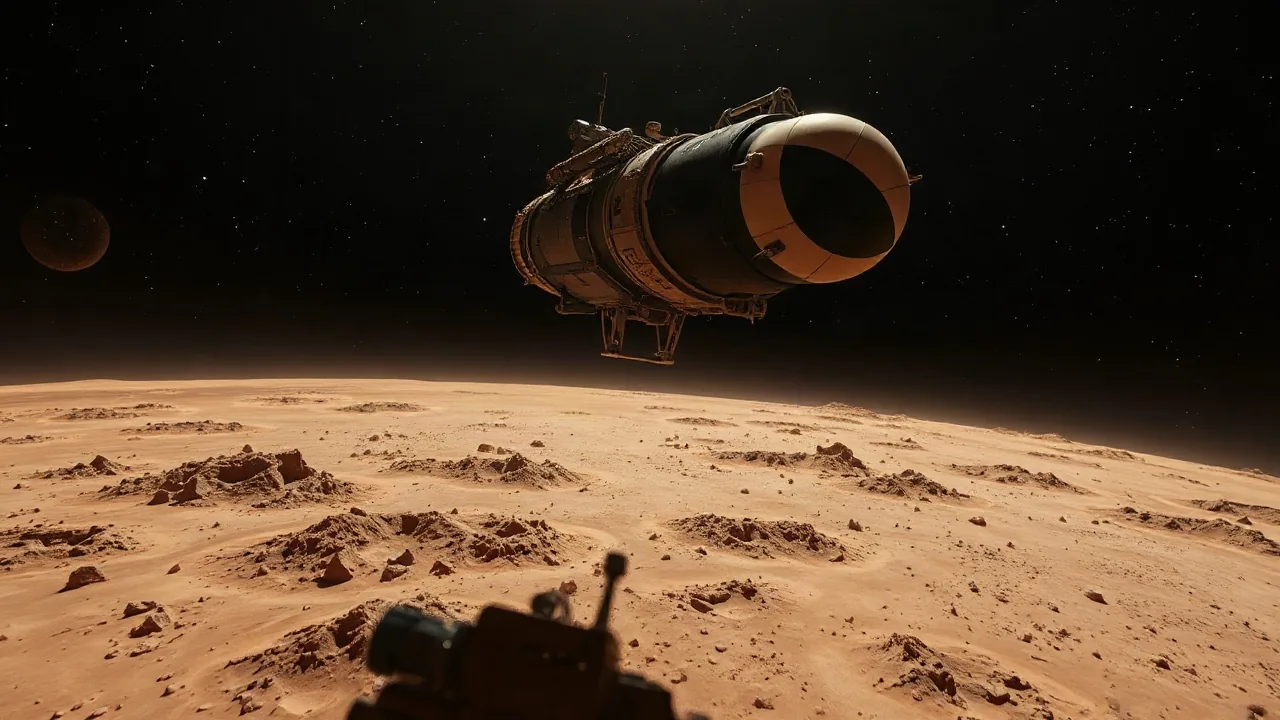
The Japan Aerospace Exploration Agency (JAXA) is preparing to launch the Martian Moons eXploration (MMX) mission, a pioneering endeavor designed to land on Phobos, one of Mars' two moons, collect surface samples, and bring them back to Earth for analysis. This ambitious undertaking, scheduled for launch in 2026, marks a significant step in planetary science and the quest to understand the origins of the solar system.
Phobos and its sibling moon, Deimos, are thought to be captured asteroids, offering a unique window into the early solar system's composition. By studying samples from Phobos, scientists hope to gain insights into the processes that formed Mars and its moons, potentially shedding light on the formation of planetary systems throughout the cosmos.
Unraveling the Mysteries of the Red Planet's Moons
The MMX spacecraft will travel to Mars and orbit the red planet, deploying a lander onto the surface of Phobos. The lander is tasked with collecting regolith—loose soil and rock—from the moon's surface. Following sample acquisition, the lander will ascend and rendezvous with the orbiter, which will then initiate its journey back to Earth, with a planned sample capsule return in 2031. This complex sequence of operations requires cutting-edge technology and precise navigation.
This mission is not only about collecting samples; it also includes advanced scientific instruments to study Martian weather and surface conditions from orbit. The MMX spacecraft will provide high-resolution images and data, contributing to our broader understanding of the Martian environment. The Japanese space program has a strong track record in sample return missions, notably with the Hayabusa missions that successfully retrieved asteroid samples.
Dr. Hitoshi Kuninaka, JAXA's project manager for MMX, stated, "This mission represents a monumental leap in our exploration capabilities. Bringing back samples from Phobos will provide us with invaluable data that ground-based telescopes and orbiters alone cannot offer." The scientific community eagerly anticipates the results, which could reshape theories about the formation of Mars and its celestial companions.
The challenges are significant, including the harsh radiation environment around Mars and the low gravity of Phobos, which necessitates careful landing and ascent procedures. Furthermore, the mission must navigate the complexities of returning the precious cargo safely to Earth. Despite these hurdles, the potential scientific rewards are immense. The successful retrieval of these pristine samples could answer fundamental questions about the materials that coalesced to form planets in our solar system billions of years ago.
Previous robotic missions, like NASA's Mars rovers, have provided extensive data about the Martian surface. However, Phobos and Deimos have remained largely enigmatic due to their small size and irregular shapes, making direct exploration and sample collection a formidable task. The MMX mission directly addresses this gap, offering a tangible link to the planet's formative past.