
Nancy Grace Roman Space Telescope Launch Window Narrows in 2026
NASA's Nancy Grace Roman Space Telescope is approaching its launch milestone in 2026, with the mission poised to revolutionize our understanding of dark energy and exoplanet detection. The observatory will serve as a crucial complement to the James Webb Space Telescope.

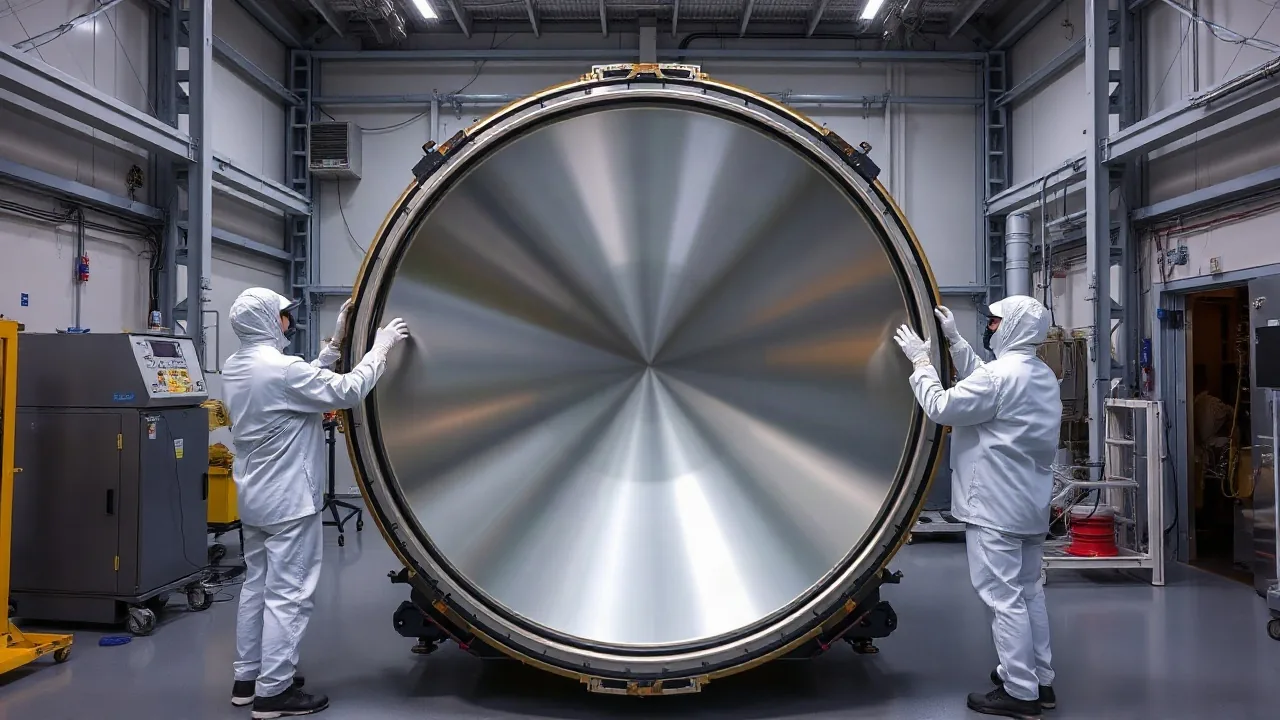
NASA officials confirmed in August 2026 that the Nancy Grace Roman Space Telescope has completed final assembly at the Goddard Space Flight Center in Greenbelt, Maryland. The $2.4 billion observatory is now undergoing rigorous environmental testing before its scheduled launch in late 2026, marking a pivotal moment for American space exploration.
Named after the pioneering NASA astronomer who championed the Hubble Space Telescope, the Roman telescope represents the most ambitious NASA astronomy mission since JWST. The instrument carries a 2.4-meter primary mirror, identical in diameter to Hubble's, but with an infrared sensitivity and field of view that will dwarf its predecessor.
"The Roman Space Telescope will fundamentally change how we observe the universe," said Thomas Zurbuchen, NASA Associate Administrator for Science, during a media briefing on August 15. "We are on the cusp of answering some of the deepest questions in cosmology."
Dark Energy and the Cosmic Expansion Mystery
One of Roman's primary objectives is to measure the expansion rate of the universe with unprecedented precision. The telescope will observe thousands of Type Ia supernovae across billions of light-years, allowing astronomers to map how the universe's expansion has accelerated over cosmic time. This data will constrain models of dark energy, the mysterious force driving this acceleration.
The mission includes a dedicated dark energy survey spanning multiple years of observation. Researchers will compare supernovae brightnesses and redshifts to test competing theories about whether dark energy is a cosmological constant or a dynamic field that evolves over time. Preliminary simulations suggest Roman will reduce uncertainties in key dark energy parameters by a factor of three compared to ground-based surveys.
Beyond supernovae, Roman will also conduct gravitational lensing studies. By observing how massive galaxy clusters bend light from distant galaxies, the telescope will independently verify dark energy measurements and probe the distribution of dark matter in the universe. These complementary methods strengthen confidence in the results.
Exoplanet Detection and Biosignature Pathways
Roman's second major science goal involves discovering and characterizing exoplanets, particularly small worlds in the habitable zones of distant stars. The telescope will employ a powerful technology called a coronagraph to block out a star's overwhelming light, revealing faint planets orbiting nearby. This technique is essential for direct imaging of potentially Earth-like worlds.
The deep space missions branch at NASA anticipates Roman will discover approximately 100 new exoplanets during its mission lifetime. The coronagraph can detect planets down to Jupiter-sized bodies and, in some cases, smaller worlds. Early studies suggest Roman may identify at least a dozen planets amenable to future biosignature analysis.
Biosignature detection itself lies beyond Roman's current capability; that work will fall to next-generation missions in the 2030s and 2040s. However, Roman's inventory of potentially habitable planets will prioritize targets for those future telescopes. The mission thereby bridges the gap between current exoplanet surveys and the era of habitability assessment.
Key observation modes include:
- Direct imaging of protoplanetary disks around young stars
- Microlensing surveys to find distant worlds beyond the solar neighborhood
- Spectroscopic characterization of exoplanet atmospheres
- Monitoring of stellar habitable zones for transit signatures
Integration with the James Webb Observatory
Roman will work synergistically with the James Webb Space Telescope, which launched in December 2021 and has now operated for nearly five years. While JWST excels at deep spectroscopy of individual galaxies and early universe observations, Roman offers a wide field of view ideal for statistical surveys across the entire sky.
JWST observations of astronomy targets selected by Roman will provide detailed follow-up data. For instance, if Roman identifies a supercluster showing unusual dark energy signatures, JWST can observe individual galaxies within it for physical confirmation. This partnership between infrared observatories maximizes scientific return and avoids redundancy.
NASA has coordinated observation scheduling between the two telescopes to ensure complementary data collection. Joint JWST-Roman programs are already in development for the 2027 mission year, focusing on high-redshift galaxies and their host clusters.
Testing protocols underscore the mission's criticality. Roman's coronagraph underwent thermal-vacuum testing in July 2026, simulating the extremes of space. Engineers verified that the instrument maintains alignment to tolerances of one nanometer even as temperatures swing from minus 233 degrees Fahrenheit to plus 176 degrees Fahrenheit. Such precision is necessary for imaging planets billions of miles away.
Launch vehicle selection remains confirmed: Roman will ride an Atlas V rocket from Cape Canaveral Space Force Station. The mission plan allocates five and a half years for primary science operations, with hardware designed for a decade of useful life. Fuel reserves and component redundancy support this extended timeline.
Staffing for mission operations is finalized, with approximately 1,200 scientists, engineers, and support personnel from NASA, partner universities, and contractors coordinating Roman's activities. Data processing pipelines to handle the terabyte-scale daily downloads are now 90 percent complete. The Space Telescope Science Institute in Baltimore will manage archive and distribution of all public data, mirroring the proven Hubble workflow.
As the 2026 mission year concludes, Roman stands ready to extend humanity's cosmic perspective far beyond current horizons. The telescope's twin pursuits of dark energy physics and exoplanet discovery promise discoveries that reshape our understanding of the universe and our place within it.