
Nancy Grace Roman Telescope Launches to Unravel Universe's Mysteries
The Nancy Grace Roman Space Telescope has launched, aiming to explore exoplanets and investigate dark energy. Its advanced instruments will provide unprecedented data on the universe's composition and fate.

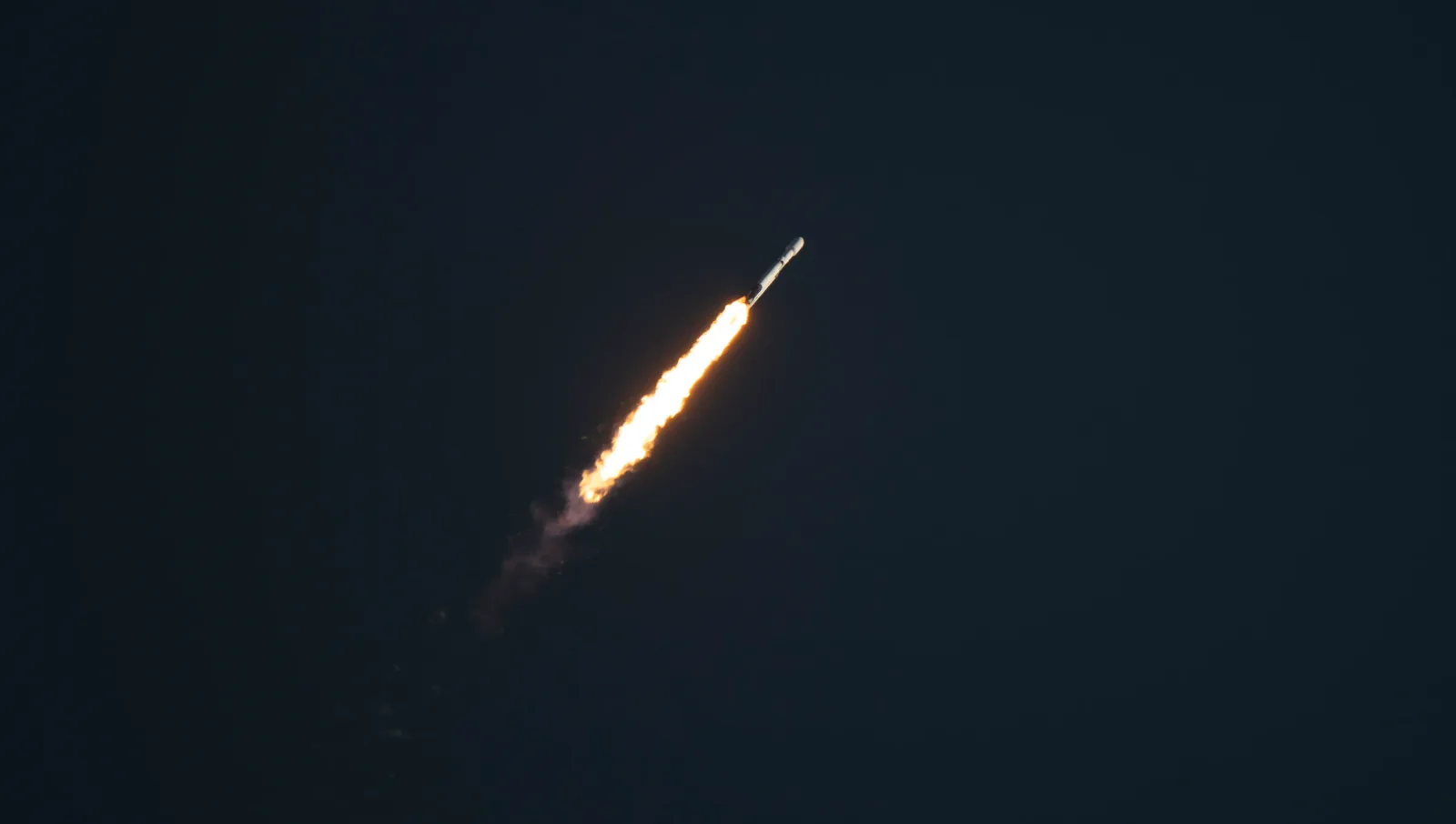
The Nancy Grace Roman Space Telescope embarked on its journey from Florida on August 30, 2026, en route to its operational station at a Sun-Earth Lagrange point, approximately one million miles from Earth. This stable gravitational equilibrium offers an ideal vantage point for the telescope, where it will join its predecessor, the James Webb Space Telescope. Notably, the Roman telescope achieved its launch under budget and ahead of schedule, utilizing a primary mirror originally intended for a canceled reconnaissance program. Following a shakedown period, it is expected to officially begin scientific operations in early 2027.
A significant portion of Roman's mission will focus on the detection and study of exoplanets, leveraging its cutting-edge Coronagraph Instrument. This instrument is designed to block the overwhelming glare of host stars, enabling the observation of faint planets in orbit around them. Unlike previous methods that could only capture rudimentary data on a limited number of exoplanets, Roman's coronagraph employs sophisticated masks, baffles, and detectors. It even features adaptable mirrors, fine-tuned by numerous small pistons, to precisely filter starlight and capture planetary images. This advanced capability promises to reveal closer planets, potentially within habitable zones, and planets billions of years old, offering unparalleled insights into planetary evolution beyond our solar system. The coronagraph's spectroscopy mode will also allow scientists to analyze exoplanet atmospheres and the presence of clouds.
Unveiling Dark Energy's Secrets
Beyond its exoplanet research, the Roman telescope is poised to address one of cosmology's most profound enigmas: dark energy. While the universe's expansion, first observed by Edwin Hubble in 1929, was once thought to be decelerating due to gravity, later discoveries in 1998 revealed an accelerating expansion. This phenomenon is attributed to dark energy, a mysterious force posited to permeate the universe uniformly and possess negative pressure. Current cosmological models suggest that ordinary matter and energy constitute only five percent of the universe's mass-energy, with dark matter making up twenty-seven percent and dark energy comprising the remaining sixty-eight percent.
However, recent observations, including data from the Cosmic Microwave Background, have hinted that dark energy's influence might be diminishing over time, challenging the standard model. Professor Will Percival of the University of Waterloo, involved with the Earth-bound Dark Energy Spectroscopic Instrument project, noted, "It’s looking more and more like we may need to modify our standard model of cosmology to make these different datasets make sense together. And evolving dark energy seems promising." The Roman telescope's broad field of view, which is a hundred times larger than Hubble's, combined with its ability to conduct repeated sky surveys, will enable scientists to observe celestial events like supernovae and gravitationally lensed galaxies with unprecedented speed and detail. By meticulously tracking changes in these distant objects over time, Roman aims to provide definitive data that will either validate current cosmological theories or necessitate significant revisions, ultimately shedding light on the universe's composition and its ultimate destiny.