
NASA Artemis II Heat Shield Passes Rigorous Analysis Post-Flight
NASA has confirmed the performance of the Artemis II heat shield, with rigorous analysis showing it performed as expected during the Artemis I mission. This critical data informs future crewed lunar missions.

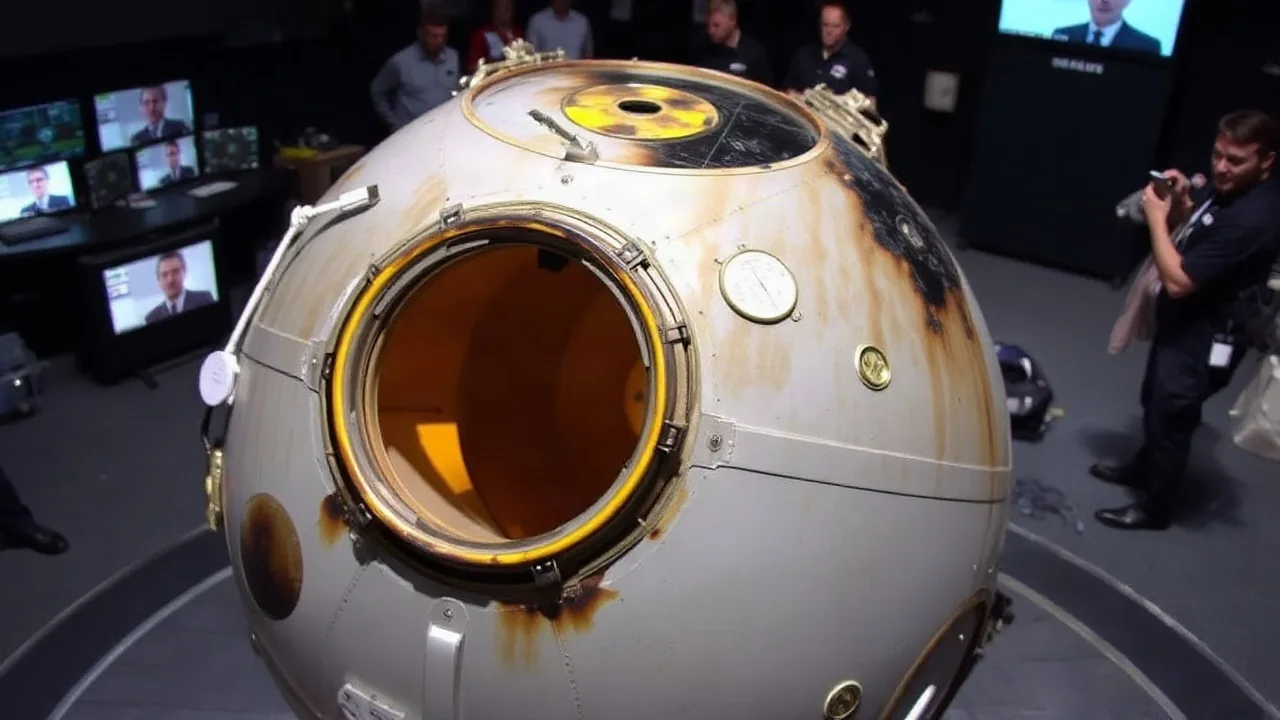
NASA officials announced this week that extensive analysis of the heat shield on the Orion spacecraft has confirmed its performance met expectations during the uncrewed Artemis I mission. The findings are crucial for the upcoming Artemis II mission, which will carry astronauts around the Moon.
The heat shield, a vital component designed to protect the capsule and its occupants from the extreme temperatures of re-entry, underwent significant scrutiny following its return from lunar orbit. Data collected during the Artemis I flight, which concluded in December 2022, indicated that the shield's ablative material successfully dissipated the intense heat generated as Orion hurtled back through Earth's atmosphere at speeds exceeding 25,000 miles per hour. While the shield experienced more charring and erosion than anticipated in certain areas, the overall structural integrity remained intact and performed within the predicted parameters.
Artemis II Lunar Mission Ahead
The Artemis II mission, currently slated for launch in late 2024, will see four astronauts embark on a trajectory around the Moon, marking the first time humans have ventured beyond low-Earth orbit since the Apollo program. The success of Artemis I provided invaluable data for this crewed flight, and the confirmation of the heat shield's performance is a significant step forward. NASA engineers have been meticulously reviewing telemetry and physical inspection reports to ensure that any lessons learned from Artemis I are incorporated into the preparations for Artemis II and subsequent missions.
“The data from Artemis I is essential for us to build confidence in the systems that will support our astronauts on their journey to the Moon,” said a NASA spokesperson. “Understanding how the heat shield behaved under real-world re-entry conditions allows us to validate our models and make necessary adjustments.” The agency emphasized that while the observed charring was more extensive than initial predictions for some sections, it did not compromise the shield's ability to protect the crew or the spacecraft.
The Artemis program aims to establish a long-term human presence on and around the Moon, serving as a stepping stone for future missions to Mars. The performance of critical systems like the heat shield is paramount to ensuring astronaut safety and mission success. The detailed analysis involved hundreds of engineers and scientists, employing advanced computational fluid dynamics and material science techniques to interpret the re-entry event.
Future missions within the Artemis program, including the eventual lunar landings planned for Artemis III, will rely heavily on the robust performance of the Orion capsule and its protective systems. The rigorous validation process for the heat shield is a testament to NASA's commitment to crew safety and mission assurance as it pushes the boundaries of space exploration.