
NASA's Dragonfly Drone Set for Nuclear-Powered Titan Exploration
NASA's Dragonfly mission will send a nuclear-powered drone to Saturn's largest moon, Titan, exploring its dense methane atmosphere and hydrocarbon lakes.

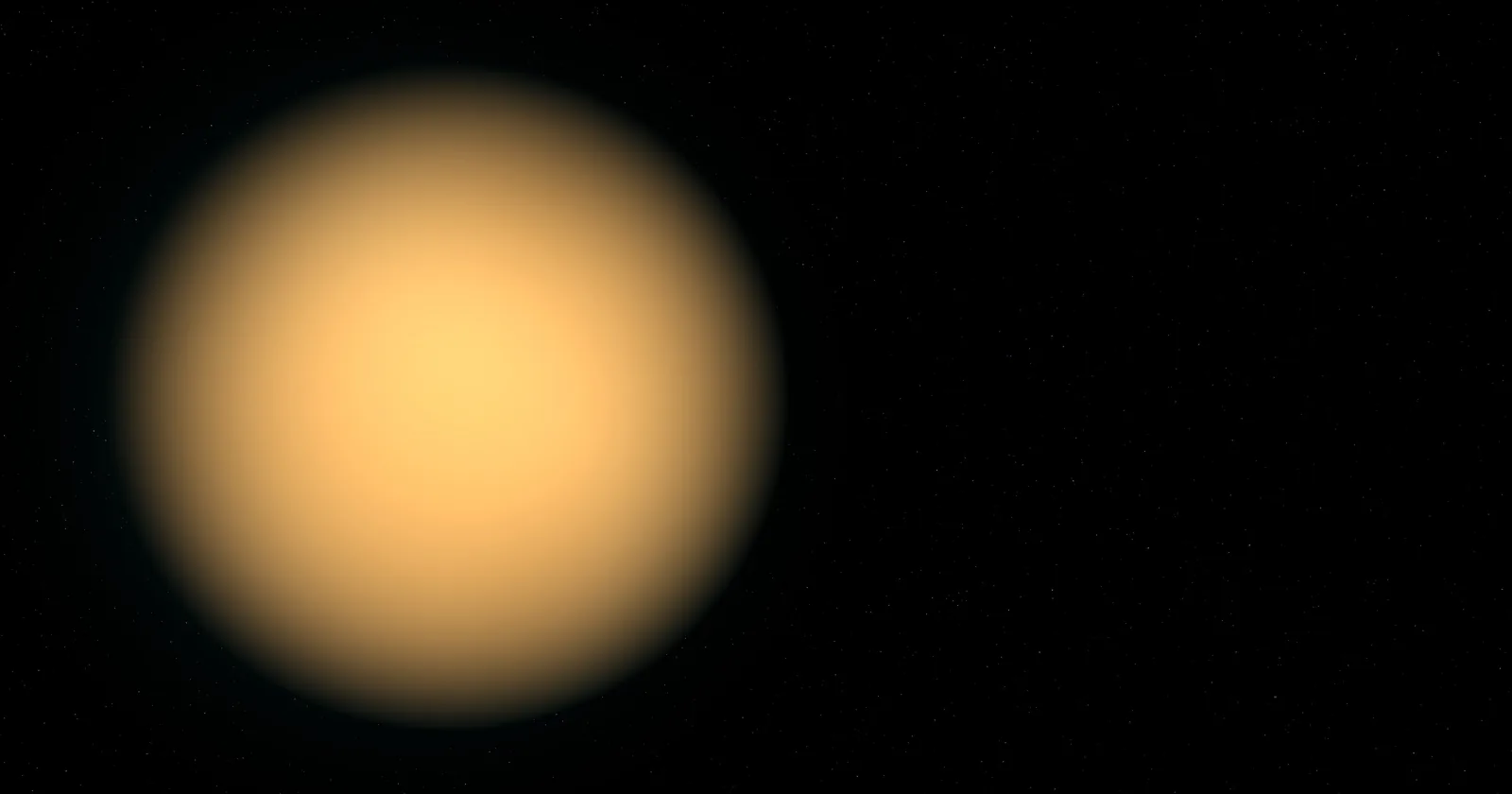
NASA is preparing to launch the Dragonfly mission, a car-sized rotorcraft designed to explore Saturn's largest moon, Titan. With an atmosphere denser than Earth's and surface liquids composed of methane and ethane, Titan presents unique conditions that make flight more feasible than surface exploration. The mission, managed by the Johns Hopkins Applied Physics Laboratory, aims to study the moon's complex organic chemistry and assess its potential for harboring life. The nuclear-powered drone is slated for a potential launch in July 2028, with an interplanetary journey of nearly seven years, aiming to reach Titan around 2034 for a surface mission lasting over three years.
Titan is a world unlike any other in our solar system. It is roughly the size of Mercury and is the only moon known to possess a substantial atmosphere, with a surface pressure about 1.5 times that of Earth at sea level, despite its gravity being only one-seventh of Earth's. This dense atmosphere, primarily nitrogen with a few percent methane, is shrouded in an orange photochemical haze that obscures the surface from orbital view. At its frigid surface temperatures, hovering around minus 180 degrees Celsius, methane and ethane exist as liquids, fueling a weather cycle analogous to Earth's water cycle. This results in methane clouds, rain, rivers, and vast seas, predominantly located near the north pole, making Titan the only known celestial body besides Earth to host stable surface liquids.
The prospect of flying on Titan is significantly enhanced by its atmospheric and gravitational conditions. The lift generated by a rotor is directly proportional to the density of the air it displaces. Titan's extremely cold temperatures pack its gases tightly, creating a far denser atmosphere than Earth's, even with a comparable surface pressure. Combined with Titan's low gravity, these factors make generating lift considerably easier than on Earth—potentially by a factor of tens. This advantage makes a rotorcraft a superior choice for exploration compared to a rover. Navigating Titan's surface is challenging due to the obscuring haze, which limits detailed orbital mapping for rover routes. The terrain itself can be hazardous, featuring sand dunes and rugged, cracked ground. A rotorcraft, however, can easily bypass such obstacles and access remote locations that a rover could not reach. NASA estimates that Dragonfly could cover more ground in a single flight, lasting less than an hour, than any Mars rover has achieved in its entire mission history.
Dragonfly's mission objectives and technological approach
Dragonfly is envisioned as a sophisticated, eight-rotorcraft vehicle designed for autonomous operation. It will be capable of landing, conducting scientific analyses on the surface, and then taking flight to new locations, completing approximately one flight per Titan day, which spans about 16 Earth days. The primary scientific goal is to investigate Titan's rich organic chemistry and to determine how far it has progressed toward conditions that could support life. Given the weak sunlight at Saturn's distance, which is about one percent of its intensity at Earth, and further diminished by Titan's haze, solar power is not a viable option. Consequently, Dragonfly will be powered by a Multi-Mission Radioisotope Thermoelectric Generator (MMRTG). This system, similar to those used on the Mars rovers Curiosity and Perseverance, generates electricity by converting the heat produced from the decay of plutonium.
While the concept has passed its Critical Design Review in April 2025, signaling a readiness for fabrication and testing, the mission's timeline and cost have seen adjustments. The total lifecycle cost is estimated at approximately $3.35 billion USD, roughly double the initial projection. The launch date has slipped to its current target, July 2028, after earlier delays stemming from budget uncertainties. The mission relies on a SpaceX Falcon Heavy rocket for its launch, followed by an interplanetary journey lasting almost seven years. A missed launch window for this lengthy expedition can push the entire mission back by several years due to orbital mechanics. Therefore, monitoring the assembly and testing of Dragonfly's hardware over the next two years will be crucial to maintaining its 2028 launch target.