
NASA Space Flight Missions 2026: Key Launches and Objectives
NASA's 2026 space flight calendar includes critical missions to the Moon, Mars, and beyond. Learn about the agency's most ambitious launches and what they mean for future exploration.

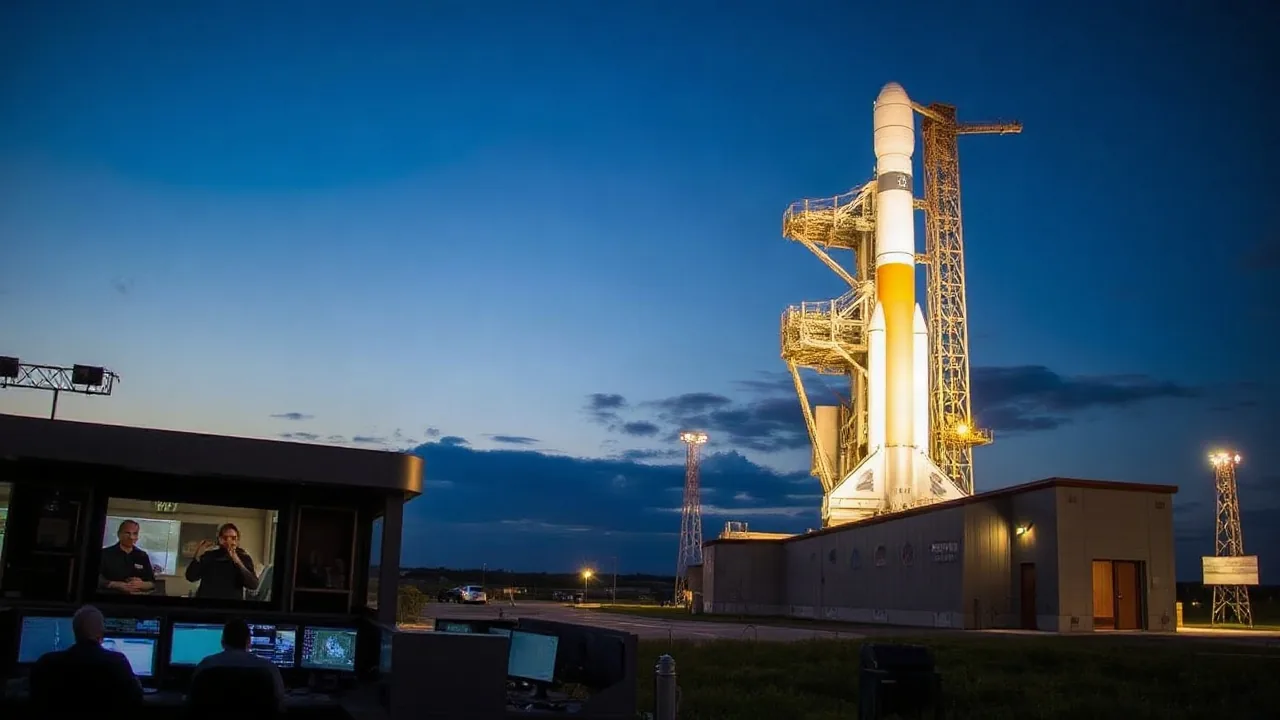
In September 2026, NASA stands at a pivotal moment in its space exploration roadmap. The agency has lined up a series of high-stakes missions that will test new technologies, advance scientific discovery, and lay groundwork for human missions to Mars and lunar surface operations. These launches represent years of engineering, billions in investment, and the work of thousands of NASA employees and contractors across multiple centers.
The most visible mission on NASA's 2026 calendar is the continuation of the Artemis program, which aims to return humans to the Moon. Unlike the Apollo missions of the 1960s and 1970s, Artemis missions prioritize sustained lunar presence and establishment of infrastructure for long-term habitation. The program's success depends on precise execution of multiple vehicle types and complex orbital mechanics.
Artemis and Lunar Infrastructure Advances
The Artemis program represents NASA's centerpiece space exploration initiative. Previous Artemis flights tested the Space Launch System (SLS) and Orion spacecraft in uncrewed configurations. In 2026, NASA is preparing for the next phase of lunar missions, with plans to deliver cargo and equipment that will support human landers and habitat modules.
Bill Nelson, NASA administrator, stated in recent remarks: "The missions we're executing in 2026 are essential stepping stones toward sustainable lunar exploration and eventual human presence on Mars." This statement captures the agency's dual focus on near-term lunar goals and longer-term Mars ambitions.
Key components of the 2026 lunar push include:
- Deployment of power systems and habitat modules at lunar polar regions
- Testing of advanced aerospace technologies in lunar gravity conditions
- Validation of resource extraction and in-situ utilization techniques
- Communication and navigation infrastructure for future crewed landings
The lunar south polar region remains a primary focus because of its permanently shadowed craters, which contain water ice. This ice is invaluable for life support, fuel generation, and scientific study. NASA's 2026 missions will place instruments and equipment in this challenging terrain.
Mars Missions and Interplanetary Robotic Exploration
Beyond the Moon, NASA's 2026 missions include significant robotic missions to Mars. The Perseverance rover, which has been operating on Mars since 2021, will continue its geological survey and sample collection. Additionally, NASA is preparing to launch the Sample Return Campaign, a multi-mission effort to bring Martian rocks and soil back to Earth for detailed laboratory analysis.
The Sample Return Campaign represents one of the most complex logistics undertakings in space history. It involves a retriever spacecraft, an ascent vehicle to launch samples from Mars, and an orbital rendezvous system. All components must work flawlessly millions of miles from Earth, with communication delays of up to 22 minutes one way.
Robotic missions also extend to other destinations. NASA continues development of missions to explore icy moons of Jupiter and Saturn, which may harbor subsurface oceans and potential microbial life. These NASA missions require specialized power systems, radiation-hardened electronics, and advanced scientific instruments.
Technology Validation and Infrastructure Development
The 2026 missions serve a critical function beyond their immediate scientific objectives: they validate technologies essential for human deep space exploration. Advanced life support systems, radiation shielding, autonomous navigation, and fuel depot operations must all be proven in actual spaceflight conditions before humans depend on them.
NASA's Space Technology Mission Directorate oversees development of these enabling technologies. In 2026, several experimental systems will fly aboard operational missions. These include advanced solar panels with higher power density, regenerative fuel cells for long-duration missions, and autonomous systems for hazard avoidance.
Space flight infrastructure development includes the establishment of fueling depots in low Earth orbit and cis-lunar space. These depots allow spacecraft to refuel in space, dramatically extending their range and capability. Tests of propellant transfer in microgravity will occur in 2026, paving the way for this critical capability.
Commercial partnerships continue to play an expanding role in NASA's 2026 agenda. Private companies are developing lunar landers, cargo delivery systems, and transportation services. NASA funds and oversees these efforts through contracts, ensuring that commercial capabilities meet mission requirements while driving down costs through competition.
The year 2026 also marks continued operation of the James Webb Space Telescope, which has been revolutionizing astronomy since its deployment in 2021. Webb's observations have redefined our understanding of the early universe, exoplanet atmospheres, and the formation of stars and galaxies. NASA's budget for space-based observatories remains substantial, reflecting the scientific returns these missions deliver.
International cooperation remains embedded in NASA's mission planning. The agency works closely with the European Space Agency, Japan's JAXA, Russia's Roscosmos, and emerging space agencies from countries including India and China. Joint projects, data sharing agreements, and coordinated observations maximize scientific output and reduce duplication of effort.
Looking at 2026 as a whole, NASA's portfolio balances human spaceflight, robotic exploration, scientific discovery, and technology development. Each mission class serves different objectives while contributing to the broader goal of extending human presence and knowledge throughout the solar system. The missions launching and operating this year represent investments made by Congress and the public, with results that will shape space exploration for decades to come.