
NASA Space Shuttle Program: Engineering Legacy and Impact
Three decades of shuttle missions transformed human spaceflight, leaving behind engineering innovations and lessons that shaped modern aerospace exploration.

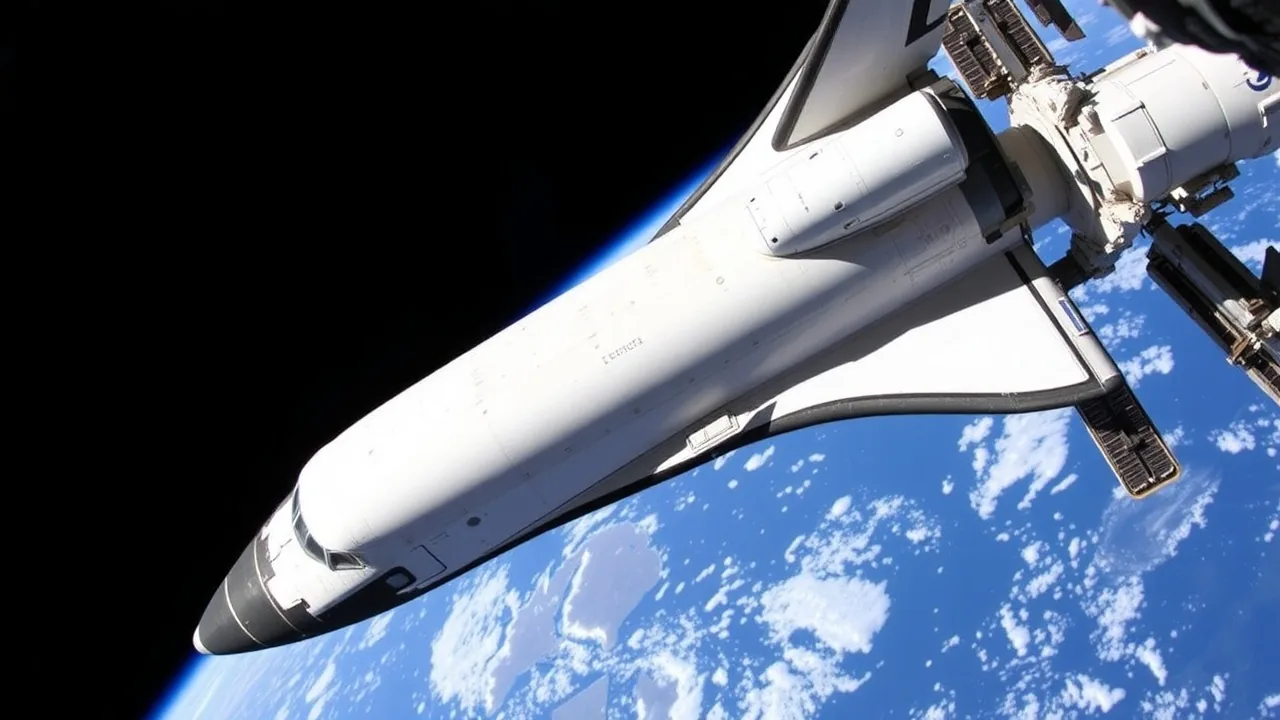
Between April 1981 and July 2011, NASA's Space Shuttle program completed 135 missions, carrying 355 astronauts and cosmonauts into orbit and establishing the first sustained human presence in low Earth orbit. The program began with Columbia's maiden flight and concluded with Atlantis docking at the International Space Station, marking the end of an era that redefined how humanity accessed space.
The shuttle was conceived in the 1970s as a revolutionary spacecraft: the first reusable orbital vehicle designed for routine access to space. Unlike Apollo's expendable rockets, the shuttle promised lower costs and more frequent launches. Its delta-wing design, external tank, and solid rocket boosters became iconic symbols of American spacefaring ambition.
"The Space Shuttle was a triumph of engineering, but it also taught us hard lessons about complexity, risk, and the cost of maintaining an aging fleet," said Robert Zubrin, founder of the Mars Society, in a 2024 aerospace panel discussion. The program's 30-year operational history yielded insights that continue to influence how NASA and private companies design and operate spacecraft today.
Revolutionary Achievements in Orbital Engineering
The shuttle's capabilities redefined what was possible in space. It carried the Hubble Space Telescope into orbit in 1990, and subsequent space program missions deployed and repaired the observatory five times, transforming our understanding of the universe. Astronauts conducted extensive repairs and upgrades on orbit, proving humans remained essential to complex space operations.
The shuttle also deployed major aerospace infrastructure. It launched planetary probes, carried the Chandra X-ray Observatory, and delivered crucial modules to construct the International Space Station. Over 30 years, the shuttle delivered approximately 600,000 pounds of payload to orbit, establishing new standards for heavy-lift launch capability.
- Deployed four major space telescopes and observatories
- Delivered 37 Spacelab missions for microgravity research
- Conducted 51 flights to assemble and maintain the ISS
- Performed emergency repair missions, including Hubble maintenance in 1993, 1997, 1999, and 2002
These accomplishments demonstrated that reusable spacecraft could perform complex, varied missions. The shuttle's robotic arm, developed by Canada and integrated into NASA's architecture, became the standard for on-orbit manipulation and helped establish international cooperation as central to space exploration success.
Lessons in Risk, Complexity, and Sustainable Operations
The program's full history reveals why simplicity often outperforms ambition. The shuttle was far more expensive to operate than originally projected. Development costs exceeded $36 billion (in 1970s dollars), and annual operating expenses reached $3.5 billion at peak activity. The original promise of routine, low-cost spaceflight proved unrealistic given the vehicle's inherent complexity.
Two catastrophic accidents shaped how the aerospace industry approaches system safety. Challenger broke apart on January 28, 1986, killing seven crew members, revealing organizational failures that suppressed critical concerns about O-ring performance in cold weather. Columbia disintegrated during reentry on February 1, 2003, a result of insulation foam damage during launch that went undetected and unaddressed.
These tragedies transformed NASA safety culture and influenced how commercial rockets and spacecraft are now designed. The accidents demonstrated that even the most advanced engineering cannot overcome systemic pressures to launch despite uncertainty. Modern spaceflight companies now emphasize open communication about technical concerns and more conservative risk acceptance.
The shuttle also highlighted the challenge of maintaining aging infrastructure. By the 2000s, the fleet was 20 to 25 years old, requiring increasingly expensive maintenance and spare parts. This experience informed current NASA policy favoring new vehicles with shorter operational windows rather than indefinite extension of older systems.
Enduring Legacy in Modern Spaceflight
Today's spacecraft reflect lessons learned across the shuttle program's three decades. SpaceX's Falcon 9 prioritizes reusability for cost reduction, but uses a fundamentally simpler approach: vertical landing rather than horizontal runway return. Blue Origin and other commercial providers study shuttle operations to understand what worked and what didn't.
The shuttle demonstrated that humans remain valuable for complex, adaptive work in orbit. Hubble repairs proved that astronauts could solve problems that ground-based engineers had not anticipated. This insight shaped NASA's decision to maintain human spaceflight as part of long-term space exploration strategy, influencing Artemis lunar missions and ISS operations.
NASA's NASA history archives now serve as a resource for students, engineers, and policy makers studying how large-scale space programs operate. The shuttle program documented technical decisions, failures, and successes in detail, creating a public record that accelerates learning across the aerospace industry.
The shuttle's retirement in 2011 did not end human spaceflight, but rather transition it. Astronauts now reach the ISS aboard Crew Dragon and Starliner, commercially operated vehicles that inherit design principles from decades of shuttle operations. The program's 30-year archive of flight data, maintenance records, and mission reports continues to inform spacecraft design at NASA, SpaceX, Boeing, and international space agencies worldwide.