
NASA vs SpaceX: Competition Reshaping Space Exploration
NASA and SpaceX are redefining space exploration through fierce competition and surprising partnerships. Their diverging approaches to missions, funding, and technology are accelerating innovation in 2026.

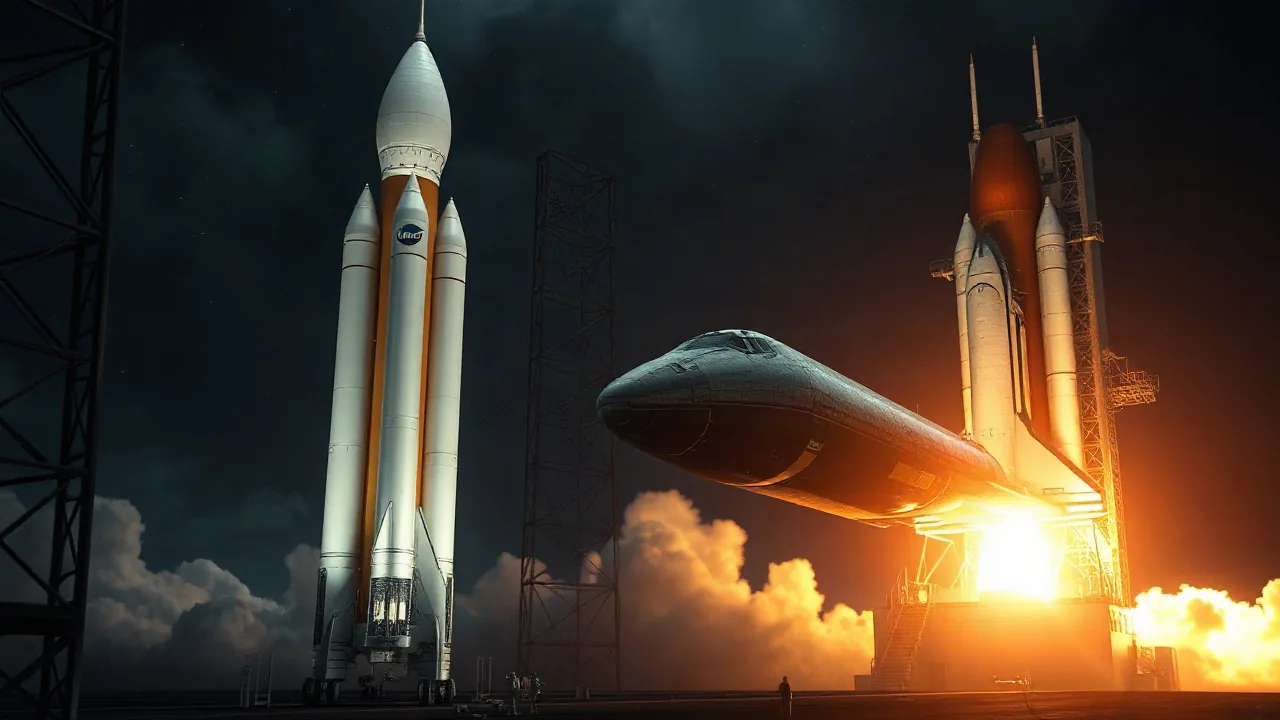
On August 15, 2026, SpaceX's Starship completed its seventh uncrewed test flight with a full booster catch at Starbase, Texas, while NASA simultaneously announced contract extensions with the company for crew transportation through 2030. This single day encapsulates the complex relationship between America's space agency and the private aerospace giant: simultaneous rivalry and interdependence that has reshaped the entire sector.
The tension between these two organizations reflects fundamentally different approaches to space. NASA operates as a government agency accountable to Congress and the public, with missions spanning scientific research, human spaceflight, and Earth observation. SpaceX, founded by Elon Musk in 2002, pursues commercial spaceflight with a focus on cost reduction and rapid iteration, treating space as an economic frontier rather than purely a national achievement.
The Competition That Drives Innovation
SpaceX's emergence as a credible spaceflight provider has forced NASA to reconsider decades-old practices. The company's Falcon 9 rocket, operational since 2015, achieves costs around $15 million per launch through booster reusability, compared to legacy expendable rockets costing $300-400 million. When SpaceX won the 2014 Commercial Crew Program contract alongside Boeing, it signaled NASA's confidence in private industry but also created urgency.
"The private sector has shown it can do things more efficiently," said Robert Cabana, NASA's Space Flight Director, in a June 2026 interview with Aviation Week. "That competition motivates us to innovate faster and smarter."
This competitive pressure has accelerated NASA's own transformation. The agency's Artemis program, which aims to return humans to the Moon by 2026, relies on SpaceX's Starship for lunar lander services alongside Blue Origin's Blue Moon. Rather than building everything in-house as it did during Apollo, NASA now integrates private spaceflight contractors into its core strategy.
SpaceX benefits equally from this competition. NASA's deep pockets, technical expertise, and long-term commitment provide stability for ambitious projects. Crew Dragon capsule development, which SpaceX has been refining since its 2020 first crewed mission, incorporated NASA requirements and safety standards that elevated the company's engineering maturity.
Collaboration Reshaping the Industry
The NASA-SpaceX relationship extends far beyond contracts. The two organizations share launch facilities at Kennedy Space Center, coordinate schedules, and exchange technical data on launch vehicle performance and crew operations. This collaboration model has become the template for aerospace partnerships across the industry.
In 2026, NASA made the strategic decision to retire the Space Shuttle's aging infrastructure and consolidate operations around commercial providers. SpaceX gained exclusive rights to certain launch pads previously managed by United Launch Alliance, forcing ULA to innovate faster with Vulcan rocket development.
The contract values tell the story. SpaceX currently holds approximately $18 billion in NASA contracts across multiple programs:
- Commercial Crew Program: $2.6 billion for crew transport through 2030
- Lunar Starship Human Lander System: $2.9 billion base contract plus development milestones
- Cargo Dragon resupply missions: Ongoing contracts through 2030
- Space Force National Security Launch agreements: $3+ billion annually
This financial interdependence creates both stability and potential friction. SpaceX's accelerated development timeline, characterized by rapid prototyping and occasional failures, sometimes conflicts with NASA's risk-averse culture shaped by tragic accidents in 1986 and 2003.
Technology and Missions Define the Future
The technical divergence between NASA and SpaceX reveals their different priorities. SpaceX focuses on reusable launch systems and rapid iteration cycles, aiming to make spaceflight routine and affordable. Starship, the company's fully reusable mega-rocket currently in development, represents an engineering bet that sheer volume and simplicity can reduce costs below current commercial rates.
NASA invests heavily in specialized scientific instruments and long-duration missions. The James Webb Space Telescope, launched in December 2021, represents billions of dollars in space exploration commitment with a multi-decade return horizon. SpaceX has no equivalent flagship science program, though its capabilities now enable NASA's science missions more affordably.
Their missions reflect these philosophies:
- NASA: Lunar sample collection, Mars rover operations, exoplanet detection, climate monitoring
- SpaceX: Starlink satellite internet deployment (500+ satellites operational), Starship development, cargo logistics, eventual Mars colonization
The Starlink project demonstrates SpaceX's independent ambitions. With over 5,000 satellites in orbit as of August 2026, the constellation generates direct revenue while simultaneously showcasing the company's launch capability and satellite manufacturing scale.
Government space agencies including government space operations have taken notice. The Department of Defense now uses SpaceX launch services for national security missions, and NATO allies increasingly rely on Starship availability for their own spacecraft deployments.
Looking forward, the NASA-SpaceX dynamic will intensify. Both organizations have announced lunar base ambitions, with NASA targeting the Moon's south polar region and SpaceX proposing fuel depot infrastructure. Both are developing technologies for eventual Mars missions. Direct competition over government contracts and commercial markets will shape the next decade of innovation in spaceflight.
Yet neither organization can achieve its goals alone. NASA needs SpaceX's launch capacity and cost efficiency. SpaceX needs NASA's scientific credibility and patient capital for long-term megaprojects. The rivalry that drives each organization forward ultimately forces better outcomes for American space exploration overall.