
See 2026's Smallest Full Moon During Rare Blue Moon Livestream
Stargazers can witness the smallest full moon of 2026, a 'Blue Moon,' tonight through a free livestream. The event, starting at 9:30 p.m. EDT, offers a rare celestial spectacle.

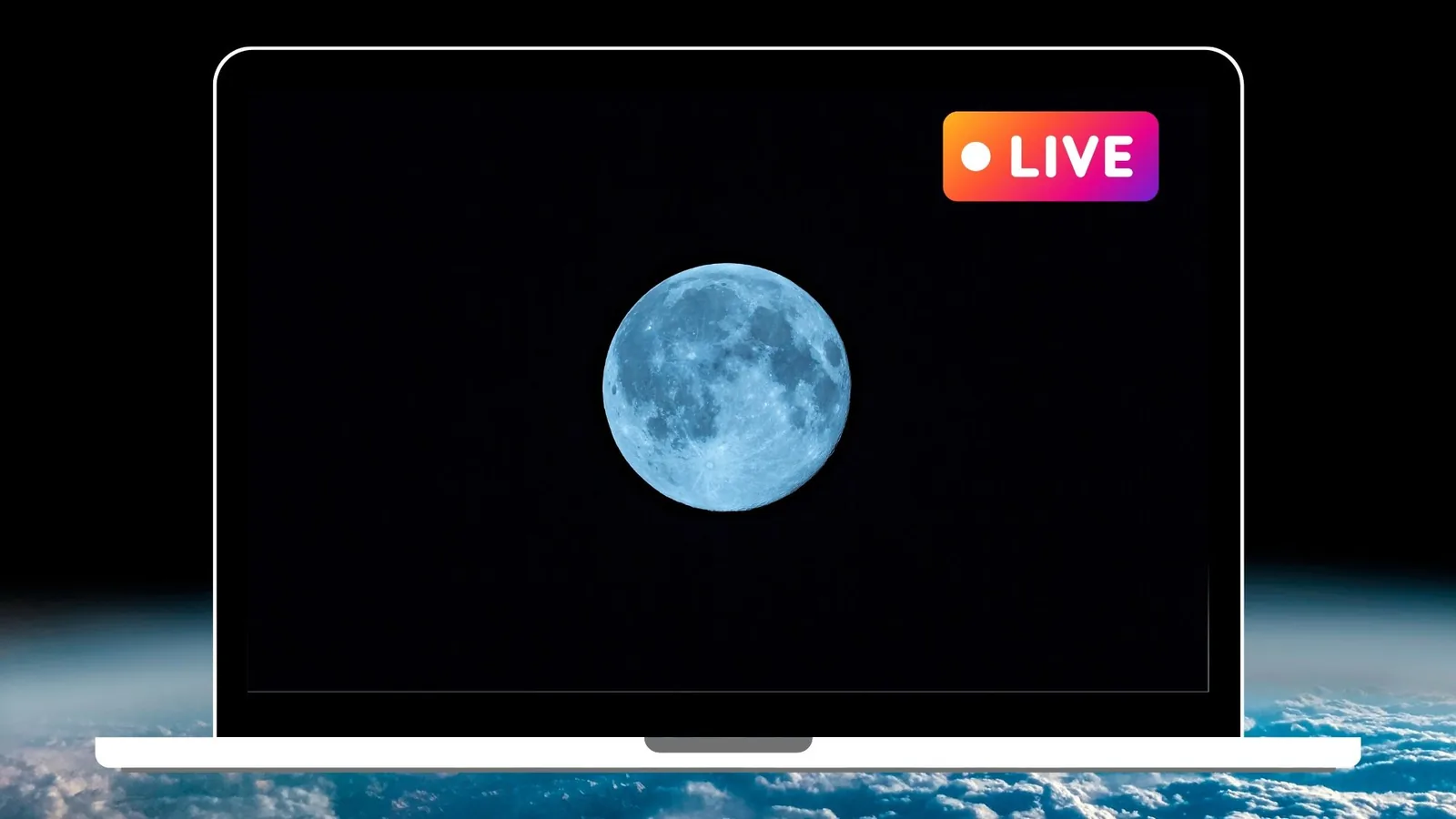
The second full moon of May, also known as a 'Blue Moon,' will rise tonight, marking the smallest full moon of the year 2026. Astronomy enthusiasts can observe this celestial event live online via a free livestream hosted by astronomer Gianluca Masi and his Virtual Telescope Project, broadcasting from Manciano, Italy. The stream is scheduled to begin at 9:30 p.m. Eastern Daylight Time on May 30, which corresponds to 0130 GMT on May 31.
Viewers can tune into the livestream directly on Space.com, or through the Virtual Telescope Project's official WebTV or YouTube channels, provided the weather cooperates. The broadcast will also include archival footage showcasing the moon positioned above some of Rome's most recognizable landmarks, according to the Virtual Telescope Project.
A 'Blue Moon' derives its name from a calendrical definition, not its color. The term originally referred to the third full moon in an astronomical season containing four full moons. However, a widely adopted modern interpretation defines a Blue Moon as the second full moon occurring within a single calendar month. This monthly definition, which arises from a past misinterpretation of the original seasonal meaning, is now commonly accepted alongside the older one, as noted by sources like Time and Date.
Micromoon vs. Supermoon: Understanding the Lunar Display
The occurrence of a monthly Blue Moon is relatively infrequent, happening approximately once every two and a half years. This is due to the moon's orbital period of about 29.5 days not perfectly aligning with the length of calendar months. This weekend's Blue Moon fits the monthly definition.
Adding to its uniqueness, this particular full moon coincides with the moon reaching apogee, the farthest point in its elliptical orbit from Earth, just 19 hours after becoming full. This alignment makes it the most distant full moon of 2026. Consequently, it will appear noticeably smaller and dimmer in the night sky compared to other full moons. This phenomenon is often referred to as a 'micromoon,' the celestial opposite of a 'supermoon.' A supermoon occurs when a full moon happens near perigee, its closest orbital point to Earth. Reports from Time and Date indicate that a micromoon can appear up to 14% smaller than a full supermoon and up to 7% smaller than an average full moon, highlighting the subtle but observable differences in lunar appearance based on orbital distance.
The Virtual Telescope Project has been instrumental in bringing astronomical events to a global audience, providing access to significant celestial happenings like meteor showers, planetary conjunctions, and lunar events. Their work often involves high-definition imagery and live commentary, making complex astronomical phenomena accessible to the public. This particular micromoon event offers a chance to appreciate the nuances of lunar observation, distinguishing it from the more commonly discussed supermoons.
This event underscores the dynamic nature of Earth's celestial companion and provides a valuable opportunity for both amateur and experienced skywatchers to observe and document variations in the moon's apparent size and brightness. Such events contribute to public engagement with astronomy and highlight the importance of understanding celestial mechanics. The Virtual Telescope Project's efforts ensure that these astronomical spectacles are not missed, regardless of location or weather conditions, by offering a reliable online viewing platform.