
SpaceX Falcon 9: Rocket Launch Milestones Reshaping Exploration
SpaceX's Falcon 9 has logged over 300 successful missions by May 2026, cementing its role as the workhorse of modern space exploration and commercial satellite deployment.

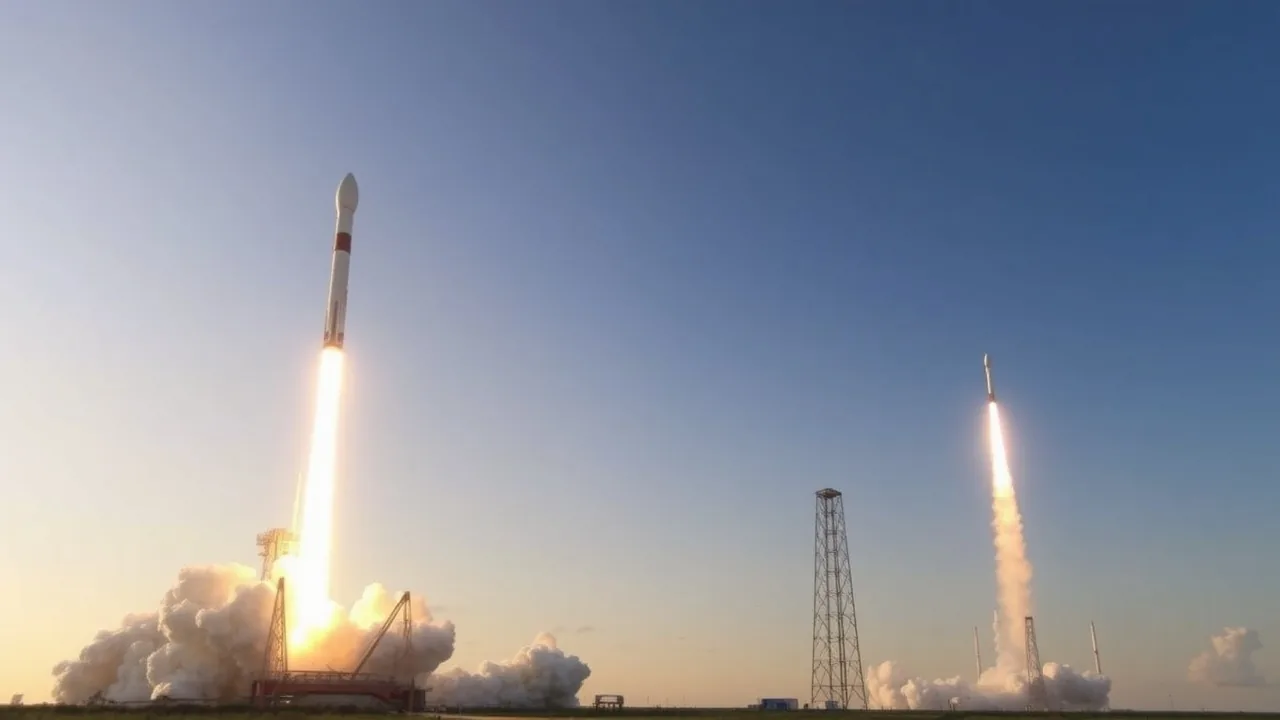
On a bright morning in May 2026, a Falcon 9 rocket pierced the Florida sky from Kennedy Space Center, marking another chapter in the most-flown orbital rocket in history. The booster, having completed its designated flight count, was already slated for refurbishment and reuse - a hallmark of SpaceX's reusable rocket philosophy that has fundamentally altered the economics of spaceflight.
The SpaceX Falcon 9 has become synonymous with reliable orbital access. By mid-2026, the vehicle had executed more than 300 orbital missions, transporting everything from crew to the International Space Station to classified national security payloads for the U.S. Space Force. This consistency did not happen overnight.
SpaceX first launched Falcon 9 in 2010 with modest goals: reach orbit, return hardware, and learn. The early flights were marked by occasional failures and hard-won lessons. Today, the rocket boasts a success rate exceeding 99 percent, a figure that would have seemed impossible during those experimental years.
From Experimental Workhorse to Indispensable Asset
The turning point came when SpaceX proved first-stage booster recovery at scale. Beginning in 2015-2016, the company began landing Falcon 9 first stages on drone ships and land pads, then relaunching them weeks or months later. This capability eliminated the single largest cost component of a rocket launch: the disposable first stage.
Thomas Mueller, former SpaceX Vice President of Propulsion Engineering, noted in a 2024 industry forum that "the reusable booster architecture compressed the development timeline for next-generation systems and made frequent launch cadences economically viable." By 2026, that vision had materialized into reality.
Commercial customers now depend on Falcon 9 for deploying satellite constellations. Companies like OneWeb, Starlink, and Amazon's Project Kuiper have contracted dozens of launches with SpaceX. These are not one-off science missions but recurring transportation services, reshaping how the aerospace industry views launch procurement.
The numbers tell the story:
- Over 300 total orbital missions flown through May 2026
- More than 200 booster landings and recovery attempts
- Average turnaround time between booster flights reduced to 6-8 weeks
- Launch cadence exceeding 60 missions per year by 2025-2026
NASA Partnership and Human Spaceflight
Falcon 9's role in human space exploration extends far beyond commercial metrics. SpaceX's Crew Dragon spacecraft, atop a Falcon 9, has carried NASA astronauts to the International Space Station on a regular cadence since 2020. By 2026, the company had completed over 10 crewed missions for the agency, each one validating the rocket's reliability and safety margins.
The partnership represented a sea change in how America accessed human spaceflight. For nine years between 2011 and 2020, the United States had no domestic crewed launch capability; NASA purchased seats from Russia at costs exceeding $80 million per astronaut. Falcon 9 and Crew Dragon reclaimed that independence and drove the cost per seat downward to roughly $55 million by 2026.
"This system has met every requirement and exceeded many expectations," said a NASA official during a Crew-12 mission briefing in early 2026. "The reliability and responsiveness we've achieved with commercial spaceflight would not have been possible without this partnership."
The Falcon 9 also launched the Crew Dragon missions that brought home two stranded astronauts from the International Space Station in 2024 and 2025 - a high-stakes rescue operation that underscored the rocket's operational maturity and readiness for real-world contingencies.
Future Horizons and Starship Integration
As SpaceX looks ahead, Falcon 9 remains a core launch vehicle even as attention turns toward the massive Starship system. Starship will eventually replace Falcon 9 for many applications, but that transition will take years. In the interim, Falcon 9 will continue supporting commercial spaceflight, national security missions, and deep space exploration.
The rocket has proven adaptable. Engineers have tweaked engines, software, avionics, and ground operations continuously. These incremental improvements have compounded into substantial gains in reliability and launch frequency. The Falcon 9 Block 5 variant, introduced in 2018, now dominates the flight manifest.
Industry analysts project that Falcon 9 will remain in service well into the 2030s, even as SpaceX develops successor systems. The rocket's proven track record, growing fleet of boosters rated for dozens of flights each, and deep supply chain integration make it too valuable to retire prematurely. For payload providers and government agencies, continuity matters.
The aerospace industry has learned to plan around Falcon 9 availability. Satellite operators schedule launches with confidence. Space agencies coordinate interplanetary missions knowing that reliable, affordable orbital access is no longer a constraint. That shift in assumptions - from scarcity to abundance - may prove to be Falcon 9's most enduring contribution to spaceflight.