
SpaceX Stock: Aerospace Investment Outlook for 2026
As SpaceX advances reusable rocket technology and expands contracts with NASA, investors weigh the company's private valuation against a booming space market. Here's what the 2026 aerospace landscape means for potential stakeholders.

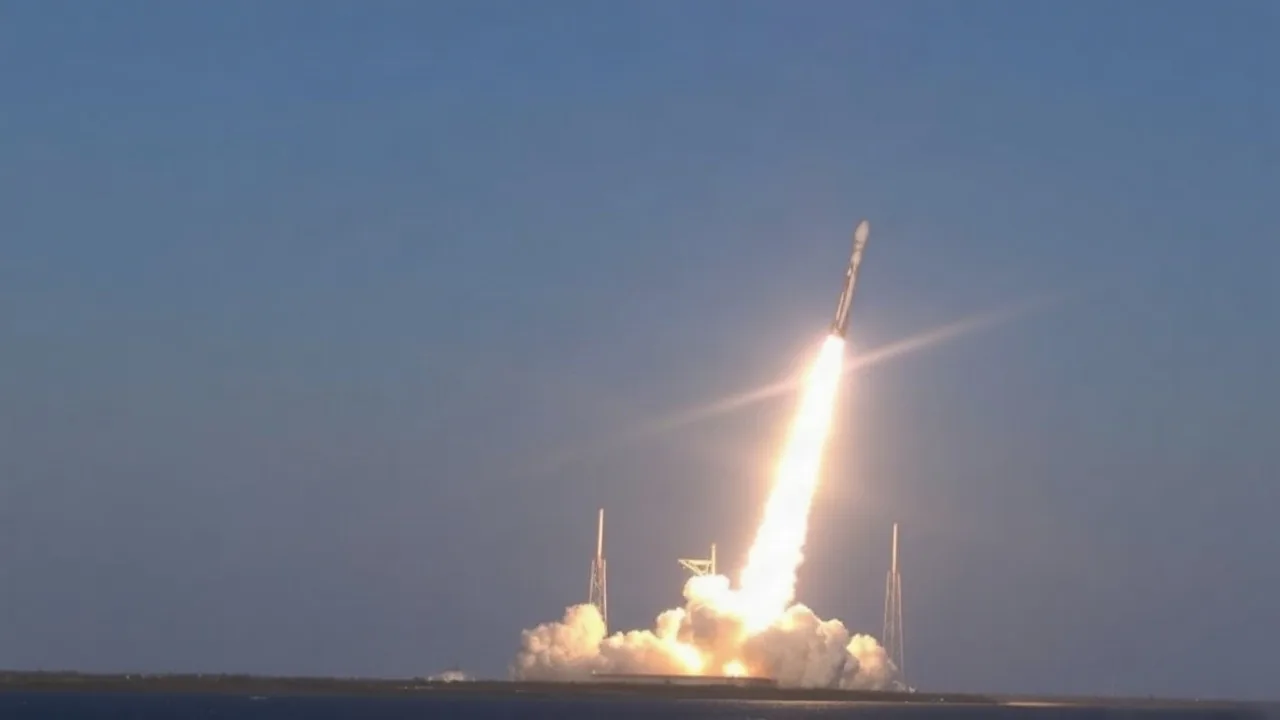
Elon Musk's SpaceX has reshaped how Wall Street views commercial space ventures, yet the privately held company's stock remains unavailable to retail investors as of September 2026. The absence of public shares has not dampened investor appetite or industry scrutiny, with analysts closely tracking SpaceX's technical milestones and commercial partnerships as proxies for its market value.
In 2026, SpaceX's valuation reflects the company's dominant position in space exploration and satellite launch services. The company continues to operate the world's most frequently launched orbital rocket, Falcon 9, while developing Starship for deep-space missions and lunar cargo delivery. Industry observers argue that SpaceX's reusable rocket architecture has fundamentally altered the economics of spaceflight, cutting launch costs to approximately $1,500 per kilogram to low Earth orbit.
"SpaceX's competitive advantage rests on vertical integration and rapid iteration," said Marco Caceres, an aerospace analyst at The Teal Group, in recent industry commentary. "No other commercial provider has matched their cadence for launches and reflight success. That operational efficiency is translating directly into market share gains."
Reusable Rockets and NASA Contracts Drive Growth
The cornerstone of SpaceX's 2026 strategy centers on reusable rockets and long-term government partnerships. NASA has committed to using SpaceX's Falcon 9 and crewed Dragon spacecraft for International Space Station resupply and crew rotation missions through at least 2028. These contracts, valued in the billions, provide stable revenue and validate the company's engineering roadmap.
SpaceX is also advancing Starship, a fully reusable super-heavy-lift launch vehicle designed for missions to the Moon and Mars. Test flights have progressed through 2026, with each iteration demonstrating improved engine performance and heat shield integrity. The company aims to conduct orbital refueling demonstrations, a critical step toward the infrastructure needed for sustained lunar operations.
Beyond government work, SpaceX controls a significant share of the commercial satellite market. Its Starlink subsidiary operates over 6,500 active satellites as of mid-2026, generating recurring subscription revenue from broadband customers worldwide. Analysts estimate Starlink contributes between 15 and 25 percent of SpaceX's overall revenue, with growth potential still ahead.
The Investment Question: Valuation and Market Timing
SpaceX's private status creates a valuation puzzle for potential investors. The company last raised capital in 2021 at a $74 billion valuation, but secondary market transactions and analyst estimates in 2026 suggest the company is worth considerably more. Some venture capital funds trading SpaceX shares privately value the company at $150 billion or higher, reflecting its market dominance and cash generation.
For retail investors, the lack of a public listing means exposure to SpaceX remains limited. Some aerospace and technology-focused exchange-traded funds hold stakes in firms that partner with SpaceX, such as equipment suppliers and telecommunications operators, but these do not provide direct ownership of SpaceX equity.
The broader aerospace investment landscape in 2026 remains buoyant, with government space budgets rising. NASA's budget for fiscal 2026 reached $28.5 billion, with significant allocations toward lunar return programs (Artemis) and deep space exploration. The U.S. Space Force and Space Development Agency have also expanded commercial launch contracts, benefiting SpaceX and smaller competitors alike.
Potential IPO speculation persists. Financial analysts have periodically suggested that SpaceX might pursue a public offering once Starship achieves operational maturity, but Elon Musk has shown little urgency. Musk has stated that he prefers to maintain private ownership to focus on long-term engineering goals rather than quarterly earnings expectations.
Competitive Dynamics and Market Share
SpaceX faces intensifying competition in 2026, though no rival has yet matched its launch frequency or cost structure. Blue Origin, Amazon's space venture, is developing New Glenn, a heavy-lift rocket expected to enter service by late 2026 or early 2027. Relativity Space and Axiom Space are advancing 3D-printed rocket components and commercial space station modules, respectively.
Internationally, China's launch capacity continues to expand, and India's ISRO has gained market share in small-satellite launches. Within the United States, Rocket Lab specializes in small-payload launches, while Sierra Space is developing Dream Chaser for cargo delivery. This competitive environment underscores why SpaceX's operational superiority and cost advantage remain critical to any investment outlook.
The future of space commerce also depends on regulatory evolution. The Federal Aviation Administration has expanded commercial launch licensing and is developing rules for space traffic management and orbital debris mitigation. These frameworks will shape how companies like SpaceX operate in the coming years.
For investors watching SpaceX's trajectory, the 2026 landscape reflects a maturing commercial space industry with durable growth drivers. Government demand for launch services shows no signs of abating, satellite internet adoption is expanding, and deep-space missions are moving from concept to execution. Whether SpaceX eventually offers public equity, its dominance in launching and in-space operations underscores why the company commands premium valuations among private investors and why aerospace remains a strategic sector in the U.S. economy.