
SpaceX Stock Price Drivers and Aerospace Investment Outlook
SpaceX remains a private company, but investor interest in its valuation and growth trajectory continues to surge in 2026. We examine the key factors shaping its market potential in commercial spaceflight.

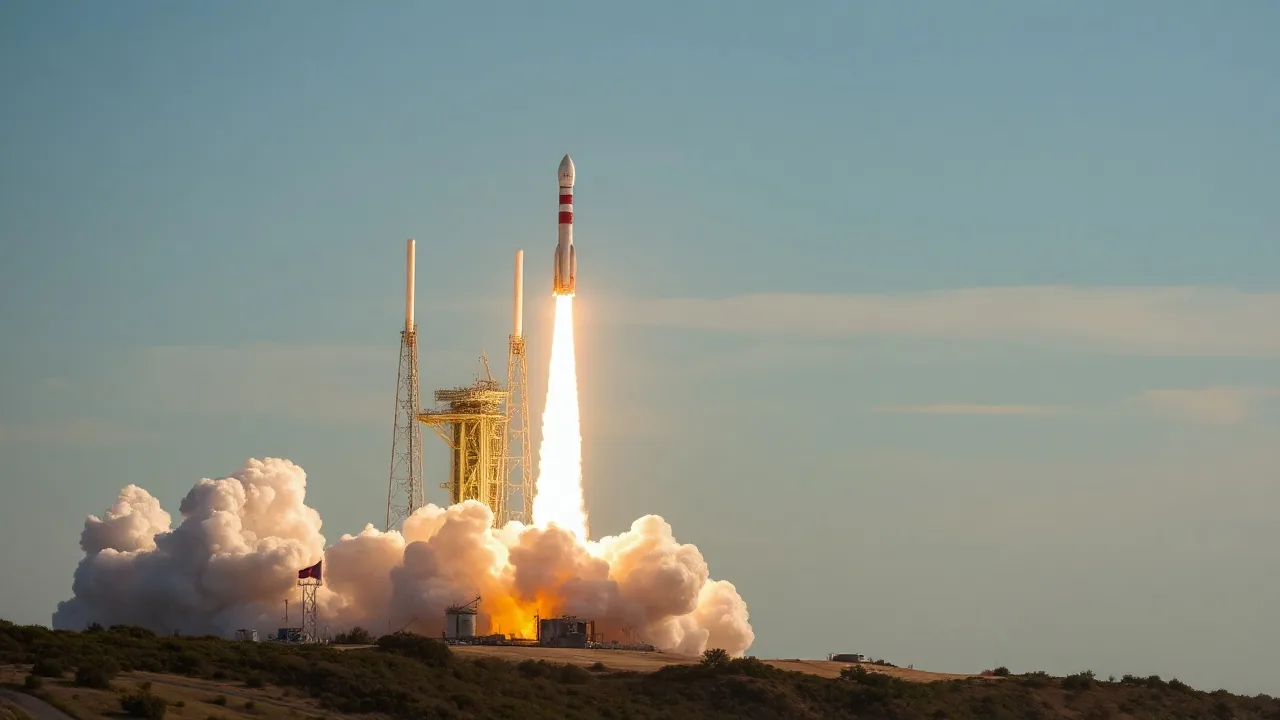
Elon Musk's SpaceX has captivated investors and aerospace analysts since its founding in 2002, yet the company maintains its private status as of August 2026, making direct stock ownership impossible through traditional exchanges. Nevertheless, recent discussions about SpaceX stock valuations reflect deep curiosity about the company's financial trajectory and what a future public offering might entail.
The company's latest valuation estimates, based on secondary market transactions and private equity rounds, place its worth in the range of $180 billion to $210 billion as of mid-2026. This valuation reflects SpaceX's dominant position in commercial launch services and growing demand for satellite internet connectivity through its Starlink division.
SpaceX generates revenue through multiple channels: Falcon 9 and Falcon Heavy launch contracts for government and commercial clients, Starlink satellite internet subscriptions, and development contracts with NASA and the U.S. Space Force. The company's profitability milestone in 2023 signaled maturity in its core launch business, attracting institutional investors eager to participate in private equity rounds.
Market Drivers Behind Valuation Growth
Several concrete factors have pushed SpaceX's enterprise value upward throughout 2026. The U.S. government's increased spending on national security space initiatives has expanded demand for rapid, reliable launch capacity. SpaceX won multiple contracts from the Space Force and National Reconnaissance Office, cementing its role as America's primary commercial launch provider.
Starlink's subscriber base reached 4 million customers by June 2026, with monthly revenue exceeding $200 million. This recurring revenue stream appeals to value investors accustomed to software-as-a-service models, and analysts believe Starlink alone could justify a multi-billion-dollar valuation independent of the launch business.
"SpaceX's competitive moat in launch services remains unmatched," said Marco Caceres, Senior Space Analyst at The Teal Group Corporation, in a recent industry briefing. "No other operator can match their launch cadence or cost structure, and that operational dominance translates directly into margins."
The company's reusable rocket architecture has driven launch costs down dramatically compared to competitors. The Falcon 9 first-stage booster, now regularly reflown dozens of times, has reduced per-flight expenses to an estimated $15 million to $25 million in variable costs. This efficiency gap widens SpaceX's competitive advantage in aerospace investment circles.
Private Spaceflight and Future Growth Paths
Private spaceflight has evolved from a speculative venture into a legitimate economic sector. SpaceX leads this transformation, but investor scrutiny now extends beyond launch services to the company's longer-term ambitions, including its Starship development program and eventual Mars missions.
Starship, the fully reusable super-heavy launch system, remains under development with integrated flight tests ongoing. Analysts disagree on the timeline and profitability of this platform. Conservative estimates place commercial Starship operations at 2027 or 2028, while optimistic forecasts suggest earlier deployment. The system's theoretical lift capacity of 100-150 tons to low Earth orbit could unlock new markets in mega-constellation deployment and deep-space missions.
SpaceX's company valuation reflects these uncertainties. Investors must weigh the tangible profitability of Falcon 9 and Starlink against the speculative returns of Starship and interplanetary initiatives. Secondary market trades in 2025 and 2026 have shown buyer appetite even at premium valuation multiples, suggesting confidence in management's execution.
Key considerations for potential investors include:
- Regulatory environment: U.S. government oversight of space activities and export controls affect SpaceX's international launch market
- Competition: Blue Origin, Relativity Space, and Chinese launch providers are improving capabilities, though SpaceX maintains significant lead
- Technology risk: Starship development remains capital-intensive with no guaranteed return timeline
- Dependency on Elon Musk: The company's strategy, technical direction, and public perception remain closely tied to its founder and CEO
IPO Prospects and Investor Access
Speculation about a SpaceX initial public offering persists, though Musk has consistently rejected near-term IPO plans. His stated preference is to keep SpaceX private until achieving profitability in Mars colonization efforts, a goal measured in decades rather than years. However, changing ownership structures or strategic pivots could alter this position.
Investors seeking aerospace exposure without direct SpaceX equity can target publicly traded aerospace contractors that supply components or services to the company. Alternatively, mutual funds and hedge funds with private equity exposure sometimes hold SpaceX securities, offering indirect participation.
The aviation and defense sector has shown strong valuation multiples in 2026, with companies like Northrop Grumman and Lockheed Martin trading at 20-25 times forward earnings. A hypothetical SpaceX IPO at a $200 billion valuation would likely trade at a premium to these legacy contractors, reflecting higher growth rates and expanding addressable markets.
For now, SpaceX remains a compelling investment narrative rather than a directly tradeable asset. Its technical achievements, revenue growth, and market dominance justify serious analyst attention, but participation remains restricted to accredited investors with access to private equity platforms or secondary markets. As the commercial space economy expands in 2026 and beyond, SpaceX's role will only deepen, making its eventual public debut a significant event for aerospace investors.